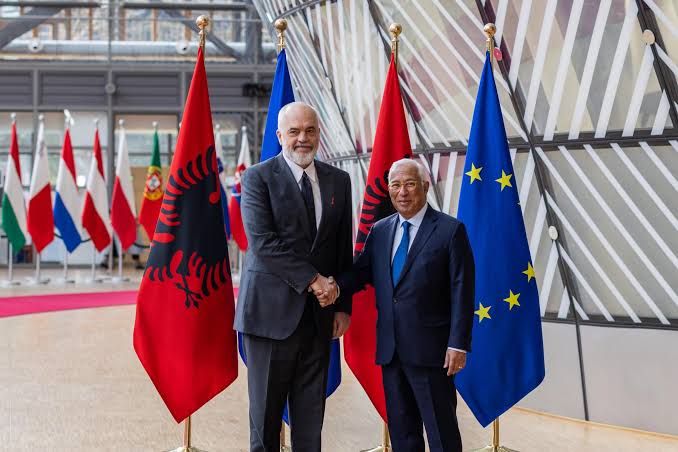
The conference proceedings were inaugurated by the honored guest, Prime Minister Edi Rama of the Republic of Albania, who emphasized that “the right to information is not just a democratic instrument but a prerequisite for the health and development of functional democracies.” He highlighted the importance of working closely with institutions such as the Commissioner’s Office and the Ombudsman to ensure that transparency is upheld and misinformation countered effectively.
During the Opening Ceremony, Adrian Alcalá Méndez, President of the Board of Commissioners of INAI, Mexico, and concurrently, Chair of the ICIC Executive Committee, underscored Albania’s evolution towards a more open, democratic, and representative society as evidence of the transformative power of access to information and transparency.
Attendees were greeted via video message by Tawfik Jelassi, Assistant Director-General for Communication and Information at UNESCO, who praised Albania’s sustainable commitment to respecting the right to information, transparency, and inclusivity in an increasingly interconnected world.
Giuseppe Busia, President of Italy’s National Anti-Corruption Authority, emphasized the collective commitment to examining the significant role of access to information within the frameworks of transparency, inclusivity, and accountability on a global scale.
Darian Pavli, a judge at the European Court of Human Rights based in Strasbourg, noted that the hosting of ICIC in Tirana demonstrates Albania’s significant progress, particularly in the past decade, in guaranteeing the right to information and enhancing public sector transparency.
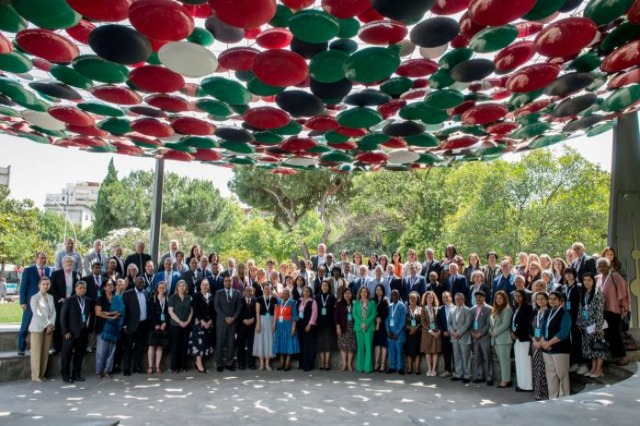
With over 200 representatives from ICIC member or observer states/jurisdictions across all continents, as well as international organizations such as the Council of Europe, UNESCO, the World Bank, and the OECD, academia, civil society, and media, both domestic and international, the two-day Open Session featured five main panels. These discussions encompassed issues such as granting the exercise of this right within vulnerable groups and the interaction between regulatory authorities and civil society and media to maximize the effectiveness of access to information and transparency.
Additionally, participants had the opportunity to engage in panels focused on the dynamism of the digital environment and initiatives for open data, as well as the balance between advancing access to information and respecting rights in the field of personal data protection.
The conference also included a panel on “Indicators of Sustainable Development Goals” by UNESCO, highlighting legislative adoption efforts worldwide and innovative solutions to empower the right to information and transparency.
During the Closed Session, representatives of member/observer authorities reported on the past 12 months’ activities of regional networks and respective working groups on significant developments in this field. The Mexican authority was reconfirmed at the helm of the organization’s Executive Committee for the 2024-2027 term, while Australia and Kenya became the newest members of this forum for the same period.
The next two editions of the conference are scheduled to be held in Germany in 2025 and Sierra Leone in 2026, in line with the principles of cooperation, diversity, and inclusivity of the organization’s membership. This International Conference serves as a central platform for addressing perspectives, challenges, and opportunities to further strengthen standards in the practical exercise of the right to information. Additionally, interaction and collaboration with non-public sector partners are crucial for fostering a culture of transparency and accountable institutions for a functional democratic society.
/k.s/

 English
 Français
 Deutsch
 Italiano
 Turkish
 Greek
 Serbian

















 RTI