
 English
 Français
 Deutsch
 Italiano
 Turkish
 Greek
 Serbian
Danish magazine “Politiken”: Albania is called the Maldives of Europe, and it is also cheap




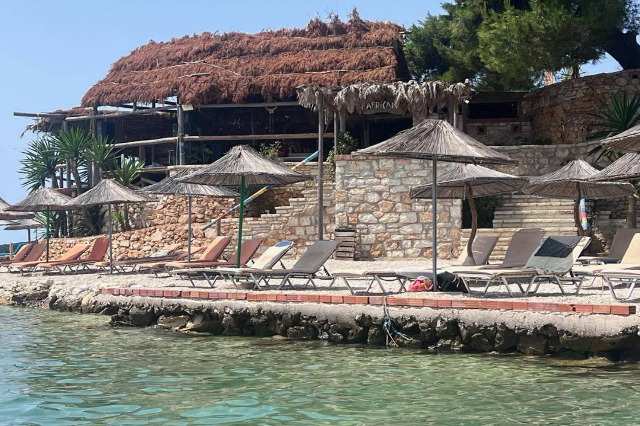
In just a few years, Albania has transformed from being one of the most closed countries in Europe to an extremely popular travel destination. Here are six compelling reasons why you should consider your next trip to Albania.
Last summer, a couple of friends mentioned that they wanted to veer away from the usual travel destinations like Italy and France and opt for Southeast Europe instead. They brought up Albania, and while I found the idea intriguing, I didn’t know much about the country beyond its history with communism and isolation, which didn’t exactly ignite my travel enthusiasm.
But two weeks later, the first photos and videos from their trip arrived. I was surprised, but mostly envious. Images of long sandy beaches, towering mountains, and breathtaking sunsets got me thinking: Should I go to Albania?
I didn’t have time to finish the thought before my Instagram feed started flooding with videos about Albania. Phrases like ‘Europe’s Maldives’ and ‘This is not Bali but Albania’ dominated, and before I knew it, my better half and I had booked plane tickets.
We left this summer and spent nearly four weeks exploring Albania. And we weren’t the only ones. Albania has become one of the most popular travel destinations—especially if you follow social media, where the country is being hyped like never before with the promise that paradise doesn’t have to be far away.
Getting there: There are no direct flights from Copenhagen to the capital Tirana. However, airlines such as Serbia Air, Austrian Air, and Lufthansa fly to it. Therefore, you can choose to fly to Munich, Vienna, or Belgrade and then take a plane or a bus from there to Tirana.
I didn’t have time to think about it before Instagram started bombarding me with videos about Albania. Phrases like “Europe’s Maldives” and “This isn’t Bali, it’s Albania” dominated, and before I knew it, my better half and I had booked our flight.
Here are six compelling reasons to swap Lake Como for the Balkan Peninsula.
1. Because Albania has a rich history
It wasn’t always like that. Albania endured 44 years of communist rule and was famously known as the most closed country in Europe, where everything from private cars to tourist trips was banned. After the death of dictator Enver Hoxha and the fall of communist power in 1985, democracy began to take root. Initially, this transition did not significantly alter the country’s economic situation, leading to approximately 40 percent of the Albanian population choosing to emigrate. However, in 2009, Albania became part of NATO, signaling a shift in focus towards tourism.
A visible reminder of the communist era is the presence of 137,000 bunkers still scattered across the country, a testament to Enver Hoxha’s paranoia about a potential attack following World War II. Albania’s numerous museums and monuments also bear witness to its dark times and period of isolation.
In the mountain town of Gjirokastra, a UNESCO World Heritage Site, you can visit the ethnographic museum, which was once the childhood home of the dictator. However, due to our limited time in the town, we prioritized a brief visit to The Cold War Museum, which showcases artifacts from the era, including helmets, weapons, uniforms, and postcards.
For an alternative to museums, consider booking a free walking tour. We did this in Tirana, where we had an English-speaking guide for a few hours. As we strolled through the center of Tirana, our guide shared stories and anecdotes from Albania’s years of isolation and showed us the former residence of the dictator. Interestingly, our guide mentioned that the government is still contemplating whether to demolish the house, convert it into a museum, or rent it out as an Airbnb.
Throughout the tour, our guide pointed out Tirana’s main attractions, architectural highlights, and local spots where we could enjoy delicious food and drinks. This experience allowed us to delve deeper into Albania’s history and gain a better understanding of Tirana’s past.
2. Because Albania boasts vast mountain passes and winding hiking trails
Albania is home to numerous natural wonders that kept my camera busy and its memory full. One notable feature is the mountain passes in the northern part of the country, attracting tourists eager to explore its hiking trails.
Upon arriving in Tirana, we promptly headed north with our rented “Ford” towards Shkodra. Situated relatively close to the Prokletije mountain range, the impressive river, and Lake Koman, Shkodra is a favorite destination for tourists seeking day trips to Theth National Park—just like us.
Early one morning, we departed from Shkodra for the mountain town of Theth, a two-hour journey away. Armed with hiking boots, backpacks, and plenty of granola cookies, we embarked on a trek amidst towering mountain passes, vast meadows, and winding paths along the mighty Shala River. Initially, we walked alongside other tourists, but soon we dispersed in all directions.
Our goal for this one-day hike of 17-19 kilometers was to witness the natural phenomenon known as the “Blue Eye”—a spring of crystal-clear water in shades of blue and green.
There are two places in Albania known as the Blue Eye. One is near Theth, and the other is in Ksamil. Despite its appealing appearance, many people take the plunge into its crystal-clear waters. We did too. However, the experience is not as pleasant as it seems. The water, originating from the nearby mountains, is extremely cold.
3. Because Albania offers beaches for all preferences.
If you’re the type who enjoys re-reading “The Subtle Art of Not Giving a Fuck,” there are plenty of opportunities for that too.
Albania boasts several beaches along the Albanian Riviera. The first one we visited was Currilove Beach, a pebbly beach near the port city of Durrës. Arriving on a Saturday, we found the beach bustling with lots of people—mostly local families with children. They were playing music, enjoying lunch, and building sandcastles. The only downside was that the water was not as crystal clear as we were accustomed to at other beaches.
The next beach we opted for was located south of the small coastal town of Himara. Our host had recommended Potam, which features a mix of sand and pebbles. Upon arrival, we noticed there were very few people, and a sense of serenity enveloped us immediately—a beach perfect for those who enjoy immersing themselves in a book to the soothing sound of the waves. The water was calm, clear, and blue, prompting several people to don their goggles and explore the rocky seabed.
When mentioning Albania, you can’t overlook the beaches of Saranda and Ksamil, often described on Instagram as the Bali and the Maldives of Europe. While the beaches are undoubtedly stunning, we found that the sense of serenity and generosity we experienced elsewhere was not as prevalent there.
Especially in Ksamil, the Instagram-famous beach was crowded with people and sunbeds (150 kroner per sunbed). However, if you enjoy a lively atmosphere akin to a club, this might be the ideal spot for you. Nonetheless, I would highly recommend exploring beyond Ksamil and Saranda to discover more intimate beaches like Mirror Beach and Pigeon Cave. These secluded pebble beaches are nestled in small bays, where the waves crash against the shore. Here, you’ll find locals sunbathing on steep rocks and striped sunbeds, offering a more authentic and serene experience.
4. Because the locals are hospitable and kind-hearted.
Albanian people have a strong tradition of hospitality. Since tourism has only started to develop in recent years, locals are still welcoming and accommodating. They haven’t become jaded by the demands of tourists or the expectations of luxury hotels. Instead, they greet visitors with open arms and genuine smiles, reflecting the warmth of their hospitality.
We booked two nights with an Albanian family in Durrës. Upon our arrival, we were warmly welcomed with Turkish cake and coffee. The family then took us to their olive groves, where they passionately shared their knowledge about farming while we helped pick vegetables for dinner. Back at home, the mother began cooking and served us a traditional Albanian meal, which included fritters with pepper and cheese, Albanian meatballs, pie, and tarator.
Here we sat and feasted on a variety of dishes, while she relaxed with her cigarettes and enjoyed my partner’s appetite. After dinner, the boys invited my boyfriend to a soccer game while I stayed with their mother on the terrace. And there we were – two women, 30 years apart, laughing out loud. “You have to come back again next year,” said the monotone voice on the phone.
5. Because Albanian cuisine is a fusion of several culinary traditions
Albanian cuisine is traditional, hearty, and anything but modest. Let’s explore some Albanian dishes:
One popular dish we often ordered were the meatballs, which can be made with beef, chicken, or lamb and are often fried. These are typically accompanied by a country salad, bread, and fries, which quickly became a staple in our meals. The salad typically consists of red peppers, tomatoes, onions, a type of dry curd, and yogurt.
Another traditional dish is the pie, which I declared my love for several times during the trip. It can be made with spinach and cheese (my favorite!) or minced meat, onion, and cheese. You can buy it at almost all bakeries, which is perfect for satisfying a little hunger after a long day at the beach.
The first time I tasted the pie was in Himare from a small bakery. If you don’t come to Himare for the beach, come for the shrimp!
Although I was fond of Albanian food, I couldn’t help but notice that it could be heavy at times. Therefore, we were pleasantly surprised when we realized that Albanians have also embraced the food culture of the Mediterranean and the Middle East.
6. Because your money holds value
Prices in Albania are relatively low. 100 lek is about 7 Danish kroner, which means you can live relatively well without feeling deprived. Coffee is expensive in Denmark, so it felt like a luxury to us that every morning, a large coffee from a nearby cafe cost 10-15 kroner. If you can’t give up oat milk and matcha powder, check out the Albanian coffee chain Mon Cherie – here, however, the coffee costs about 25 kroner.
Albania also offers restaurants in all price categories. If you’re looking for a relatively cheap meal consisting of a meat dish, a salad, bread, and a sauce, you can expect to pay around 40-50 kroner per person. And you’re sure to be full, as the portions are often large. To quench your thirst, you can buy a half-liter of wine for about 35 kroner or a large beer for about 15 kroner. Typically, we would book the hotel along the way, and it was easy to find affordable accommodation.
In Tirana, for example, we found a spacious apartment in the city center, boasting a large terrace with views of the city and the mountains. The price was around 300 kroner for one night. In Himare, we also discovered an apartment with a balcony, a spacious terrace, and a swimming pool offering panoramic views for 260 kroner a night.
It’s advisable to have cash on hand—either Lek or Euro. Many restaurants, hotels, and shops still do not accept cards.
/m.ll/
Të ngjashme




Latest News










Most read










 RTI