
 English
 Français
 Deutsch
 Italiano
 Turkish
 Greek
 Serbian
Declassified Document Shows Kadare Under Surveillance During Communist Era




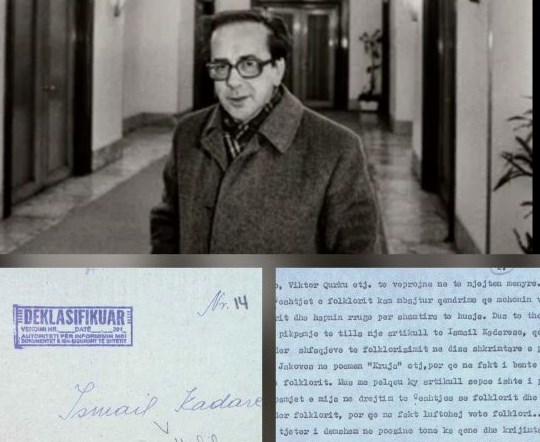
Today marks the 90th anniversary of Ismail Kadare’s birth. Archival documents show that the Albanian writer was under surveillance by the former State Security.
Although Kadare faced no direct repression, the authorities monitored him. Moreover, he received official recognition from the regime.
One document from 1977 refers to a crackdown on the so-called “anti-party group” in art and culture, led by former Culture Minister Fadil Paçrami. The files mention Kadare as a writer who “treated reality with a critical eye.” They also note that he expressed ideas that “contradicted the official line” and produced poems and articles considered “problematic for ideology.”
The Albanian Authority on Files (AIDSSh) declassified the document. It carries the note: “For Ismail Kadare: Notify the Party and retain the material.” This shows how the regime used fear and ideological interpretation to monitor literary work.
According to philosopher Hannah Arendt, such documents do not need to punish. Instead, they keep individuals in a constant state of uncertainty. Kadare was not penalized, but the surveillance limited creative freedom.
The transcript of Fadil Paçrami’s statements confirms this. He admitted that he encouraged writers, including Kadare, to address conflicts critically. He also approved Kadare’s works, even when they challenged official positions on folklore and social issues.
In conclusion, Kadare was recorded, interpreted, and watched. The case illustrates how totalitarian regimes controlled freedom of expression through surveillance, without direct punishment.
/a.c/
Të ngjashme

Latest News
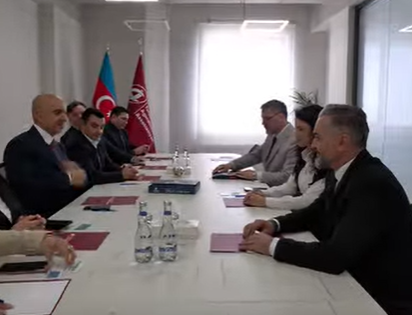
Albania and Azerbaijan Seek Stronger Tourism Ties and New Partnerships


Most read










 RTI