
 English
 Français
 Deutsch
 Italiano
 Turkish
 Greek
 Serbian
Depopulation/ Korça and Dibra with the fastest decline in the number of births in the country




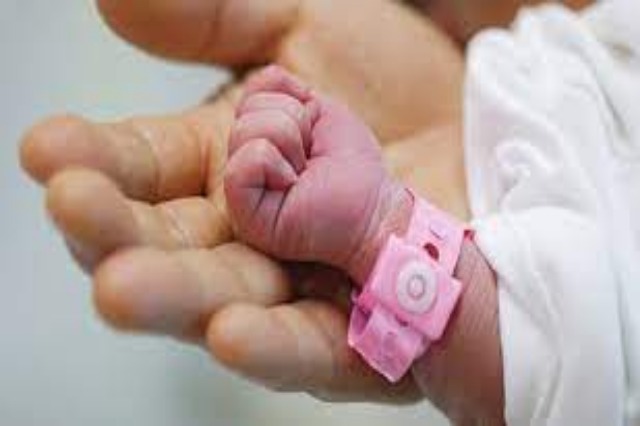
The number of births is falling rapidly in all regions of the country year after year, but in the first 6 months of 2022, the phenomenon was stronger in the regions of Dibra and Korça.
According to INSTAT data, in January-June 2022, births nationwide experienced an annual decrease of 9 percent, but in the districts of Dibra and Korça, the contraction was 23.8% and 20%, respectively.
The data show that in the Korça region, births fell by almost a quarter in the span of one year, as the factors are related to sharp emigration, the aging of the population and the decline in fertility rates for women living in that area.
The decline in births is related to the same reasons in Dibra, where the district is losing its young population year after year as a result of the high rates of internal emigration.
Small municipalities and especially rural areas of the country are depopulating faster. Young couples are not building their lives in these areas, not for economic reasons, but not for lack of quality educational services. In most Albanian villages, collective schools have been created from the small number of children. For this reason, many parents leave their homes when their children approach school age.
Most counties had a double-digit decrease in births compared to the first six months. After Dibra and Korça, Shkodra had a decrease of 18%, Berat with 13.2%, Fieri with 12.4% and Kukësi with 10.5%.
The drop in birth rate has also affected Tirana. Despite the fact that the population of the capital is increasing from year to year, the number of births has started to decline. In the first 6 months of 2021, births in the district of Tirana decreased by -3.5%.
In addition to the high rates of immigration that are negatively affecting births, the postponement of the marriage age, career goals and in many cases economic impossibility are causing Albanian women living in Albania to give birth to fewer and fewer children.
This trend is clearly reflected in the year after year decline of the Synthetic Fertility Index (ISF), which shows the average number of children a woman of reproductive age is expected to give birth to.
INSTAT reported that the synthetic fertility index fell to 1.32 children per woman in 2021 from 1.34 children in 2020 and 1.36 in 2019. In 2001, according to INSTAT, this indicator was 2.1, while in the 1970s it was over 5.
This means that 100 women are expected to give birth to 132 children, up from about 210 children in 2001 and 500 children in 1970.
With this progress, the population of Albania suffers an irreversible decline because the birth rate is now far below the replacement rate and women are unable to replace themselves. This means that in the future the population will decrease, but there will be fewer and fewer females, which are the basis of reproduction.(Monitor)
/Klara Ruci/
Të ngjashme


Latest News





Most read










 RTI