
 English
 Français
 Deutsch
 Italiano
 Turkish
 Greek
 Serbian
Divjakë-Karavasta National Park Attracts Visitors with Rare Butterfly Museum




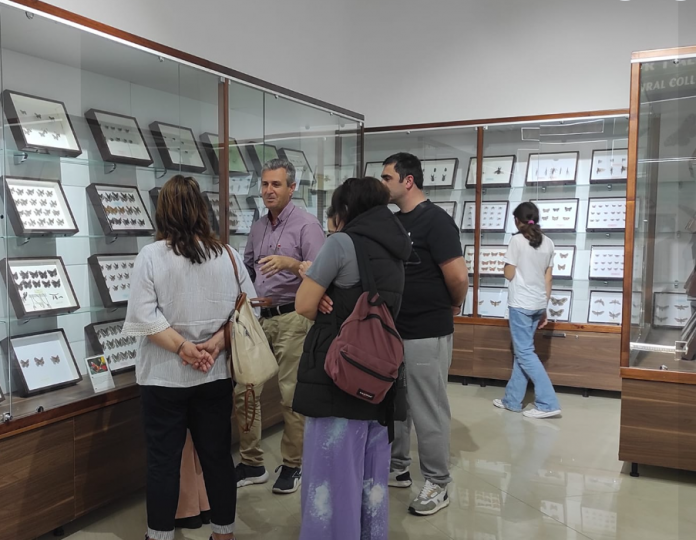
Visitors, both local and foreign, came to Divjakë-Karavasta National Park today. They did not leave without exploring the rare butterfly and wildlife collection at the Natural History Museum.
The museum offered a magical world of butterflies, insects, mollusks, and other rare species found in the park.
Altin Hila, founder of the museum and administrator of Divjakë-Karavasta tourist guides, told ATSH that the museum had welcomed around 6,700 visitors from January to September. They included students, school groups, and tourists. He added that the collection had grown steadily with new and rare species.
Hila said the museum had also attracted international biologists interested in nature. Every year, scientists from different countries had visited the park and stopped by the museum to study the species in his collection.
He explained that Divjakë-Karavasta held the largest number of species in Albania. Hila’s collection included about 520 butterflies, moths, and orthopterans, representing around 80% of national species.
However, Hila faced challenges due to species disappearance. He warned that the current era had become critical. Only five or six of the 125 daytime butterfly species in his collection still flew in the wild. He called this a warning bell.
Hila also stressed the need for a larger museum space. For years, he had requested local and national authorities to provide a bigger venue. The current space limited exhibitions and visitor capacity.
Among the museum’s highlights was the African monarch butterfly (Danaus Krispus), which migrates from Africa to Divjakë, becoming a symbol of the park, alongside pelicans and flamingos.
The park protected complex ecosystems rich in biodiversity. It hosted around 51,000 waterbirds and 500 breeding pairs. Additionally, 89 species of mollusks, insects, amphibians, reptiles, birds, and mammals were considered threatened in Albania.
/a.c/
Të ngjashme


Most read










 RTI