
 English
 Français
  Deutsch
 Italiano
 Turkish
 Greek
Greek Serbian
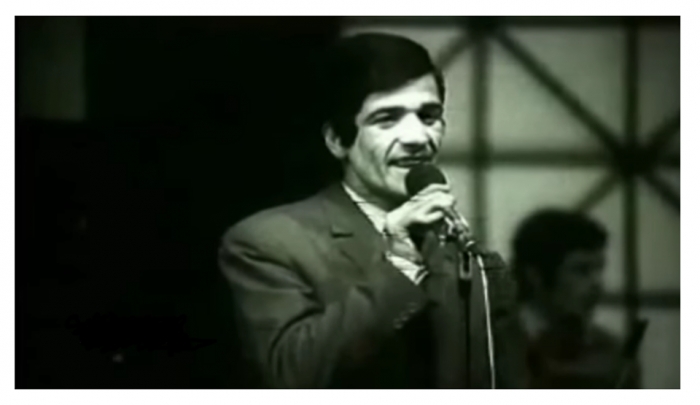
Drago Siliqi, an Albanian poet, literary critic, and publisher.




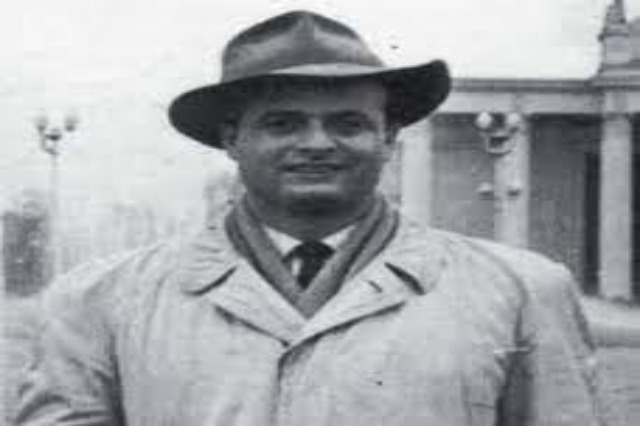
Drago Siliqi was an Albanian poet, literary critic, and publisher. He was born on June 9, 1930 in Tirana, Albania. He was the nephew of the Albanian National Awakening activist and poet Risto Siliqi. In 1944, Siliqi became a scout and then a partisan of the National Liberation Movement. He published his first collection of poetry, and then pursued university studies at the Maxim Gorky Literature Institute in Moscow.
After graduating, he returned to Albania and then, during 1957-1963 he worked as editor and then director of the Naim Frashëri Publishing House, where, as a literary critic, he was key into helping fully develop as writers some of the most notable post-World War II Albanian authors, such as Ismail Kadare, Dritëro Agolli, Fatos Arapi, Petro Marko, Qamil Buxheli, Dhori Qiriazi, and Vangjush Ziko. He encouraged and assisted Ismail Kadare to write The General of the Dead Army.
He also led the company to publish more translations of foreign literary works into Albanian through the hiring of affirmed writers.
As a literary critic Siliqi is remembered to have rejected formalism, and Russian formalism in particular. Contrary to formalism practices, in his writings he would analyze by including a combination of his comments on both content and societal influence, as well as discourse and forms. Several authors and critics have expressed their thoughts that Siliqi’s critique was deep, yet he would be always open in discussing his ideas and had a positive attitude on an entire generation of young authors to express themselves in elevated forms of art. He was also daring enough to express very positive notes on The Highland Lute, an Albanian national epic poem, by Gjergj Fishta, although the work had been banned in Albania at that time, due to anti-Slavic rhetoric.
During Siliqi’s tenure the publishing house saw a boom of translations of the world’s best classical literature from foreign languages into Albanian. This increase in publications was mainly due to Siliqi’s work in using some of the best translators, such as Dhimitër Pasko, Lasgush Poradeci, Pashk Gjeçi, Gjon Shllaku, Vedat Kokona, Sotir Caci, Robert Shvarc, and Klio Evangjeli, many of whom were actually affirmed and retired writers. Works translated during that period included classical pieces, such as the Iliad from Homer, which had never been fully translated into Albanian, but it also included contemporary authors, such as John Galsworthy, Theodore Dreiser, Ernest Hemingway, Paul Éluard, and Erich Maria Remarque. According to Naum Prifti , an Albanian writer, Siliqi’s direction in translations would always require a double standard: keeping the beauty of the original and adding beauty in the Albanian language as well.
Siliqi wrote several poems, such as “Atdheu” (“Motherland”), “Nana” (“The Mother”), “Dashunia” (“The Love”), or the philosophical one “Kangë e re për dashuninë e vjetër” (“New Song for the Old Love”), which was highly praised by critics for its theme on migration and the deep analysis of the characters. His works were collected and published several times, under the care of his wife, Drita Siliqi.
He died on July 13, 1963, flying from China to Albania, when Aeroflot Flight 12 crashed in the vicinity of the Siberian city of Irkutsk, Soviet Union. The crash killed 33 passengers and crew. Casualties included Siliqi, as well as six other Albanians.
Të ngjashme
Latest News
Most read







 RTI
RTI