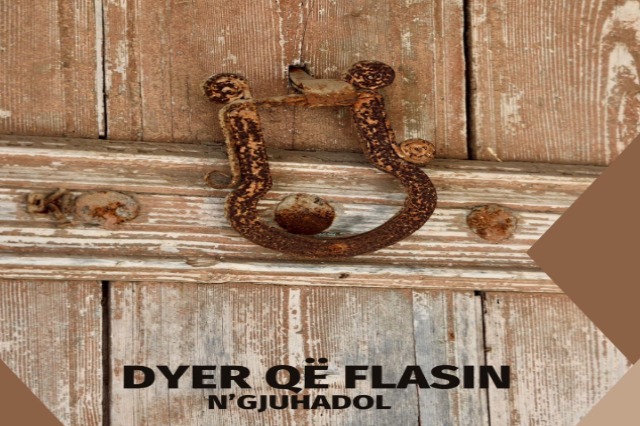
For lovers of culture and history, the Regional Directorate of Cultural Heritage (DRTK) Shkodër, in close partnership with the Center for Openness and Dialogue (COD), has unveiled the photographic exhibition “Doors That Speak in Gjuhadol.”
Open for several days, the exhibition features captivating images of Shkodra’s historic doors, each telling a story of the city’s past and legacy.
“This exhibition offers a chance to connect intimately with a part of Shkodra that preserves the echoes of its history,” shared DRTK Shkodër.
Together with COD, DRTK Shkodër has embarked on a special initiative to document the old doors of Shkodra, uncovering their stories and unique architectural features. The project aims to safeguard Shkodra’s cultural heritage, reviving the memories and narratives embodied in these doors, along with their ties to families and the city’s historical identity.
Photographs shared by DRTK Shkodër on social media show that the exhibition has drawn curiosity from people of all ages, including school students.
The Shkodran houses of the 18th and 19th centuries, which expanded across the city’s plains, featured spacious courtyards adorned with notable outer gates. These gates, crafted with aesthetic and practical care, were decorated with arches and carved wooden or stone elements. The doors were designed in two parts: a large section that opened for carts, and a smaller door used for the daily comings and goings of family members and visitors.
A distinctive element of these doors was the rezja, often fashioned by blacksmiths into an elongated horseshoe shape, serving as a symbol of the social status of the families who resided within.
With the shift to neoclassical architecture in the late 19th and early 20th centuries, doors in the city center became smaller due to their façade placement. The design of the rezja also evolved, featuring new decorative motifs such as floral, animal, and human forms.
Today, many families cherish these elements as historical mementos, reflecting not only a legacy of craftsmanship but also a vibrant tradition of artisanal skills. Together, these details transform Shkodra’s historic homes into museum-like ensembles of wood, stone, iron, and rich ethnographic heritage.
/a.c/

 English
 Français
 Deutsch
 Italiano
 Turkish
 Greek
 Serbian



























 RTI