
 English
 Français
 Deutsch
 Italiano
 Turkish
 Greek
 Serbian
EC key findings of the 2023 Report on Albania




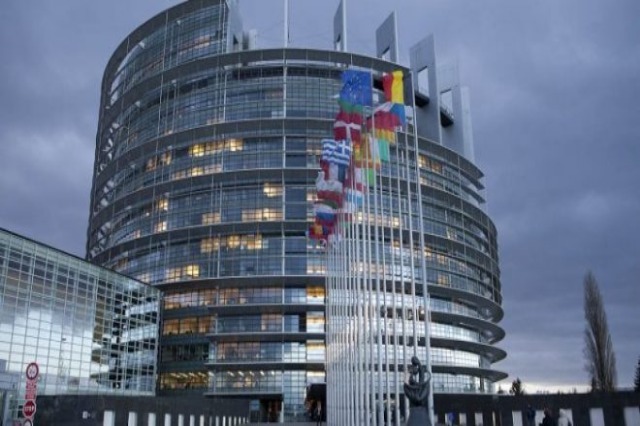
The European Commission released a report to show what are the setbacks or progress of Albania for the last 12 months.
As regards political criteria, regular local elections on 14 May 2023 were conducted in a generally calm manner. Observers assessed them as well-administered, competitive and with the participation of key political actors. Concerns relate to the misuse of state resources, claims of pressure on public sector workers and voters, and allegations of vote buying. A low turnout of only 38.2% was registered. The political scene continued to be marked by political polarisation, against the background of persistent deep divisions within the largest opposition party. Parliamentary oversight of the executive remained limited. The government needs to engage in stronger public communication on the EU accession process. While civil society is generally free, shortcomings negatively impact the ability of civil society organizations to contribute to policy processes. The role of civil society, including in the EU accession negotiation process, needs to be strengthened.
Albania remains moderately prepared in the area of public administration. The new strategies on public administration reform and public financial management reform have yet to be prepared and adopted. The reorganization of roles and responsibilities within the Office of the Prime Minister is still ongoing. Provisions on merit-based recruitment in the Civil Service Law are not consistently applied, especially at senior management level. Increased attention is also required on digital security and protection of personal data, especially following the cyber attacks in 2022 and a number of data leaks.
Albania has a moderate level of preparation on the functioning of the judiciary. The implementation of the justice reform continued, resulting in good progress overall. The appointments to the Constitutional Court have been completed with all nine judges now in office, of whom eight with full nine-year mandate. The Specialized Structure against Corruption and Organized Crime (SPAK) achieved further results, and a new Chief Special Prosecutor was elected in December 2022 after a sound process. The temporary evaluation of all judges and prosecutors has continued to advance at a satisfactory pace.
Albania has some level of preparation in the fight against corruption. Despite some progress and continued efforts in fighting corruption, it remains an area of serious concern. SPAK bodies have conducted investigations in a number of high-level cases, ordering several arrests and convictions in a number of high-level cases. Further efforts are needed to ensure due judicial follow-up in vetting cases where there are indications of criminal offences. Albania has some level of preparation in the fight against organized crime, with a continued good level of cooperation with EU Members States and EU agencies. More efforts need to be made in the fight against illicit drugs, including through an increase in the capacities of the law enforcement authorities.
On fundamental rights, efforts at implementation of the legal and policy framework need to be intensified. Progress was made on the use of alternatives to detention. On the protection of national minorities, the adoption of the remaining implementing legislation did not advance. Furthermore, Albania needs to put in place strong legal and institutional safeguards to prevent further breaches of personal data.
Albania is in between some and moderate level of preparation in the area of freedom of expression. Limited progress was made. The intersection of business and political interests, the lack of transparency of sources of finance, the concentration of media ownership, intimidation and precarious working conditions continued to hamper media independence, pluralism, and the quality of journalism.
The application of gender-responsive budgeting continued to improve. Since January 2022, the Albanian government has implemented a range of measures aimed at supporting families, women and girls, and vulnerable groups.
The legal framework on migration is largely aligned with the EU acquis but needs updating in line with developments on the EU side. Albania has contributed to the management of the mixed migration flows towards the EU by cooperating to implement the EU Action Plan on the Western Balkans
On the economic criteria, Albania has between a moderately and good level of preparation on developing a functioning market economy and made some progress in addressing last year’s recommendations. The economy showed resilience and GDP growth remained strong in 2022.
On public procurement, Albania is moderately prepared and has made some progress, in particular through an increased use of the most economically advantageous tender award criteria
Albania is moderately prepared in most areas of the internal market, namely free movement of goods, services and capital, financial services, and competition policy. Some progress was made on intellectual property rights and on free movement of family members of EU citizens as well as on financial services.
Albania has achieved a moderate level of preparation in many areas linked to competitiveness and inclusive growth, namely taxation, enterprise and industrial policy, social policy and employment, education and culture and the customs union. The same holds true for the digital transformation and media, where the country made good progress, including by joining the Digital Europe programme in June 2023.
As regards the green agenda and sustainable connectivity. Albania has some level of preparation in the areas of transport, trans-European networks, environment, and climate change, and it has a moderate to good level on energy. Progress is noted on the reform of the day-ahead and intra-day electricity markets, on renewable energy auctions and in developing transport and regional energy networks. Further efforts are needed on renewable energy and on energy efficiency.
Albania has some level of preparation in most areas linked to resources, agriculture and regional policy and cohesion, namely agriculture and rural development, veterinary and phytosanitary policy, and financial and budgetary provisions. Further efforts are needed in regional policy particularly on administrative capacity and coordination between central, local and municipal levels and on financial and budgetary provisions.
Albania has a good level of preparation as regards external relations, foreign security and defense. On external relations, Albania made some progress, further aligning its legislation with the EU acquis on preventing trade in certain goods that could be used for capital punishment and torture. As regards the EU common foreign and security policy, Albania maintained full alignment with all relevant EU decisions and declarations during the reporting period. As a non-permanent member of the UN Security Council since January 2022, Albania continues to be actively engaged in promoting and defending the rules-based international order as well as Women, Peace, and Security.
Të ngjashme
Latest News
Most read










 RTI