
 English
 Français
  Deutsch
 Italiano
 Turkish
 Greek
Greek Serbian
Edith Durham, Queen of the Highlanders




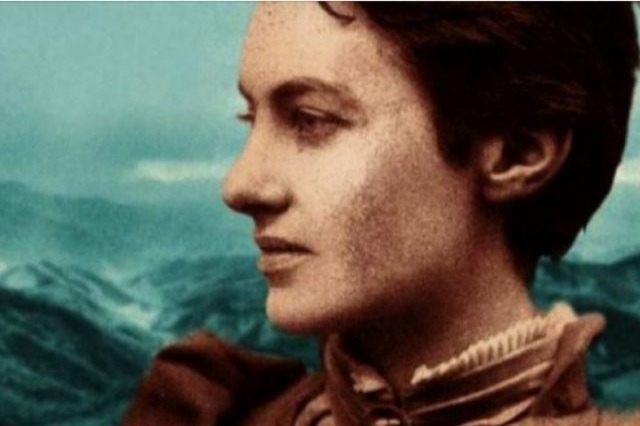
Edith Durham is remembered primarily for her publications, in particular her volume ‘High Albania’ (1909), but she was also the author of countless articles and ‘letters to the editor,’ in which she endeavoured to present Albania’s cause to the British public and to correct erroneous views. Many of these articles and letters have been published recently in the volume ‘Albania and the Albanians: Selected Articles and Letters, 1903-1944.’ In 1941, following the Italian occupation of Albania, Durham published the following overview of Albania in the ‘Proceedings of the Royal Institution of Great Britain,’ typical of her passionate involvement in Albania’s fate. As the most renowned figure of Albanian studies in twentieth-century Britain, she died at her home in London on 15 November 1944.
Mary Edith Durham, (8 December 1863 – 15 November 1944) was a British artist, anthropologist and writer who is best known for her anthropological accounts of life in Albania in the early 20th century. Her advocacy on behalf of the Albanian cause and her love of Albania gained her the devotion of many Albanians who consider her a national heroine.
Durham was the eldest of nine children. Her father, Arthur Edward Durham, was a distinguished London surgeon. She attended Bedford College (1878–1882), followed by the Royal Academy of Arts, to train as an artist. She exhibited widely and contributed a number of detailed drawings to the amphibia and reptiles volume of the Cambridge Natural History (published 1899).
After the death of her father, Durham took on the responsibilities of caring for her sick mother for several years. It proved an exhausting experience. When she was 37, her doctor recommended that she should undertake a foreign vacation to recuperate. She took a trip by sea down the coast of Dalmatia, travelling from Trieste to Kotor and then overland to Cetinje, the capital of Montenegro.
Durham travelled extensively in the Balkans. In 1908 she wrote High Albania after travelling through the Albanian highlands, from Montenegro to Shkodër. Over the next twenty years she focused particularly on Albania. She worked in a variety of relief organisations, painted and wrote, and she also collected folklore and folk art. In 1911-13 she helped Albanian refugees in Montenegro where she raised funds for medicine, food and helped wounded soldiers.
She contributed frequently to the journal Man and became a Fellow of the Royal Anthropological Institute. Her writings, however, were to earn her particular fame. She wrote seven books on Balkan affairs. High Albania (1909) is the best known and is still regarded as the pre-eminent guide to the customs and the society of northern Albania’s highlands of that period.
Durham came to identify closely with the Albanian cause and championed the unity and independence of the Albanian people. She was strongly criticised by the advocates of a Yugoslav state, who supported the incorporation of the Albanian-populated region of Kosova into Yugoslavia.
Durham denounced what she termed “Serb vermin” for having “not created a Jugoslavia but have carried out their original aim of making Great Serbia.
The Albanians held Durham in high regard and named her “Queen of the Highlanders”. She was given an embroidered waistcoat by the government to thank her for lobbying the British government on behalf of the occupied city of Korça. She was well received in the Albanian Highlands and passed unharmed despite being a lone female traveller.
When she passed away in 1944, she received high praise for her work from the exiled King Zog I, who wrote: “She gave us her heart and she won the ear of our mountaineers”. She is still considered with very high regard by Albanian historiography. In 2004, Albanian President, Alfred Moisiu considered her as “one of the most distinguished personalities of the Albanian world during the last century”.
/a.p./
Të ngjashme

Latest News


Most read









 RTI
RTI