
 English
 Français
  Deutsch
 Italiano
 Turkish
 Greek
Greek Serbian
Escobar: Important sanctions in stabilizing the Balkans




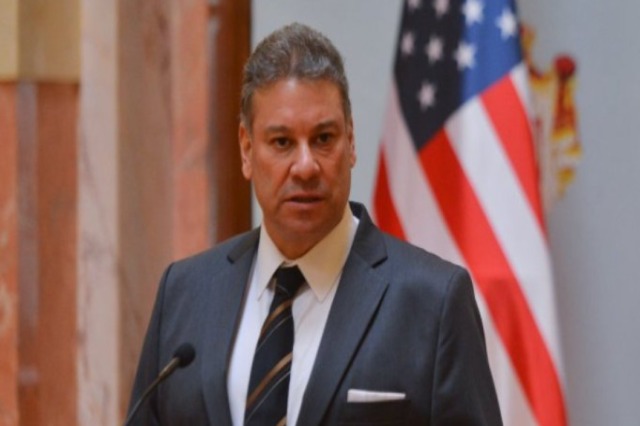
The US Special Representative for the Western Balkans, Gabriel Escobar, recently stated that sanctions are not the main tool of US engagement in the Western Balkans region, but that they have an effect and that there will be more.
In an interview with VOA, Escobar assessed that corruption is the main problem in the Balkans. Asked about the sanctions imposed on Bosnia and Herzegovina Presidency member Milorad Dodik and two other Bosnian officials, then against Milan Radoicic and Zvonko Veselinovic in Kosovo, he stressed that we should not think that the US is engaging in the region through sanctions.
Among other things, he stressed that the administration in Washington is very committed to the fight against corruption and that one of the tools in this fight is sanctions.
“And I can say that there will be other sanctions, but this will not be the main tool of our engagement,” said Escobar. Among other things he added that those sanctions are not aimed at certain countries or peoples, but, as he said, individuals who are deeply involved in corruption.
Asked if the announcement of more sanctions applies to all Western Balkan countries, he said yes.
Escobar stressed that US policy and engagement in the Western Balkans has traditionally been linked to multiethnic reconciliation and EU integration, but that the focus of the Western Balkans on US administration has changed in recent years.
Escobar noted that there is a renewed effort for the United States to engage in all mechanisms that were successful, and that, according to him, to strengthen the Dayton Agreement, to support and renew the dialogue between Kosovo and Serbia and the cooperation of closely with NATO partners and to ensure that they can meet their NATO obligations.
/Klara Ruci/






 RTI
RTI