
 English
 Français
  Deutsch
 Italiano
 Turkish
 Greek
Greek Serbian
Escobar in Prishtina: Kosova and Serbia to implement the agreements




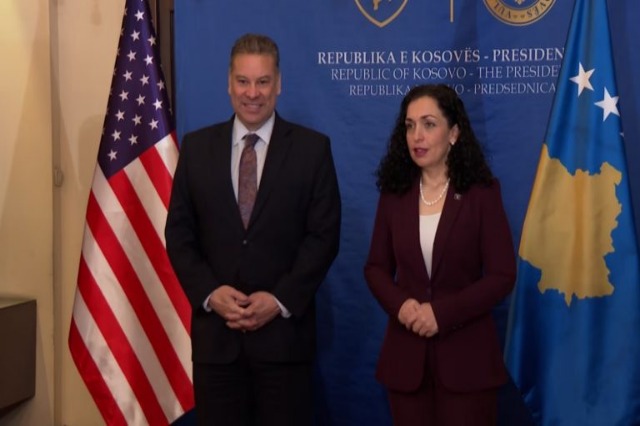
The US envoy for the Western Balkans, Gabriel Escobar said this Wednesday after a meeting with the president of Kosova, Vjosa Osmani that Kosova and Serbia should continue with the full implementation of the agreements reached in the dialogue mediated by the EU.
Escobar rejected President Osmani’s claims that the EU is showing a lack of equal access in mediating the dialogue.
“Both parties must continue with the full implementation of the agreement, so it will not a unilateral effort that only Kosova should take those difficult decisions,” said Escobar.
Osmani said that it is vital to fully implement the agreements reached last year between the parties.
“Therefore, the selective approach to only certainarticles of the basic agreement will not help, because all the articles are important,” she said.
She added that the commitment and role of the US remains crucial “for a successful conclusion of the dialogue that would lead to mutual recognition, as President Joe Biden has mentioned in his last letter“.
Kosova and Serbia reached the Agreement for the normalization of relations on February 27, 2023, with the EU mediation.
The agreement of 11 articles, on the normalization of the relations, provides, among other things, a level of self-management for the Serbian community in Kosova and mutual recognition of each state symbols, while it asks Prishtina and Belgrade to also implement all previous agreements reached during the dialogue.
The EU has said that the agreement, though not signed, is binding for the parties, and it has not yet started to be implemented.
During the meeting with Osmani, Escobar said that he also talked about security situation and that the US is concerned after the September 24 attack in Banjska, Zveçan, when a group of Serbs clashed with the Kosova Police, where a police officer and three attackers remained killed.
“At the meeting, we had a very honest conversation about the security situation. We are very concerned about the September 24 differences. We invite Serbia to bring all those responsible to Justice and give a full account,” said Escobar.
Regarding the ban on the Serbian dinar, Escobar said that he is in Kosova to discuss ways to find a solution.
President Osmani reiterated that this issue must be resolved in cooperation with the allies.
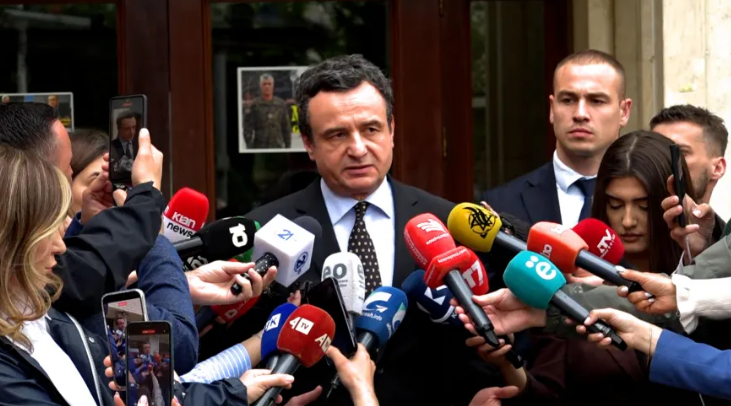
During his visit, Escobar is expected to meet with Prime Minister Albin Kurti, the opposition representatives and representatives of the Serbian community, to discuss the issue of the Serbian dinar.
The Central Bank of Kosova started implementing a new regulation from February 1, which stipulates that only the Euro should be used for cash payments, putting an end to the use of the Serbian dinar.
Escobar, during an open conversation with the reporters in Brussels on Tuesday, called “catastrophic” and “incompetent” the decision of the Kosovar authorities to implement this regulation.
Serbia declares that it allocates millions of Euros [in Serbian dinar] to Serbs in Kosova and pays them salaries, pensions and additional aid.
In the absence of dinars in their settlements in Kosova, Kosova Serbs traveled on Tuesda tens of kilometers to Serbian cities near the border with Kosova, to withdraw the means they accept from the Government of Serbia.
Escobar has mentioned several reasons why the US does not agree with the way the Central Bank of Kosova regulation is implemented, which according to him are the speed with which it was implemented, the lack of offering any alternative way to accept the money, the communities affected by the decision have not been contacted, and that the international community has had difficulty convincing Kosova to provide technical assistance.
“The government of Kosova must work with the international community to find a solution in respect to this decision, which I would call catastrophic and even incompetent. The implementation of the decision has created chaos in the economy of Kosova.”
Escobar has repeated that the US does not oppose the legitimacy of the decision, but has problems with the way of implementation and the impact it has on the Serbian community.
Escobar’s visit to Prishtina is part of an eight-day tour he started on March 10, which includes also visits to Belgium, Austria and Montenegro.
/a.p./
Të ngjashme
Latest News

Most read





 RTI
RTI