
 English
 Français
 Deutsch
 Italiano
 Turkish
 Greek
 Serbian
Escobar: Pristina and Serbia should strengthen their commitment towards their approach to the EU




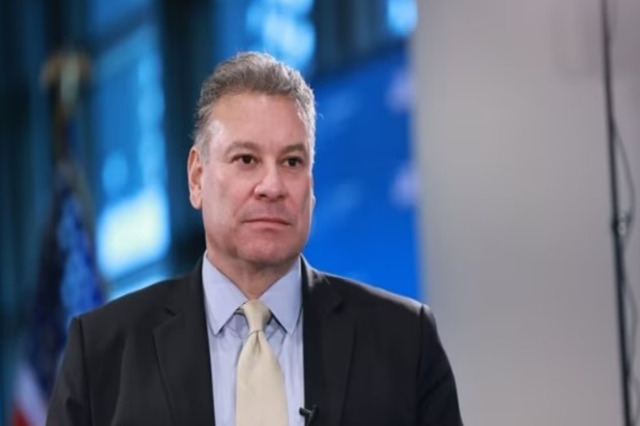
Gabriel Escobar, the United States’ envoy for the Western Balkans, expressed his concerns in an interview with Radio Free Europe (RFE) regarding messages originating from Pristina. These messages criticize the European emissary for the dialogue, Miroslav Lajcak.
“I see no evidence of collusion in the efforts to advance Serbia’s interests in this,” Escobar stated.
Escobar emphasized that the U.S. expects both sides to “strengthen their commitment, with a particular call for Kosovo to demonstrate greater pragmatism and realism in its approach to the EU.”
“We are strongly urging the Kosovo side to be more constructive. I must express my concern about the messages emanating from Pristina. I have worked closely with the European Union’s special representative, Miroslav Lajcak. I have not seen any evidence of bias or collusion in advancing Serbia’s interests in this matter,” he stated.
According to him, both sides should work toward progress, but Kosovo, in particular, should show more pragmatism and achieve more in its approach to the European Union.
Asked if there could be consequences for Kosovo and Serbia if they do not make progress with the implementation of the Ohrid Agreement and its Annex, Escobar stated, “I wouldn’t say measures; I would say consequences. Currently, Kosovo faces the consequence that if they refuse to engage with the European Union, the EU will not commit to additional aid and integration measures. These consequences are having an impact on Kosovo’s economy. I hope that, at least bilaterally, the United States can work with Kosovo to find a way to lift these measures by 2024. We will continue to work with Kosovo to bring it closer to the European Union, but we would also like to see political will and movement in that direction.”
The senior American official also stated, “The association of municipalities with a Serbian majority should not pose operationalization problems within Kosovo. It should align with its legal code and the Constitution.”
“Within that, I still believe there is significant capacity to enable Serbs to manage their municipal services in a manner that best serves their citizens, without it resembling Republika Srpska. We have addressed this repeatedly, and I’m disappointed that this talking point continues to arise – that it will turn into Republika Srpska. It will not become [a Republika Srpska]. It’s primarily about municipal authorities conducting their usual functions in the Serbian language,” emphasized Escobar.
/m.ll/
Të ngjashme
Latest News
Most read










 RTI