
 English
 Français
 Deutsch
 Italiano
 Turkish
 Greek
 Serbian
EU Economic Growth Plan’s Impact on the Western Balkans




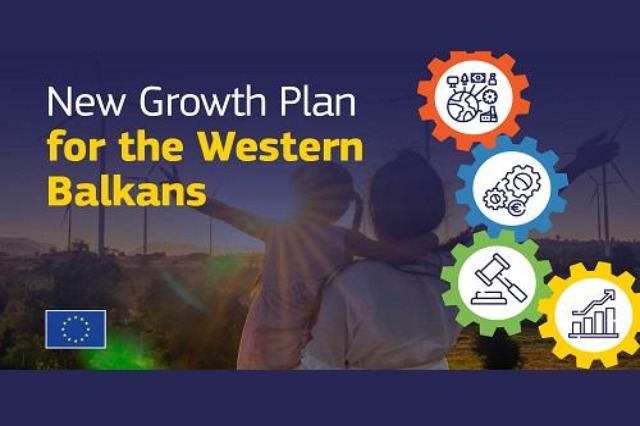
The 6 billion euros support from the European Union for the Balkans in the period 2024-2027 will be unlocked once the instrument is approved by the European Council. 3 billion euros (2 billion euros in grants and 1 billion euros in soft loans) will be allocated for investments through the Western Balkans Investment Framework (WBIF). The other 3 billion euros will be in the form of soft loans to the governments in the Western Balkans, on the condition that they fulfill the Reform Agendas. To benefit from the funds, each Western Balkan country will need to prepare a Reform Agenda, particularly focusing on the rule of law.
Payments will be made twice a year, based on requests submitted by Western Balkan partners and verified by the Commission for meeting the relevant payment conditions, such as macro-financial stability, sound public finance management, transparency, and budget control. If payment conditions are not met, the Commission suspends or reduces a certain amount from the fund.
Each of the 6 Western Balkan countries will have 1-2 years to fulfill the conditions; otherwise, the amount will be redistributed among others in the following years. With the absorption of these funds, in the form of financial assistance to support reforms, where 2 billion euros will be grants and 4 billion euros loans from 2024 to 2027, Albania, Bosnia, Kosovo, Montenegro, North Macedonia, and Serbia will be able to integrate prematurely into the European common market, facilitating the lives of individuals and resident businesses in each state.
But what will citizens specifically benefit from? With integration into the European internal market, it is estimated that just by changing the regime of financial transactions made by Albanian citizens living in European countries, such as remittances to their families and their small businesses in Albania, they could save over 20 million euros annually. On the other hand, it’s millions of euros that regional businesses spend while being outcompeted by European companies, which don’t need to spend their own expenses for the same things because they utilize mechanisms within the European Union market.
The new plan initially envisages the integration of the Western Balkans into the common market, a process that will depend on the adaptation of the region’s countries to the rules of this market and simultaneously opening their markets to neighboring countries in relevant sectors. Regional market opening is expected to increase the Gross Domestic Product (GDP) of the Western Balkans by 10 percent.
Reforms are another important aspect of the plan, implying rule of law enforcement that also aids in attracting foreign direct investment and strengthening regional stability. Finally, the distribution of financial assistance to support reforms, totaling 6 billion euros, will be applied.
In the context of regional integration, there has also been the Berlin Process, an initiative launched in 2015 aimed at increasing regional cooperation in the Western Balkans and assisting in the integration of these countries into the European Union. As part of this, another initiative called the “Open Balkans” was undertaken, involving only Albania, Serbia, and North Macedonia.
What happens after approval? After approval, the six Western Balkan partners will be invited to present their individual reform agendas, outlining the socio-economic and fundamental reforms they will undertake to promote growth and convergence according to the Growth Plan during the period 2024-2027. Economic convergence is a crucial element in the Western Balkans’ approximation to the EU.
Currently, the average GDP per capita in the region stands between 30% and 50% of the EU average. Integration with the EU’s single market has been a key driver of economic growth for all countries that joined the EU. The positive impact on a country’s GDP and income levels resulting from integration with the EU’s single market has been clearly demonstrated in the past.
The plan’s four main pillars are:
Increasing economic integration with the European Union’s Single Market;
Enhancing economic integration within the Western Balkans through the Regional Common Market;
Accelerating fundamental reforms;
Increasing financial assistance.
Explanation of the 4 points:
Economic Growth
The first point focuses on economic growth, aiming for economic integration with the EU’s single market, provided that the Western Balkans approximate the rules of the single market and open relevant sectors for all their neighbors simultaneously, in line with the Regional Common Market.
“The key areas are the free movement of goods, services, and workers, the single euro payments area, transportation, energy, and the digital single market,” the document states.
Promoting Integration
Promoting economic integration within the Western Balkans through the Regional Common Market is another issue addressed in the plan, based on EU rules and standards, which potentially could add 10% to their economies.
Accelerating Reforms
The plan also involves accelerating fundamental reforms, supporting the region towards EU membership, improving sustainable economic growth, including attracting foreign investment and strengthening regional stability.
Increasing Financial Assistance
Increasing financial assistance aims to support fundamental reforms. The 6 billion euro instrument consists of 2 billion euros in grants and 4 billion euros in concessional loans, conditioned on the fulfillment of specific reforms by Western Balkan partners.
The Growth Plan is based on the 30 billion euro Economic and Investment Plan launched in 2020.
/k.s/
Të ngjashme



Latest News









Most read










 RTI