
 English
 Français
 Deutsch
 Italiano
 Turkish
 Greek
 Serbian
EU TACSO 3 and the European Year of Skills 2023 event took place in Tirana




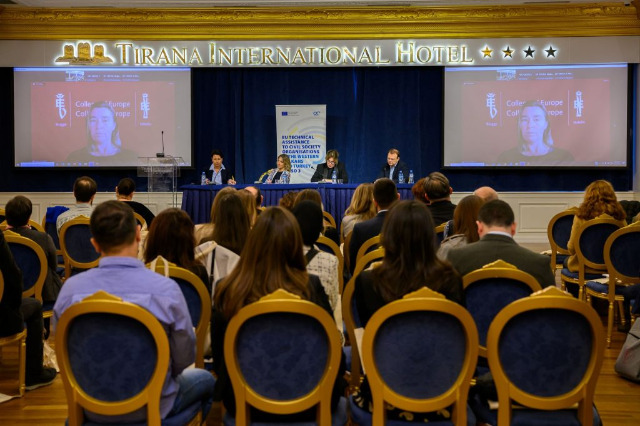
The event titled ‘EU TACSO 3 and the European Year of Skills 2023: Skills for non-profit organizations in the Western Balkans and Turkey’ took place in Tirana.
The event aims to unite essential stakeholders from the non-profit sector, education, and government across both the region and the EU.
The main goals of the event are:
- Enhancing intersectoral cooperation
- Securing recognition of non-profit skills within National Qualifications Frameworks
- Augmenting Erasmus+ funds dedicated to educational innovation in non-profit organizations
- Cultivating partnerships between the academic sector and non-profit organizations
- Advocating for increased support from public authorities for the non-profit sector
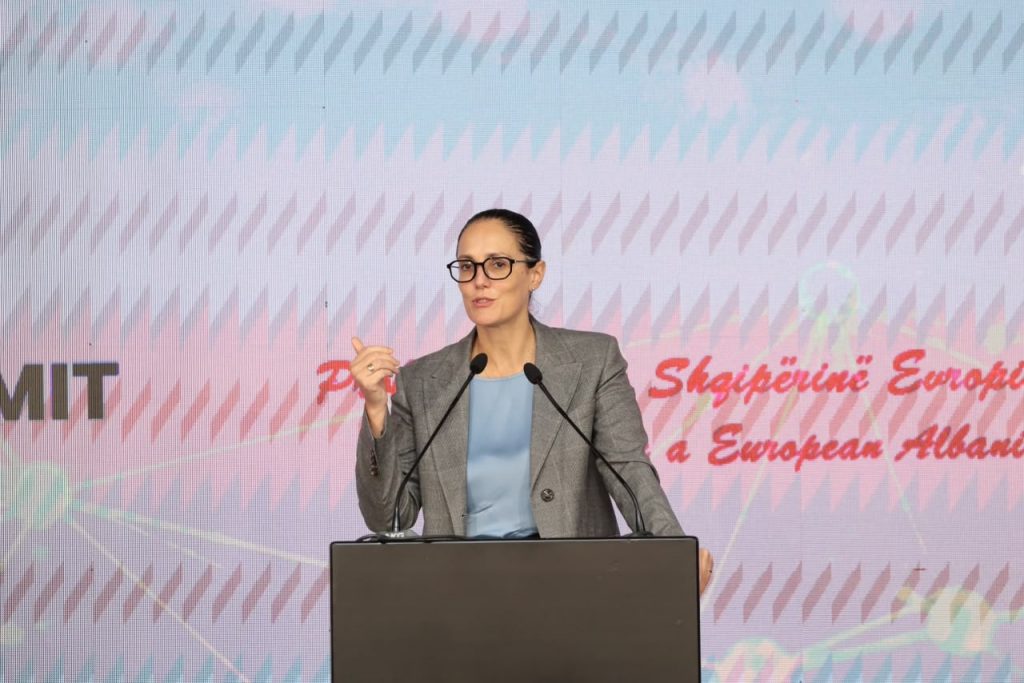
Elira Demiraj, Director of the Economic Department at the Ministry of Finance and Economy of Albania, opened the event with an introductory speech highlighting the crucial role of skills development in the region.
“The non-profit sector holds a significant role in our economy. A sector employing over five percent is recognized as a major contributor to economic growth. For us, this sector’s importance is paramount. Our EU integration process is focused on integrating the non-profit sector into various facets of governmental initiatives. This emphasis is due to the sector’s engagement with crucial societal matters, fostering stability and equal opportunities in areas encompassing protection, education, housing, and healthcare,” she remarked.
“In Albania, our relationship with non-profit organizations and civil society is multifaceted. For instance, within our Employment and Skills Strategy, we incorporate measures pertaining to NGOs. Additionally, Albania’s National Qualification Framework, established in 2010, stands as a vital instrument for assessing skills and enhancing employment connections. This framework ensures labor market quality and offers assurances to all stakeholders involved in the realm of skills and employment. Moreover, we acknowledge non-formal skills acquired outside the traditional education system, which have gained increasing importance in today’s labor market dynamics. This acknowledgment aligns with the trend towards micro-credentials, a concept advocated within the EU skills scheme, where non-profits can significantly contribute,” explained Demiraj.
Lenka Vitkova, Head of Rule of Law and Good Governance at the Delegation of the European Union to Albania, emphasized the EU’s dedication to bolstering skills within the non-profit sector.
“The event is significant as it corresponds with two pivotal EU agendas. Firstly, 2023 marks the European Year of Skills, emphasizing the vital role of skills investment in the EU economy. Given the imminent green and digital transitions, there exists a clear necessity to enhance the skills of workers across all age groups. This objective resonates with the EU’s primary aim for this year: advocating for lifelong learning. The EU has set an ambitious target, aiming for 60% of adults to engage in lifelong learning activities annually,” stated Vitkova.
“Another crucial aspect lies in the support of civil society, particularly within the context of EU enlargement and negotiations involving the Western Balkans countries. Civil society plays a pivotal role in overseeing governmental actions and fostering dialogue, especially in amplifying the voices of marginalized groups. It stands as a critical player in accession negotiations and aspects concerning the rule of law. Notably, the non-profit sector contributes significantly to the EU economy, accounting for 13%. This underscores the importance of governmental investment and backing. Skills development within the non-profit sector is indispensable for fostering effective communication, smooth operations, and active engagement in decision-making processes,” she added.
In her inspiring speech titled ‘The EU, Education, and the Western Balkans,’ Federica Mogherini, rector of the College of Europe, underscored the vital importance of safeguarding the independence of civil society. She elaborated the necessity to establish space, norms, guarantees, and instruments, including financial support, enabling civil society and non-profit organizations to act independently.
Additionally, she highlighted that civil society and non-profits actively participate in shaping, contributing to, and monitoring the implementation of public policies by institutions.
“I am very proud of the European Union’s 2023 emphasis on skills, a pivotal component within the education priority, spanning both European and local contexts, particularly in relation to accession negotiations and enlargement. The alignment of these two facets—capabilities and the expansion agenda—is fundamentally crucial,” stressed Mogherini.
In her perspective, the renewed enlargement agenda presents a concrete and credible opportunity for Western Balkan countries to envisage joining the European Union.
“It’s crucial to prioritize investment in the skills, knowledge, and networks of citizens, individuals, and communities both in the Western Balkans and within the European Union. This investment won’t just ensure reliability and potential acceptance but also pave the way for future success. The new campus of the College of Europe in Tirana will serve as a pivotal hub, bridging skills development and the goals of the enlargement agenda,” cited Mogherini.
Furthermore, Juliana Hoxha, director of Partners Albania for Change and Development, emphasized that “civil society organizations in the Balkans serve as not just contributors but they are integral drivers of the skills agenda. Their advocacy, grassroots initiatives, and collaborative endeavors play a vital role in our path towards EU integration. Empowering these organizations isn’t merely beneficial; it’s indispensable for our collective future. Let’s commit to fostering an environment where their full potential can be realized, ultimately enhancing the betterment of our societies.”
The second day of the event will adopt a ‘World Café’ format, offering a unique experience designed to stimulate dynamic interactions and idea-sharing among representatives from universities, civil society organizations, government officials, and funding agencies. The aim is to cultivate partnerships and further the development of skills within the non-profit sector.
The EU-funded Technical Assistance for Civil Society Organizations (TACSO) project aims to enhance the capacity and bolster the participation of civil society organizations (CSOs) in democratic processes across the Western Balkans and Turkey.
/m.ll/
Të ngjashme

Latest News
Most read










 RTI