
 English
 Français
 Deutsch
 Italiano
 Turkish
 Greek
 Serbian
European Council President: Albania and Montenegro Could Join EU Before Others




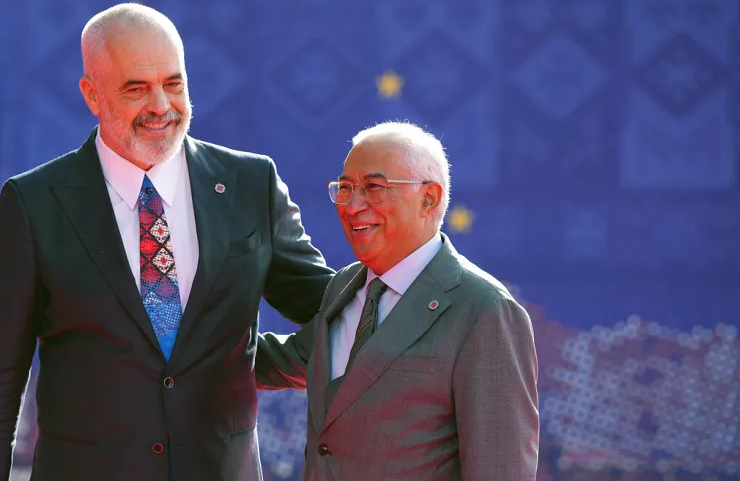
European Council President Antonio Costa said EU enlargement in the Western Balkans is once again a key priority.
In an interview with euronews.com ahead of a regional visit, he stated that the EU aims to restart the accession process. Talks had slowed down due to hesitation from member states.
Costa assured candidate countries that the EU’s stability and prosperity depend on expanding into the Western Balkans. He warned that Brussels must not lose strategic control over the region.
He noted that Russia’s invasion of Ukraine has sped up EU membership for Ukraine and Moldova. In his view, this shift pushes the Western Balkan countries to accelerate reforms.
Costa’s tour will begin in Serbia, which is facing a political crisis. He will also visit Bosnia and Herzegovina the same day. Meetings in Montenegro and Kosova will follow on Wednesday. On Thursday, he will travel to North Macedonia. The final stop is Albania, where he will attend the European Political Community summit in Tirana on Friday.
The summit will focus on enlargement, as instability grows in the region. EU leaders fear rising influence from foreign powers in an area they see as part of Europe.
Costa described enlargement as the EU’s most important geopolitical investment. He said the EU and the Western Balkans share a common vision and belong to the same European family.
The EU had previously set 2030 as a target year for new accessions. This included Albania, Montenegro, and Serbia. Now, the focus is mainly on Albania and Montenegro.
Costa gave no exact date but said countries that meet the criteria could join earlier. Albania and Montenegro have made the most progress.
He also pointed to rising tensions in the Western Balkans, especially between Serbia and Kosova, and in Bosnia and Herzegovina.
He called EU membership the best way to resolve regional conflicts. In his view, it offers a chance for prosperity not easily found elsewhere.
Costa ended by recalling the 75th anniversary of the Schuman Declaration. He said the EU began by choosing to move past historical wounds.
/a.p./
Të ngjashme
Latest News










Most read










 RTI