
 English
 Français
 Deutsch
 Italiano
 Turkish
 Greek
 Serbian
“Explore Albania, the Pearl of the Mediterranean!” – El Nacional




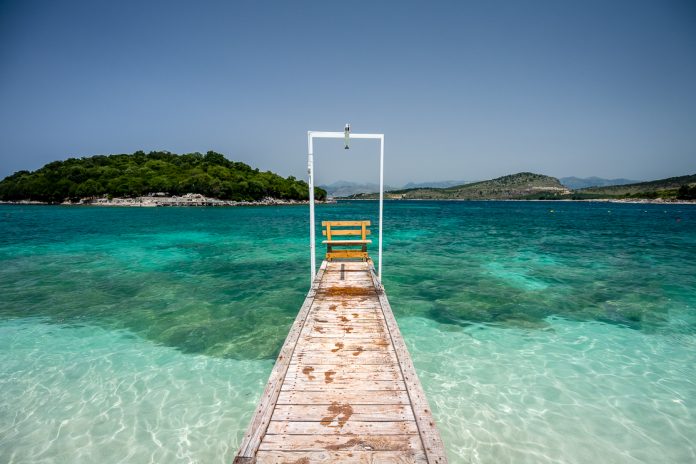
Spanish daily “El Nacional” recommends Albania to travelers seeking untouched destinations. According to journalist Alba Solé Ingla, the country offers a rare opportunity to explore the Mediterranean away from mass tourism.
Located between Montenegro, Kosova, North Macedonia, and Greece, Albania remained closed off during decades of dictatorship. Only after the 1990s did it begin to open up to international visitors.
Beaches and Natural Wonders
In recent years, Albania has earned a reputation as a hidden gem of the Mediterranean. The southern coast, known as the Albanian Riviera, stretches along crystal-clear waters and pristine beaches.
Among the most visited locations is Ksamil. Known for its white sand and turquoise sea, Ksamil offers a quiet escape with well-maintained private beaches. Renting two sunbeds and an umbrella costs between 5 and 8 euros per day.
Importantly, the area lies close to Corfu Island, drawing Italian and regional tourists throughout the summer. From Ksamil, travelers can easily visit the Blue Eye, a natural spring with visible depths of more than 50 meters.
Meanwhile, Butrint Archaeological Park — just a few kilometers away — covers 15 hectares and offers views from up to 50 meters above sea level. As a UNESCO World Heritage Site, it remains one of the country’s key cultural attractions.
Mountain Villages and UNESCO Towns
For nature lovers, Albania’s north offers alpine landscapes and traditional villages. With two-thirds of its land covered by mountains, Albania ranks among Europe’s most rugged terrains.
In particular, the village of Theth in the Albanian Alps continues to attract hikers. Although it remained isolated for years, road improvements now allow easier access. Many visitors choose to hike the popular Valbona–Theth trail.
Elsewhere, the cities of Gjirokastër and Berat provide more accessible heritage experiences. Gjirokastër impresses with its castle, Ottoman-era homes, and traditional bazaar. Berat, often called the “city of a thousand windows,” lies along the Osum River and showcases a blend of Byzantine and Ottoman architecture.
Both cities are part of UNESCO’s list of World Heritage Sites, and both continue to grow in popularity among tourists.
Local Cuisine
Albanian gastronomy combines Turkish, Greek, and Mediterranean influences. Grilled meats, fresh fish, and gyros remain widely available and affordable.
Above all, byrek — a traditional savory pie — stands out as a culinary staple. Visitors often praise it as one of the most satisfying local dishes.
According to “El Nacional”, Albania remains one of the few European destinations still off the beaten path. As tourism continues to expand, it offers a unique mix of nature, culture, and cuisine — still largely undiscovered.
– https://www.elnacional.cat/es/estilo-vida/pais-barato-europa-viajar_1267149_102.html–
Të ngjashme
Latest News










Most read










 RTI