
 English
 Français
  Deutsch
 Italiano
 Turkish
 Greek
Greek Serbian
Faik Konitza; a pioneer of Albanian nationalism and literary modernism




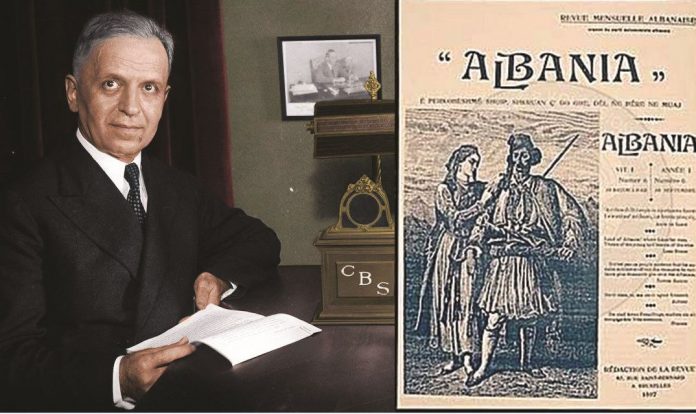
TIRANA, March 17 – Faik Konitza (1875–1942), also known as Faik Konica, stands as a central figure in modern Albanian intellectual and political history. A writer, journalist, diplomat, and cultural reformer, he shaped Albania’s national consciousness and modern literary tradition during the late 19th and early 20th centuries.
Born in Istanbul into a prominent Albanian family from the Konica region, Konitza received a European-style education in Italy and Paris. He immersed himself in contemporary political thought, literature, and nationalist movements, experiences that inspired his lifelong commitment to Albania’s modernization and cultural awakening.
In 1896, Konitza founded the journal Albania in Brussels, which became a key platform for the Albanian diaspora to promote language, education, and national unity. He championed linguistic standardization, modern education, and cultural reform while cultivating international support for Albanian independence, particularly in the United States and France. His work connected Albanian intellectuals across Europe and the Americas.
Konitza also modernized Albanian literature, introducing European styles of realism, satire, and social critique. His essays, reviews, and translations bridged Western literary trends and Albanian traditions. After Albania declared independence in 1912, he served as ambassador to the United States (1913–1921) and later to France, securing recognition and support for the new state. His diplomatic work reinforced his cultural mission, presenting Albania as a European nation committed to modernization and sovereignty.
Konitza’s legacy endures as a model of intellectual rigor, literary talent, and political activism. He remains celebrated for advancing national consciousness, modernizing Albanian literature, and representing Albania internationally. His writings, correspondence, and diplomatic achievements continue to inspire scholars and readers interested in nationalism, literature, and Balkan state-building.
/a.p./
Të ngjashme
Latest News
Most read





 RTI
RTI