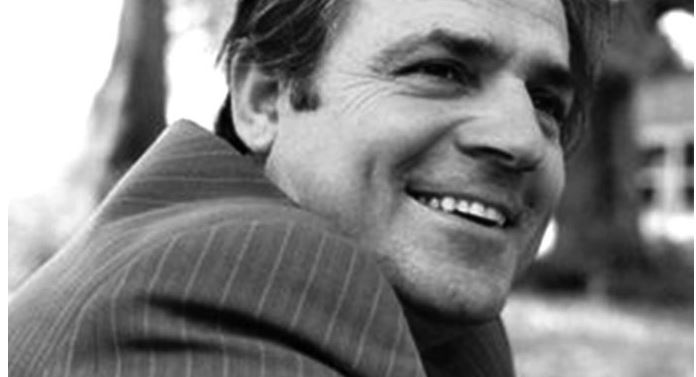
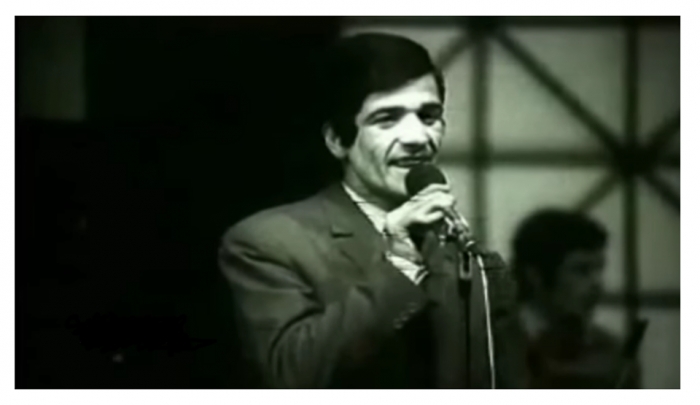
Feim Ibrahimi (Gjirokastër, October 20, 1935 – Torino, August 2, 1997) was a pioneering Albanian composer and music educator. He challenged the norms of socialist realism and introduced Albanian music to international trends. Trained entirely in Albania, he became a leading figure in the country’s musical life as a composer, teacher, and cultural organizer.
Ibrahimi entered the State Conservatory of Tirana in 1962 and graduated in 1966 under Professor Tish Daija. Immediately after, he taught composition, counterpoint, and harmony from 1966 to 1973. Then, he served as deputy director of the Institute of Arts (ILA) from 1973 to 1977.
Next, he became secretary for music at the Union of Writers and Artists from 1977 to 1991. After that, he directed the Opera and Ballet Theater (1991–1992). Finally, he taught composition at the Academy of Arts until his death.
During Albania’s cultural isolation, Ibrahimi showed strong administrative skills and positively shaped the country’s music. Although he had to follow socialist realism officially, he explored international musical developments during his travels. He experimented secretly with atonal music, as in Quasi Sonata for Cello and Piano (1975, revised 1990). He studied Xenakis in 1981 and invited avant-garde artists, such as G. Stabler, to Albania.
Ibrahimi consistently introduced new ideas and promoted Albanian music abroad. In 1978, he actively pushed for Albania’s UNESCO membership. After thirteen challenging years, he founded the National Music Committee in 1991 and became its first president, joining the International Music Council under UNESCO.
In 1992, he created the festival Evenings of New Albanian Music, opening a new era in Albanian music. Two years later, he founded the artistic association Pentaton (today the Feim Ibrahimi Cultural Foundation) to organize cultural events and establish a private conservatory for talented young musicians.
Several of his works were published by Emerson Edition in the UK. He received the titles Merited Artist and People’s Artist in 1989. The Tirana Municipality awarded him the Gratitude of Tirana in 2000, and the municipalities of Durrës and Gjirokastër named him Honorary Citizen in 2001 and 2008.
The Gjirokastër Music High School carries his name, and streets in Tirana, Durrës, and Prishtina honor him. He won numerous national awards, including two Republic prizes, Albania’s highest recognition for creative work.
In 1990, the Aalto Theater foyer in Essen, Germany, hosted “Feim Ibrahimi – Artist Portrait,” showcasing his best instrumental works and his achievements as a music organizer. In 1994, the president of the Brahmsgesellschaft invited him as composer-in-residence to Brahms’ house in Baden-Baden. Then he studied electronic music at the Mozarteum in Salzburg, composing De Profundis and becoming Albania’s first composer of electroacoustic music. In 1995, the work featured at the Synthèse Electroacoustic Music Festival in Bourges, France, and later appeared in other international festivals.
Ibrahimi composed across all genres: instrumental miniatures, film music, chamber music, symphonic works, concertos, stage works, and electroacoustic music. His works were performed in Albania, Kosovo, Italy, France, the UK, Germany, Switzerland, the USA, and elsewhere.
His last works, Dialogo for Cello and Piano and Romanza “E la tua veste è bianca” (for soprano, cello, and piano, with poetry by S. Quasimodo), were gifts for his daughter, pianist Etrita Ibrahimi, in 1997. Feim Ibrahimi died unexpectedly in Torino, Italy, on August 2, 1997.

 English
 Français
  Deutsch
 Italiano
 Turkish
 Greek
Greek Serbian














 RTI
RTI