
 English
 Français
 Deutsch
 Italiano
 Turkish
 Greek
 Serbian
Forbes Magazine Publishes Article on Tirana: Sustainability, Tourism, and Culture




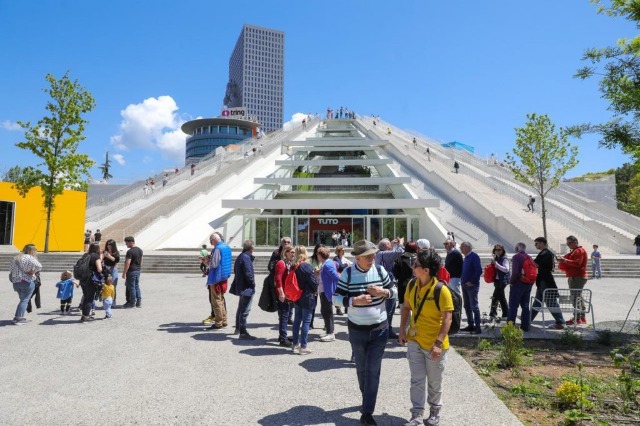
The renowned ‘Forbes’ magazine has dedicated a special article to Tirana and its transformation over the past 10 years.
From urban to cultural development, ‘Forbes’ writes that under the leadership of Mayor Erion Veliaj, the city has undergone profound changes, turning it into a pioneering urban model.
Moreover, in 2025, Tirana will be one of the two Mediterranean Capitals of Culture and Dialogue, alongside Alexandria in Egypt.
Full article below:
The ongoing evolution of the geopolitical and economic landscape in Europe reveals that beyond the Adriatic, interest in foreign capital, primarily from neighboring Italy, serves as the foundation for a development initiative that has already been underway for several years. Hospitality, luxury, urban expansion, and a focus on culture are the four cornerstones of a transformation aimed at reshaping the scenario of the entire Balkan region, where Albania is playing a leading role.
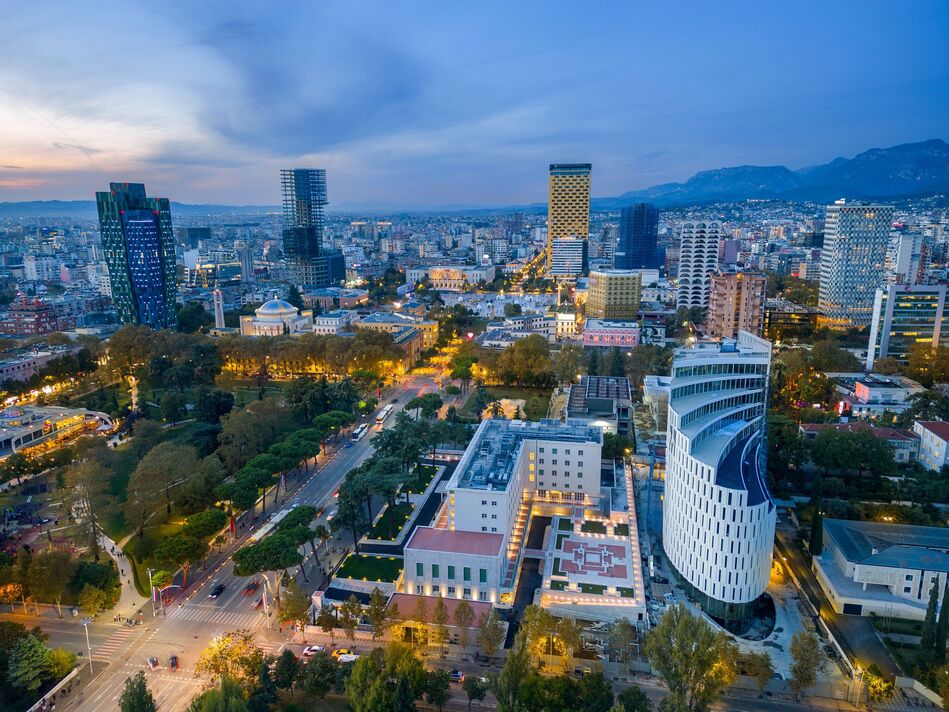
Among the main cities is, of course, the capital, Tirana, witnessing rapid financial openness to international capital, with Italy being its primary target. A fast ‘aesthetic’ transformation, driven by an unprecedented construction boom, has changed the skyline with new buildings and financial districts, blending Ottoman, Austro-Hungarian, and Italian architecture.
Tirana, Mediterranean Capital of Culture and Dialogue
In 2025, Tirana will be one of the two Mediterranean Capitals of Culture and Dialogue, alongside Alexandria in Egypt. This important recognition, awarded by the 43 member states of the Union for the Mediterranean (UfM), follows a careful assessment of efforts in promoting intercultural dialogue, tolerance, and respect.
“In a time of political divisions and serious conflicts, this project demonstrates the power of culture in building bridges and promoting dialogue, which is so much needed,” commented Nasser Kamel, Secretary-General of UfM.
Throughout the year, Tirana and Alexandria will host a series of cultural and educational events, strengthening cooperation among Mediterranean countries and celebrating their shared identity. Today, Tirana offers its international partners various investment opportunities and luxury hospitality, making it a leading destination along the Balkan coast.
Tirana under Mayor Erion Veliaj: Sustainability, Tourism, and Culture
A crossroads not only of history, culture, and modernity but also of renewal and development for young international entrepreneurs. Under Mayor Erion Veliaj’s leadership, the city has experienced profound transformations, becoming a pioneering urban model with increasing importance both nationally and internationally.
Veliaj’s leadership, which began in 2015, is characterized by a bold and innovative vision aimed at improving the quality of life for citizens, fostering economic development, and transforming Tirana into a world-class cultural and tourist hub. His commitment stems from his front-line involvement with various humanitarian organizations in Kosovo, Latin America, and Africa, which further heightened his awareness of social and political issues.
Notable among the ambitious projects is the Orbital Forest and the new Pyramid overlooking the capital. The Orbital Forest involves planting two million trees around the city by 2030, creating a green belt to improve air quality, offer new recreational spaces, and contribute to urban biodiversity. The renovation of Skanderbeg Square, transformed into a pedestrian zone surrounded by lush spaces and fountains, is now a social hub for the community and a focal point for cultural events and public demonstrations.
2025: A Major Opportunity for Albania
The challenge of 2025 is a fantastic opportunity for Tirana, grounded in strong foundations of renewal and a desire to position itself at a highly strategic crossroads between Ankara and the old continent.
This can be better understood when compared to the urban development of other neighboring capitals, which have also embarked on redevelopment and infrastructure improvement projects, always prioritizing environmental sustainability, promoting inclusive policies, and clearly driving economic growth.
Të ngjashme
Latest News










Most read










 RTI