
 English
 Français
  Deutsch
 Italiano
 Turkish
 Greek
Greek Serbian
Former NATO General: US base in Albania, evidence of the strategic importance of the region!




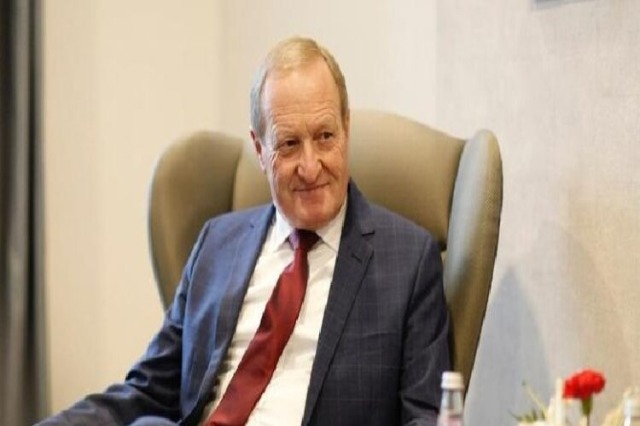
The US will set up a Special Forces Command in Albania. In an interview with DW, former NATO General Erhard Bühler explains why this news is an important signal to the region.
Deutsche Welle: The US is planning to set up a base for special forces in Albania. What exactly is this?
Erhard Bühler: First of all, it is about training special forces. Because special forces depend on very close multinational cooperation. They need the same standards by which they are trained and, if necessary, operated in missions. Special forces are elite units that can be used in commandos behind enemy lines, for example to detect and fight targets of high-value enemy, such as artillery and missile positions. Their range of tasks also includes rescuing hostages and evacuating people in case of emergency and arresting war criminals and fighting terrorists.
DW:For which missions are these special forces foreseen in Albania?
I do not think that in the foreground is a direct operational interest. First of all, it has to do with training, as well as American engagement in the region. Politically, militarily and strategically, it is important to tell the citizens of the Balkans that you live in an important area that is of the highest interest to America, NATO and the rest of Europe.
DW:Why was Albania chosen?
For thirteen years, Albania has been a valuable NATO partner with many capabilities that it can bring to NATO. And of course there is an interest in continuing to support the Albanian Armed Forces and train their skills. Secondly, it is important to help train other NATO countries in the region – Croatia, North Macedonia, Montenegro and Slovenia. It also signals that the United States is committed to peace in the Balkans.
DW:Is this a kind of return of the Americans to the Balkans, even from a military point of view? Recall that former President Trump wanted to withdraw troops from Kosovo.
They never left, but there was a discussion, as we had with the US military in Germany, which Trump wanted to reduce. The successor corrected him rightly. Now the cooperation with NATO countries is becoming even greater and this is evident with this headquarters, which will be set up in Albania.
DW:The region has constant interethnic tensions. But recently there have been tensions in Albania as well, former Prime Minister Sali Berisha, who has been declared persona non grata by the US, is trying to regain the party leadership. What role do such developments play in American decision-making?
Events in domestic politics and demonstrations, which may occur from time to time in any country, are not decisive for such a decision. The crucial factor is the training of special forces and the strong interest in giving the Western Balkans a peaceful future. Similar to the KFOR troop in Kosovo: It is not only in Kosovo a guarantee that this country will not be left alone, but it radiates that guarantee throughout the Western Balkans.
DW:You have been to the region several times, including as Commander-in-Chief of KFOR. How do you assess the current situation in the Western Balkans?
In Kosovo, I see significant progress in the security sector. I am always happy when I go to Kosovo and see what the police can really do. This was seen last summer, during the police operation for law enforcement in the north. The Kosovo Security Force has entered a very successful path so far. On the military side, I see fewer challenges for the future. What worries me a little is that nationalist rhetoric in the Western Balkans is not diminishing, but growing.
DW:What rhetoric do you have in mind?
I am talking mainly about those who threaten to use the armed forces or who want to withdraw the armed forces from the Federation, as is heard in Bosnia and Herzegovina, instigated by some politicians from Serbia. I think the parties should sit down and talk about how politicians worked here in Central Europe after World War II, and to underline reconciliation rather than nationalist ideas. But the European side also needs to do more, not just to ease the burden on Americans. The integration of the Western Balkan countries into the EU must be faster. This is not an act of charity, but in our genuine interest.
/Klara Ruci/




 RTI
RTI