
 English
 Français
 Deutsch
 Italiano
 Turkish
 Greek
 Serbian
Frashëri’s Cabinet: A Blend of Elite Education and Progressive Ideals




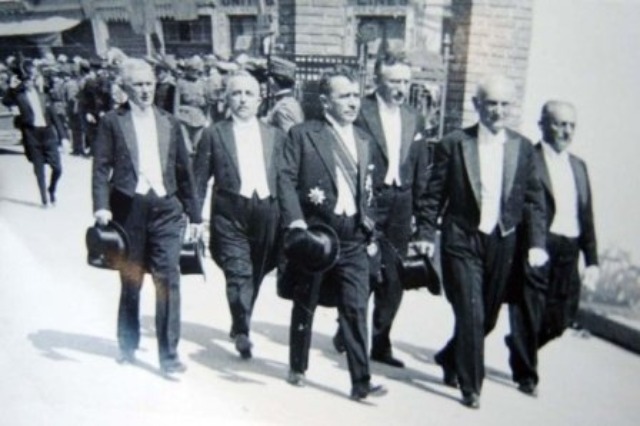
On October 21, 1935, a government led by Mehdi Frashëri was established. Frashëri’s appointment as Prime Minister of Albania by King Zog was well-received by the press of the time, as the new executive promised to fulfill a program of liberal reforms.
The Frashëri cabinet consisted of progressive figures with elite education from prestigious Western universities. In addition to his role as Prime Minister, Frashëri also served as Minister of Justice.
The cabinet included Fuat Asllani (Minister of Foreign Affairs), Et’hem Toto (Minister of Internal Affairs), Rrok Gera (Minister of Finance), Nush Bushati (Minister of Education), Ndoc Naraçi (Minister of Public Works), and Dhimitër Berati (Minister of National Economy). This political formation governed until November 7, 1936, and presented an ambitious program aimed at implementing various reforms in the economy, education, foreign policy, and a free press.
The program included 16 draft laws for the economic and financial modernization of the country. The reforms aimed to stabilize prices in the domestic market, combat speculation, and create an industrial capital in a liberal social and political climate. In terms of foreign policy, this government managed to frame Italo-Albanian relations, culminating in a cooperation agreement signed in Rome in March 1936 between Frashëri and Mussolini.
Power struggles led to the government’s overthrow by Parliament in the fall of 1936, marking a significant democratic precedent.
/a.c/
Të ngjashme
Latest News

Most read










 RTI