Not far from the beating heart of Tirana, Dajti Mountain rises like a silent sentinel, a sanctuary of wilderness where time slows and the echoes of history dance with the whispering pines. French writer Estelle Brana, in an article for EnVols, paints it as a gateway to Albania’s untamed soul—a place where adventure, serenity, and the past intertwine.
Dajti, a limestone colossus sculpted by millennia, stands 26 kilometers from the capital, its slopes unfolding in a symphony of greens and grays. This towering presence is more than just a mountain—it is a living canvas where earth and sky converge, offering a retreat for those who seek solace and discovery.
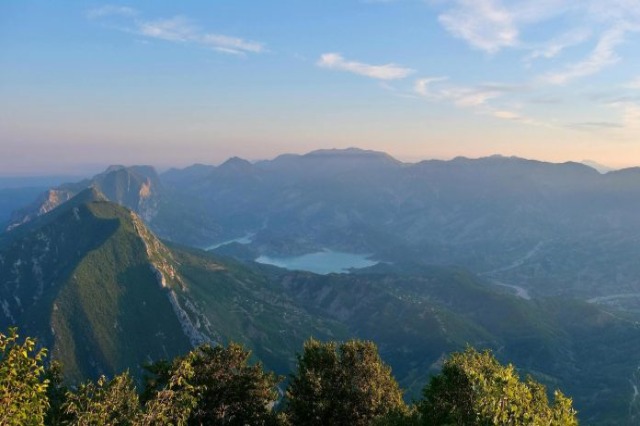
From its summit at 1,613 meters, Dajti grants visitors a spectacle of staggering beauty. Tirana sprawls below like a mosaic in motion, its streets weaving tales of old and new. Beyond, fields ripple like golden seas, while on a clear day, the Adriatic glimmers on the horizon—a silver thread binding mountain and ocean.
The Dajti Ekspres cable car glides above valleys and forests, a journey suspended in the air where silence is broken only by the hum of the wind. For those who crave the untrodden path, the peaks of Dajti and Tujan beckon, offering a wilder embrace of nature’s grandeur.
Dajti is not merely a mountain; it is a sanctuary, a refuge where life flourishes in secret. Since 1996, it has stood as a protected realm, sheltering over 1,000 plant species, some found nowhere else on Earth. Beech, oak, and black pine stand as silent witnesses to the passing centuries, their roots entwined with legends.
Beneath their shade, wild boars roam, foxes weave through the undergrowth, and in the quiet of dusk, a lone wolf may trace an ancient path. Above, golden eagles carve circles in the sky, their wings casting fleeting shadows over limestone cliffs that have stood for 65 million years.
Here, nature is not merely seen—it is felt. The wind carries forgotten stories, the trees murmur old secrets, and the land itself breathes.
Beyond the towering massif, the land unfolds in a patchwork of wonders. To the north, Brari Canyon stands defiant, its sheer walls a monument to time. An ancient Ottoman bridge lingers there, its stones worn smooth by the passage of centuries.
Not far away, Pellumbas Cave opens its limestone mouth to those who dare to enter—a sanctuary of shadows where early humans sought refuge over 10,000 years ago. Follow the winding trail to the Black Cave, where rock formations from the Jurassic era whisper tales of an Earth long before our own.
When summer paints the land in golden hues, the Erzen Canyon’s turquoise waters shimmer, inviting the brave to dive into their crystalline embrace. Deeper into the wild, Shengjergj Waterfall tumbles in a silver cascade, a hidden gem where time pauses in the hush of falling water.
These places remain untouched by the rush of modernity, where nature, still sovereign, weaves its own rhythms.
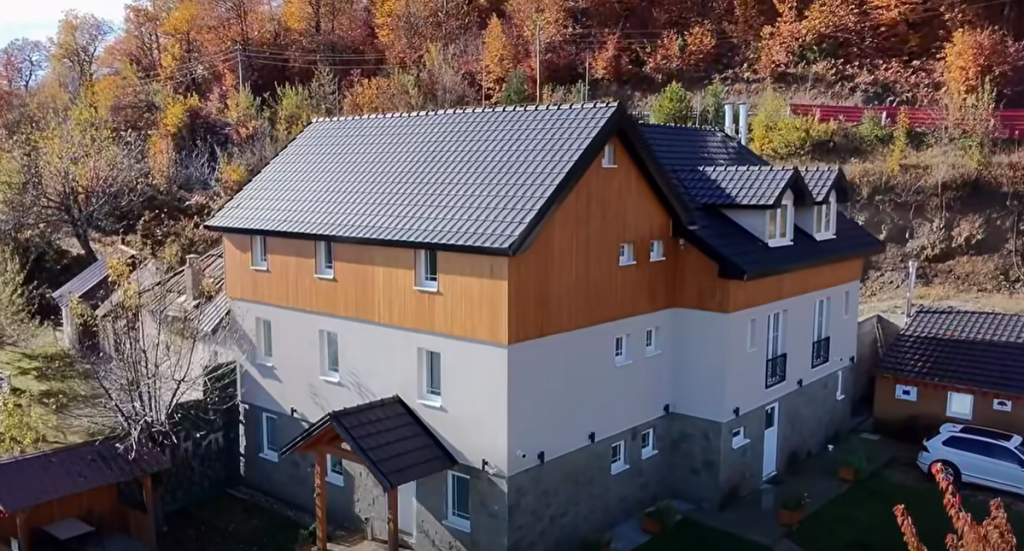
Dajti is not only a landscape to be admired—it is a land to be tasted. The mountain lodges, perched on the slopes like guardians of tradition, offer a feast for both the soul and the senses. At Ballkoni Dajtit, steaming plates of tavë kosi (baked lamb with yogurt), tangy pickles, and the honeyed sweetness of trileçe tell stories of a culinary heritage that has endured the ages.
On weekends, the mountain hums with life. Families and friends, drawn by the call of fresh air, gather for long picnics where laughter rises with the smoke of barbecue fires.
Further away, in villages untouched by the hurried pulse of the city, time lingers. Here, hospitality is sacred, and a stranger is never just a visitor but a friend in the making.
Dajti is a witness to history, its slopes bearing the imprints of those who came before. From the ruins of 6th-century BCE Illyrian settlements to the abandoned bunkers of Albania’s communist past, the mountain has stood through the shifting tides of time.
During the long years of dictatorship (1944–1991), its heights bristled with military watchtowers, now left to the elements—silent but not forgotten.
Centuries earlier, resistance fighters found sanctuary in these woods, defying Ottoman rule. Later, during World War II, the mountain harbored those who fought for freedom, their memory carved into the stones that still stand as quiet sentinels.
These weathered markers speak of an Albania that has withstood the ages—a land that has never bowed, only endured. Like Dajti itself, it remains unwavering, its spirit unbroken.
And so, the mountain stands, gazing down upon Tirana with an unblinking eye, keeping its secrets, telling its tales to the wind, and waiting—for those who will listen.
/a.c/

 English
 Français
 Deutsch
 Italiano
 Turkish
 Greek
 Serbian



























 RTI