
 English
 Français
  Deutsch
 Italiano
 Turkish
 Greek
Greek Serbian
Guri Madhi, acclaimed artist in the pantheon of Albanian painting




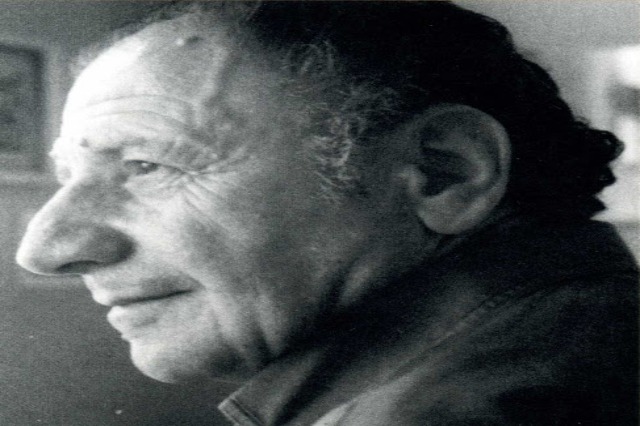
Albanian acclaimed painter Guri Madhi was a prolific artist who created over 400 works spanning approximately 30 years. He born on May 15, 1921, in Korça, and passed away in 1988 in Budapest.
After completing primary school, Guri Madhi attended an Italian high school in Korçë for two years, focusing on drawing. However, the closure of this school after the second year led him to interrupt his studies and begin working in the cinemas of his city. Following the end of the liberation war, in which he participated, he commenced his career as a painter at the House of Culture. Later, he worked as an assistant scenographer at the Korçë Theater, where renowned Albanian painter Vangjush Mio also served as a scenographer. During this period, many young artists pursued higher studies in the former Soviet Union, including Guri Madhi, who enrolled in the Institute of Painting, Sculpture, and Architecture “Ilia Efimovich Repin” in Leningrad (now St. Petersburg) in 1950. He completed his studies there in 1956 with excellent results, marking the initial phase of his career characterized by impressionistic tendencies.

His diploma thesis in 1956, “Bajram Curri in the cave of Dragobia,” depicted the National Hero, Bajram Curri, in the style typical of Russian impressionists. Upon returning to Albania, he began teaching at the Jordan Misja Art High School in Tirana.
Guri Madhi, like many other artists, faced hardships throughout his life, evident in his works that often expressed his desire to transcend boundaries. Some of his paintings from the 1960s, reflecting these tendencies, could not be exhibited but were preserved in his studio and inherited by family members, albeit with some losses. These works, coupled with his temperament, led to several challenges for the artist. Notably, the paintings of this period openly showcased surrealist influences, marking the artist’s second phase.

Contrary to the principles of socialist realism, he continued to paint, take risks, and persevere in his profession. From 1961 to 1971, he worked at the Artistic Enterprise of Tirana, only to return to the artistic community after a decade of effort. Despite the challenges he faced during this period, Guri Madhi continued to evolve as a painter, shifting towards impressionism and especially fauvism. This shift underscored his unwavering commitment to modern art despite the obstacles encountered along the way.
In 1974, Guri Madhi experienced a period of introspection, leading to the development of his own artistic style. He gravitated towards expressionist and abstract paintings during this time. In 1987, after persistent efforts, he successfully launched an exhibition, a process marked by numerous selection phases that demanded constant adjustments from the painter. Despite the challenges, the exhibition attracted a broad audience and achieved its intended impact, signaling a significant moment for Albanian art.
His repertoire encompasses paintings with historical themes, depicting revered figures like Skanderbeg, Albanian fighters, and pivotal moments from the liberation war. Additionally, he explored lyrical themes, portraying women, girls, and emotive compositions. These works stand as testament to his remarkable talent and artistic versatility.

Despite facing public indifference, criticism, or exclusion from exhibitions, with some pieces relegated to government offices, Guri Madhi’s creations reveal his exceptional talent and unwavering dedication. In his later years, he increasingly departed from conventional norms, embracing a more fluid artistic expression.
Guri Madhi’s life was marked by turbulence, characterized by hardships and challenges to his creative freedom. Yet, his allure endures today, his art undeniably valuable, modern, and infused with elements of Fauvism, expressionism, and symbolism. Through his work, he captured significant moments in Albanian history, reflecting an artist deeply engaged with his nation’s narrative.
In recognition of his contributions to the figurative arts, Guri Madhi was bestowed with the “Naim Frashëri” Order – first class by the President of Albania in 1972. The Art Gallery in Korçë now proudly bears his name, a tribute to its native son. Similarly, streets in Tirana and Korça honor his legacy. Furthermore, Guri Madhi’s work has earned its place in esteemed world encyclopedias, solidifying his status as a globally recognized artist.


/k.s/
Të ngjashme
Latest News

Most read








 RTI
RTI