
 English
 Français
  Deutsch
 Italiano
 Turkish
 Greek
Greek Serbian
Hafiz Ali Korça, the patriot and translator of oriental masterpieces, commemorated




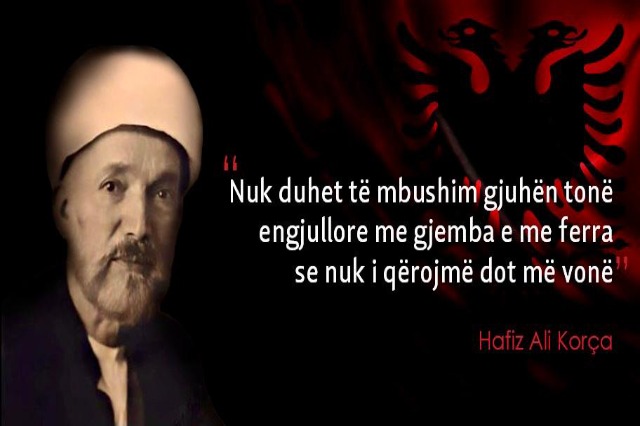
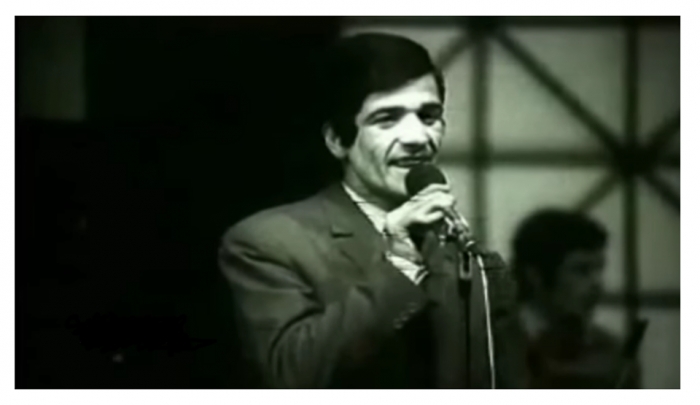
The National Museum of Espionage “House with Leaves” commemorated today the translator, writer, senior cleric, Hafiz Ali Korça (April 5, 1873 – December 31, 1957).
Hafiz Ali Korça was born in Korçë into a family of Muslim scholars. He completed his primary education in his hometown. He then continued his studies in theology in Istanbul. He quickly became involved in the national movement in defense of the Albanian language and in support of the Latin alphabet. He made notable contributions to the Congress of Dibra and the Congress of Elbasan in 1909. With the arrival of Prince Wied in Albania, he was appointed as a senior advisor for education. Later, he served as director of education in Durrës, Elbasan, Mat, and Pogradec. He was also one of the founders of the Tirana Madrasa. Hafiz Ali Korça was one of the first to denounce communist ideology through his pamphlet: “Bolshevism or the Destruction of Humanity” in 1925. Known for his anti-communist beliefs, Hafiz Ali Korça was arrested as a reactionary and a member of the “National Front” in 1945. He was imprisoned and later interned in Kavaja, where he passed away on December 31, 1957.
As a proficient in oriental languages, Hafiz Ali Korça translated Saadi’s “Gulistan and Bustan” and Omar Khayyam’s “Rubaiyat.” He also wrote works on religious, linguistic, and political themes such as: “Mevludi,” “303 Sayings of Imam Ali,” “The Holy History and Four Caliphs,” “Grammar, Albanian-Arabic Syntax,” “The Seven Dreams of Albania,” “Interpretation of the Quran,” “Bolshevism or the Destruction of Humanity,” etc.
In honor of his work, he was decorated by the President of the Republic with the Order”Honor of the Nation” in 2017.
/k.s/
Të ngjashme
Latest News
Most read






 RTI
RTI