
 English
 Français
 Deutsch
 Italiano
 Turkish
 Greek
 Serbian
“Il Quotidiano d’Italia”: Albania is a country in development




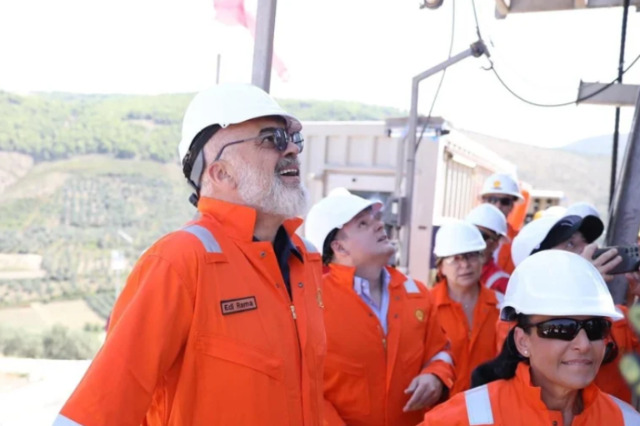
According to ‘Il Quotidiano d’Italia,’ Albania is a developing country working towards integration into the European Union and the enhancement of its economic and social conditions.
In this article, we will explore the main challenges and opportunities that the Balkan country must confront to achieve its goals.
Integration Process to the European Union
The process of Albania’s integration into the European Union began in 1992 when it signed a cooperation agreement with the European Community.
In 2006, Albania took a significant step forward by signing a Stabilization Association Agreement (SAA) with the EU. This agreement paved the way for gradual trade liberalization and increased political, economic, and judicial cooperation.
In 2009, Albania formally submitted its application for EU membership, a move that received a positive response from the European Commission in 2010.
In 2014, Albania was granted the status of a candidate country for the EU, and in 2020, it received approval to commence membership negotiations.
To advance further in the integration process, Albania must meet the ‘Copenhagen criteria.’ These criteria pertain to the stability of democratic institutions, respect for human and minority rights, the presence of a functional market economy, and the capacity to adopt the ‘acquis communautaire,’ which encompasses the set of EU rules and policies.
Opportunities and Challenges in the Albanian Economy
The Albanian economy relies primarily on agriculture, contributing 20% to the GDP and employing more than 35% of the workforce.
In recent years, the agricultural sector has seen growth, attributed to crop diversification, rising exports to European markets, and increased rural tourism. Despite these positive developments, the sector faces significant challenges, including land fragmentation, unclear ownership titles for approximately half of agricultural land, inadequate infrastructure investment, and a lack of technological innovation.
Another significant source of income for the Albanian economy is the remittances from Albanian migrants abroad, accounting for approximately 10% of the GDP.
The services sector, notably tourism, has thrived due to the country’s natural and cultural attractions. Additionally, the industrial sector, encompassing activities such as mining, energy, textiles, wood, cement, and tobacco, plays a vital role in the economy’s diversification.
Among the primary challenges facing the Albanian economy are product diversification and competitiveness, reducing reliance on imports, generating employment opportunities for youth, combating fiscal evasion and informal labor, enhancing the quality and efficiency of public services, and addressing environmental conservation and natural resource management.
Conclusion
Albania has made noteworthy progress in its transition to a market economy and its journey toward European Union integration. Despite these achievements, substantial challenges remain on the path to consolidating political, social, and economic stability, as well as unlocking its full development potential.
Italy, serving as Albania’s primary trading partner and the largest foreign investor, plays a pivotal role in supporting the Balkan nation as it continues its development journey and approaches closer to the EU.
/m.ll/
Të ngjashme

Latest News
Most read










 RTI