
 English
 Français
 Deutsch
 Italiano
 Turkish
 Greek
 Serbian
Interior Minister Hoxha: Russian Disinformation Infrastructure in the Region Expands to Albanian-Language Portals




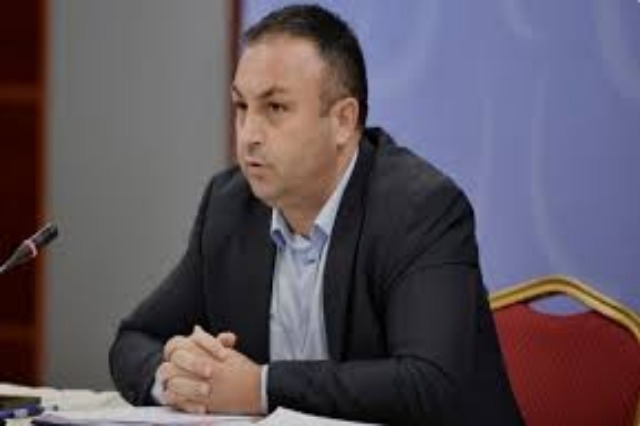
Interior Minister Ervin Hoxha emphasized today that Albania prioritizes its ability to respond to hybrid attacks as a key measure for maintaining national security and order.
Speaking at the Special Commission for Coordinating and Supervising Actions Against Disinformation and Foreign Interference in the Country’s Democratic Processes, Hoxha highlighted the Ministry of the Interior’s efforts to implement sustainable measures to protect against and effectively address these threats.
“The intensification and rapid spread of public threats pose a serious and complex challenge to the stability of democratic countries. As a globally interdependent nation, NATO member, and EU candidate, Albania considers its capacity to respond to hybrid attacks a top priority to maintain national order, security, and social cohesion,” he stated.
Hoxha noted that institutions have now agreed on a coordinated response to hybrid attacks, which requires collaboration across state structures and agencies responsible for ensuring both national and international security.
According to evaluations by various European and American institutions, Hoxha said, “intelligence sources from partner countries conclude that the main actors behind hybrid campaigns and major cyber-attacks are state actors and organizations they sponsor, with fewer non-governmental business organizations involved.”
Globally, Hoxha pointed out that it is widely recognized that the so-called “Big Four” countries Russia, China, Iran, and North Korea, are behind most cyber-attacks.
Turning to the Western Balkans, Hoxha noted that “Russia is one of the most active players in hybrid warfare in the region.”
“The Western Balkans is divided, with competing political forces at work. It is assessed that Russia has increased its presence and influence in the region, delaying and opposing these countries’ European integration through political and economic means,” Hoxha explained.
The minister further stressed that “Moscow’s political propaganda doesn’t come directly from Russia but is repackaged and disseminated by its regional satellites. 90% of Russian propaganda is spread in the Serbian language”.
Regarding Albania, Hoxha said that it has been less impacted by Russia’s hybrid campaigns and regional satellites.
“Recently, it has been assessed that the Russian disinformation infrastructure in the region has expanded to include Albanian-language portals. However, these still have limited reach, with a small number of clicks and viewers,” he said.
Hoxha also outlined the main forms of disinformation, which include cyber-attacks targeting government databases, manipulation of social media to influence public opinion and polarize views—often through AI-generated news—and the use of cultural narratives to exploit religious and ethnic tensions for destabilizing purposes. Traditional audiovisual media are also used to spread manipulated information.
“As we are aware, in July 2022, Albania was targeted by cyber-attacks organized by a hacker group from Iran. Thanks to international cooperation, the damages caused by this attack were minimized,” Hoxha said.
The minister concluded by noting that Albania has placed a strong emphasis on strengthening its legal and strategic framework.
“Our country has a comprehensive legal and strategic framework for national security, designed to protect against hybrid attacks and activities often referred to as ‘gray zone’ actions,” Hoxha concluded.
/a.p./
Të ngjashme
Latest News
Most read










 RTI