
 English
 Français
 Deutsch
 Italiano
 Turkish
 Greek
 Serbian
IRI Poll: SPAK Is Albania’s Most Trusted Institution




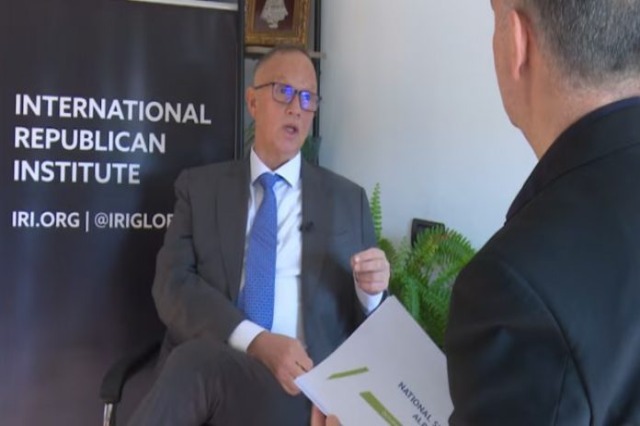
The International Republican Institute (IRI) has published its latest National Poll on Albania, highlighting strong public support for the Special Anti-Corruption Structure (SPAK). The survey reveals that SPAK remains the most trusted institution in the country. Most respondents expressed a desire for increased investigations and convictions of corrupt politicians, as corruption remains one of their primary concerns.
Respondents also indicated that they would not vote for political parties supporting laws that restrict SPAK’s work. IRI’s Albania Director, John Fluharty, told Voice of America that citizens back anti-corruption efforts as a means to improve their quality of life. He emphasized that fighting corruption helps restore public trust in democracy.
SPAK and Public Trust
IRI’s National Poll found that 76% of respondents consider SPAK the most trusted institution in Albania. Following SPAK, the police, the military, and religious institutions ranked as the next most trusted. Conversely, the parliament and political parties are seen as the least trustworthy.
The study, which surveyed 1,200 citizens aged 18 and older, also revealed that 59% of respondents believe the justice reform has been effective, and 70% credit the vetting of judges and the establishment of SPAK with improving the justice system’s performance.
Nearly half of respondents (47%) view SPAK’s creation as the most significant achievement of the justice reform, followed by judicial vetting (27%) and the reduction of political influence on courts (13%).
In the wake of the justice reform, citizens see combating corruption, investigating and punishing politicians, and maintaining institutional independence as the country’s top priorities.
The United States (46%) and the European Union (37%) are the most trusted entities for monitoring Albania’s new justice institutions, including SPAK and the courts. In contrast, only 7% trust the Prime Minister, and just 1% trust the parliament.
Over half of respondents (51%) stated they would not support any political party that advocates for laws limiting SPAK’s authority. Additionally, nearly 40% said their trust in SPAK would increase if the institution investigated politicians they had previously supported.
“For the third time in our polls, SPAK is Albania’s most trusted institution,” said John Fluharty. “A significant number of citizens indicated that if SPAK were to investigate a candidate or party they had supported before, it would enhance their trust in the institution. More importantly, citizens are less likely to back parties or candidates seeking to limit SPAK’s authority. This demonstrates hope—hope in SPAK’s work and in the fight against corruption, which previously did not exist. It’s truly significant,” he added.
Corruption Concerns
Corruption remains a pressing issue in Albania, with 71% of respondents identifying it as a serious problem.
Most respondents believe corruption is most prevalent among public service providers such as doctors, teachers, and police officers. Following these groups, they listed the Prime Minister and the Cabinet, the judiciary, political leaders, business executives, and local officials.
When asked about the country’s main challenges, respondents cited the economy (high prices and living costs), unemployment, and corruption as top concerns, followed by healthcare, crime, and migration.
Compared to last year, concern about the economy has decreased by 11 points, while concern about corruption has risen by 2 points.
A vast majority said issues like pensions, the economy, and anti-corruption efforts would determine their vote if elections were held today.
Respondents recognized infrastructure, European integration, and justice reform as the government’s most notable achievements, while pensions, the economy, migration, and corruption were ranked as its biggest failures.
According to Fluharty, “Corruption is not just a legal issue; it’s an economic one. It affects people’s ability to find jobs, increases living costs, and undermines meritocracy. Citizens see corruption as a root cause of their struggles, including rising food prices and living expenses. They believe tackling corruption will lead to improvements. Fighting corruption is like hitting a reset button for the country, a chance to set Albania on a new path toward EU membership.”
Democratic Challenges
The poll also revealed mixed feelings about democracy in Albania. Less than half of respondents (49%) are satisfied with how democracy is functioning, while the other half expressed dissatisfaction.
Despite this, an overwhelming majority still view democracy as the best form of governance. However, only one-third believe the country is governed in the interest of the majority, while nearly two-thirds (62%) think it serves the interests of specific groups.
This perception is especially prevalent among younger respondents aged 18–35 (72%), though it is consistent across other age groups, including those over 56 years old (59%).
Asked about the future of young people in Albania, 57% of respondents expressed pessimism, while only 40% were optimistic. Compared to last year, the percentage of those who believe the youth lack a promising future has worsened by 3 points.
“Key findings show that Albanians continue to have concerns about the state of democracy but remain committed to its principles. They view SPAK as a critical force for change, helping to address these concerns. Citizens support anti-corruption efforts because they understand these efforts are tied to improving their quality of life. Fighting corruption is essential to restoring trust in democracy, as the rule of law is the foundation of democratic governance,” said Fluharty.
Electoral Outlook
Ahead of the next elections, citizens expressed strong willingness to vote, although they remain divided on whether ordinary people can influence decision-making.
With elections on the horizon, IRI’s findings underline the public’s demand for justice, anti-corruption, and economic improvements as decisive issues shaping Albania’s future.
/VOA/
Të ngjashme
Latest News

Most read










 RTI