
 English
 Français
 Deutsch
 Italiano
 Turkish
 Greek
 Serbian
Isolation Tower, one of the rare monuments of Northern architecture history




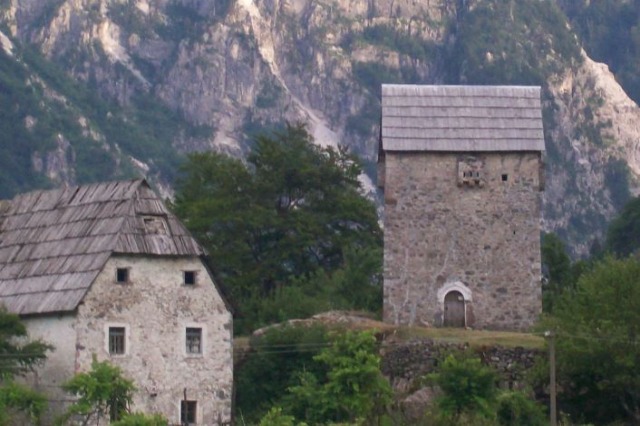
The Tower of Isolation stands as a rare testament to architectural history in the Highlands. This unique structure, steeped in centuries-old tradition, holds significance in Dukagjin as a site where individuals who transgressed customary laws would reside until reconciliation was achieved.
Situated south of Theth village and near the Shala river, the Tower of Isolation stands as one of Thethi’s prominent tourist attractions. Its four-sided structure, crowned with a typical alpine roof, has captured the fascination of visitors for generations. Notably, its mention by Franz Nopcsa a distinguished Hungarian scholar who extensively documented Balkan customs, underscores its cultural and historical importance.
The tower’s construction, reflects the architectural style prevalent in northern regions, emphasizing self-defense. Narrow windows resembling arrow slits were strategically designed to afford residents safety from external threats while maintaining a sense of security within the fortress.
Contrary to misconceptions, the Tower of Isolation served a multifaceted role beyond mere confinement. In instances of blood feuds among highlanders, it functioned as a site for inquiry and reconciliation. Perpetrators of serious offenses, escorted by guards, faced interrogation by village elders within the tower’s confines. Here, discussions among affected families aimed to achieve resolution and restore harmony within the community.
The tower’s significance extended beyond its physical structure; it symbolized the application of justice and conflict resolution in the absence of state intervention. The Kanun of Lek Dukagjini, serving as a regulatory framework akin to a penal code, upheld principles of justice and deterrence against blood feuds.
Guarded by selected youths renowned for their bravery, the Tower of Isolation represented a form of early incarceration, with elders assuming judicial roles and guards maintaining order. Amidst modest amenities within the tower, such as wooden beds and basic utensils, its stark setting underscored the gravity of the situations it addressed.
Despite a period of disuse during the dictatorship era, these towers endure as tangible relics of the past, gaining newfound significance through tourism. The evocative tales of those associated with the tower have inspired literary works such as Ismail Kadare’s “Broken April,” serving as a testament of art that narrates the power of life among the mountains.
/k.s/
Të ngjashme

Latest News










Most read










 RTI