
 English
 Français
  Deutsch
 Italiano
 Turkish
 Greek
Greek Serbian
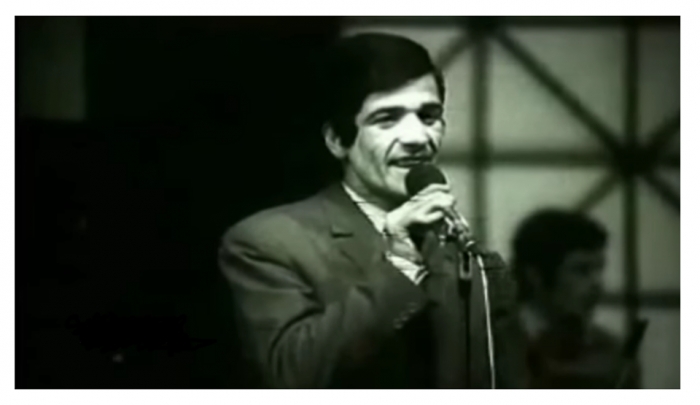
Jusuf Vrioni, the polyhedral intellectual, representative of the Albanian nobility, commemorated today




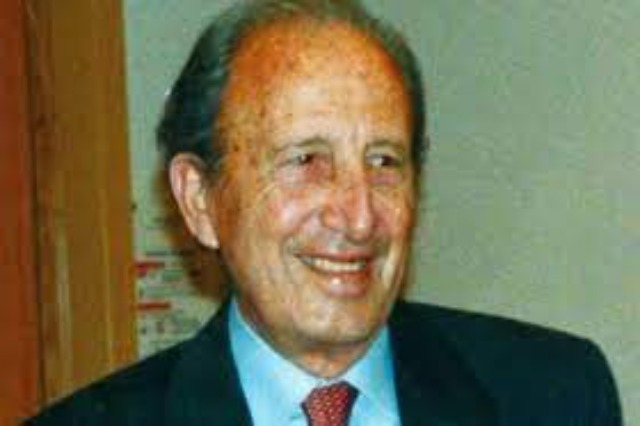
The “House of Leaves” National Museum today commemorates a prominent figure of Albanian culture, Jusuf Vrioni, jurist, political scientist, writer and brilliant translator trained in the most prestigious French schools, known as the “translator of Kadare”, the heir of the Albanian nobility and the patriot, who survived the prison and cruel torture of the totalitarian regime.
Jusuf Vrioni was born in Corfu. He spent his first years in Corfu and then in Berat. After the appointment of his father, Ilias Bey Vrioni, as Foreign Minister and Minister Plenipotentiary in Paris, his family moved to Paris in 1925. Jusuf Vrioni completed his primary and secondary education at the Lycée Janson de Sailly, Paris and higher at the Grande École des Hautes Études Commerciales and at the Institut d’Études Politiques in Paris.
In 1939, he returned to Albania, but the outbreak of the Second World War forced him to move to Rome that same year, near his brother. He returned to Tirana in 1943. On September 13, 1947, he was arrested by the dictatorial regime and accused of espionage and agitation and propaganda. From February 1949 to April 1950, he was imprisoned in one of the infamous seventeen cells of Koçi Xoxe. In July 1950, he was sentenced to fifteen years of imprisonment and forced labor, part of which he spent in Burrel prison. He was released at the end of 1958 and was exiled in Fier for a period of several months. In 1960, for the international propaganda needs of the dictatorial regime, he was appointed in Tirana as a translator.
In the early 60s, Vrioni met and befriended the writer Ismail Kadare. Appreciating the linguistic richness and value of Kadare’s works, Vrioni put his talent as a translator at the service of this writer. During his free hours, Kesodore translated his works simply for pleasure. Among his first translations is Ismail Kadare’s General of the Dead Army, which was later published in Paris. Meanwhile, his name as a translator would begin to appear in publications in France only in the 1980s.
In the first years of post-dictatorship Albania, Jusuf Vrioni, thanks to his multidimensional position as an intellectual, engaged in civil society circles and for a while served as the Chairman of the Helsinki Committee for Human Rights. The infamous crisis of 1997 forced him to leave his homeland again and return to Paris. In 1998, he was appointed Ambassador of the Republic of Albania to UNESCO and on May 22 of this year, for his rich contribution to the French language, he was awarded by the French Republic the order of “Chevalier de la Légion d’Honneur”, just like his father, Ilias Bej. Vrioni, was also awarded in the late 1920s the “Grand Officier de la Légion d’Honneur” order by the French Republic.
He passed away in Paris in May 2001 while serving as Ambassador of the Republic of Albania to UNESCO.
/k.s/
Të ngjashme
Latest News
Most read








 RTI
RTI