
 English
 Français
  Deutsch
 Italiano
 Turkish
 Greek
Greek Serbian
Kolë Idromeno: Cornerstone of Albanian Art and a Synthesis of Adriatic–Ionian Cultural Worlds




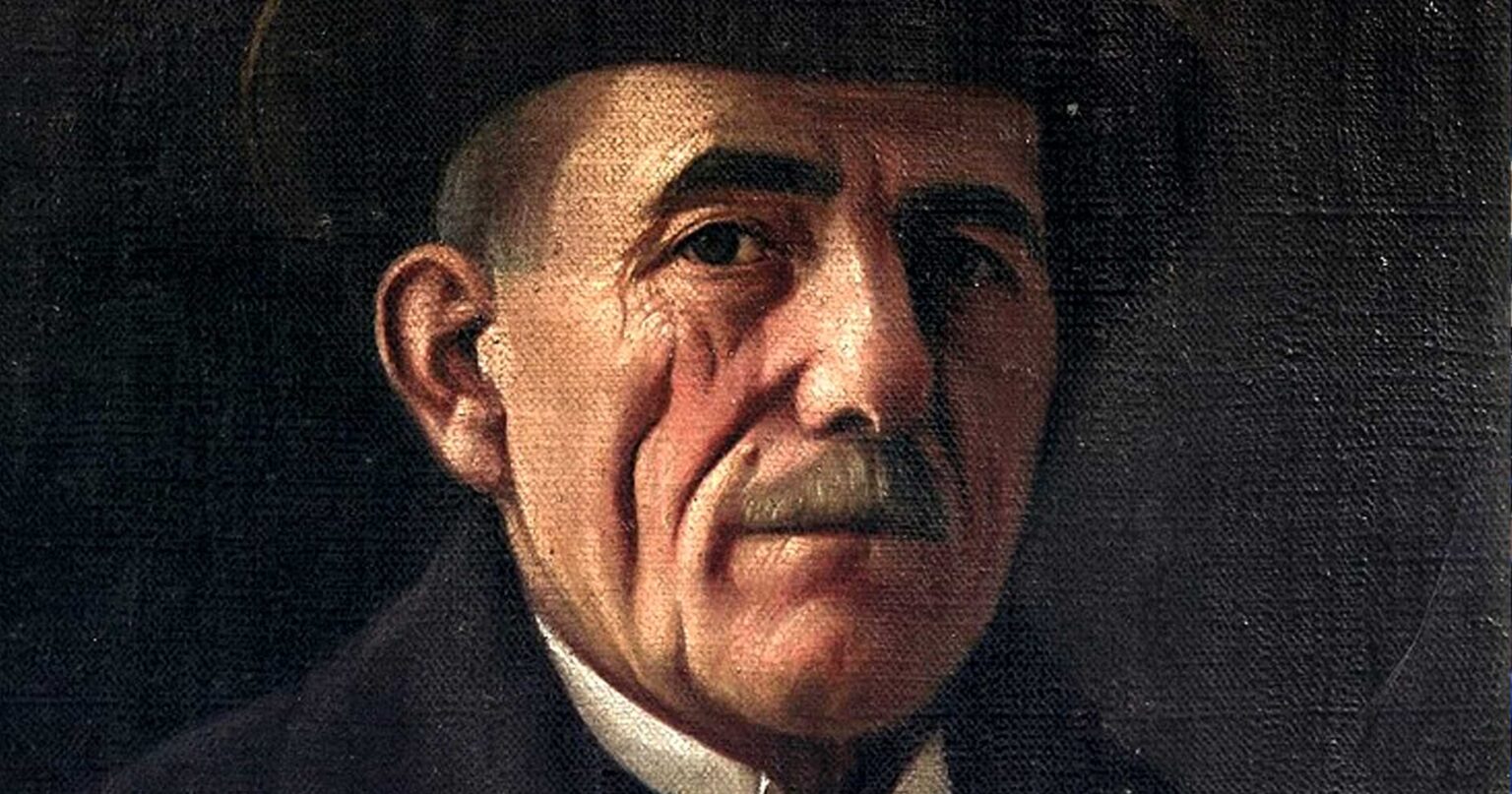
Kolë Idromeno, born in Shkodër on August 15, 1860, was more than an extraordinary painter. In addition, he excelled as a photographer, scenographer, sculptor, architect, and connoisseur of epistolary and musical arts. Consequently, his work bridges tradition and modernity. It also links local reality with European influences. Thus, he became a pivotal figure in Albanian culture.
His family came from Parga, then part of the Janina Vilayet, during the Ottoman conquest. Later, they moved to Corfu. His father, Andrea Idromeno, was a teacher. Moreover, Andrea collaborated on translating the Gospel of Matthew and the New Testament into Albanian using the Greek alphabet. He also published the history of Parga and Souli. Therefore, his work exemplified dedication to knowledge and culture. Kolë inherited both intellectual depth and practical skills. Later, he applied them in carpentry, design, and architecture in Shkodër.
He began primary school in 1867. Poet Filip Shiroka studied alongside him. Consequently, they formed a lifelong friendship. Pietro Marubbi influenced his early artistic development. Idromeno’s first drawings included “Krye fëmije” [Head of a Child], “Malësorja” [The Highland Woman], and “Gomari n’udhë” [Donkey on the Road]. Between 1871 and 1875, he created early watercolors such as “E vorfna” [The Poor Girl], “Baresha” [The Shepherdess], and “Fshatarja” [The Peasant Woman]. He also produced compositions like “Pusija” [The Ambush], “Netë kazanash” [Evenings by the Cauldrons], and “Dymdhetë luftarë të Pargës në lundër” [Twenty Fighters from Parga on a Raft].
In 1875, he attended the Venice Academy of Arts. However, he left after six months. He preferred practical work in a Venetian studio. He returned to Shkodër in 1878. Afterwards, he joined Palok Kurti’s orchestra as a trombonist. At the same time, he worked as an apprentice at Marubi’s photography studio. In 1883, he opened his own studio, “Dritëshkronja Idromeno”. Therefore, the studio introduced new energy into Albanian photography.
In 1884, he married Gjyzepina Gaspër Muzhani, known as Cina. They had a son, Zef, in 1886. Unfortunately, Zef died two years later. In addition, Idromeno cared for his young daughter, Orsolina. These personal tragedies strengthened his humanism. They also reinforced his dedication to art.
He became one of the most important Albanian realist painters. His masterpieces include “Motra Tone” [Our Sister], considered a cornerstone of Albanian figurative art. He also painted “Dasma Shkodrane” [Shkodër Wedding]. Furthermore, he captured courtyards and landscapes of Shkodër. Idromeno had an exceptional sense of light and composition. Therefore, this skill distinguished him from European contemporaries. In photography, he pioneered capturing life and portraits with unique sensitivity. Consequently, he left an important visual legacy.
As a scenographer, he designed decorations for amateur theatre and public performances. He also integrated sculpture and mixed media. In 1912, he introduced cinema to Albania. Specifically, he imported equipment from Austro-Hungarian company Joseph Stauber. He converted a hall under his home in the Gjuhadol neighborhood into the “electric theatre”.
Idromeno inherited architectural and engineering knowledge from his father and Marubi. Thus, he designed significant buildings in Shkodër. He built private homes for the Lukaj, Rokacolli, and Mazi families. Additionally, he constructed public buildings, including the Red Cross and Illyricum High School. Moreover, he built industrial facilities such as a leather factory and a power plant with SESA. He also designed Rozafa Cinema and cafés Adriatik and Park.
From 1902 to 1906, he taught at the Italian School of Craftsmanship. He mentored young painters, including Simon Rrota. Therefore, he promoted figurative art and urban culture. He organized carnival programs and festive decorations. As a result, he preserved Albanian cultural identity and traditions.
Kolë Idromeno passed away on December 12, 1939. He left a vast body of work. In addition, he created a rich legacy in Albanian art. Today, the Idromeno Museum in Shkodër preserves and exhibits his creations. It provides the city with a cultural, academic, and tourist landmark.
/a.p./
Të ngjashme
Latest News




Most read








 RTI
RTI