
 English
 Français
 Deutsch
 Italiano
 Turkish
 Greek
 Serbian
Kosovo Awaits SEPA Membership to Save Millions in Banking Fees




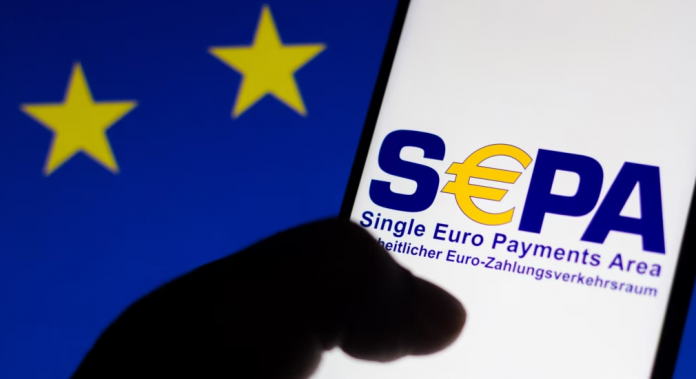
Kosovo still faces high costs for international money transfers because it remains outside the Single Euro Payments Area (SEPA). However, authorities are determined to change that.
The Central Bank of Kosovo (CBK) has already completed the pre-application phase for SEPA membership. Yet, the final step is delayed while the Constitutional Court reviews three key financial laws.
Experts emphasize that joining SEPA would drastically cut transfer fees and shorten processing times.
Currently, businesses pay heavily. For example, the beverage company “Frutex” spends at least 100 euros for each transfer up to 10,000 euros. “We split the fee—50 euros from us and 50 from the sender,” explained owner Shaqir Palushi.
Moreover, he noted that delays remain a serious challenge. “Transfers can take up to five working days. That slows trade and affects liquidity,” Palushi added.
Because Kosovo is not yet in SEPA, banks charge much higher commissions than those in neighboring countries.
Meanwhile, citizens working abroad face similar problems. Blerim Ramadani, who lives in Germany, said he now avoids bank transfers. “I once sent 7,000 euros, and my father received 60 euros less. Since then, I only use transfer companies—they’re faster and cheaper,” he explained.
According to data from ten commercial banks operating in Kosovo, international transfer fees range from 15 to over 500 euros, depending on the amount, currency, and client type. In contrast, money transfer companies offer lower fees and better exchange rates.
CBK Moves Toward Integration
To reduce banking costs, the CBK submitted its SEPA pre-application in late 2024 to the European Commission. The institution now awaits legal clearance to move forward.
The CBK estimates that SEPA membership could save citizens and businesses around 55 million euros annually. Furthermore, it would bring Kosovo’s payment system in line with European Union standards.
“The European Commission has received our documentation,” said the CBK. “We are ready to file the final application as soon as the new laws come into force.”
However, the Constitutional Court is still examining the Banking Law, the Payments Law, and the Anti-Money Laundering Law after a complaint from the Democratic Party of Kosovo.
Despite the delay, the CBK insists it is technically ready. “Our banking system already meets SEPA standards,” the institution confirmed.
Experts Expect Broad Benefits
Financial expert Nexhat Miftari agrees that SEPA membership will benefit both individuals and businesses. “Transfers will be faster, safer, and much cheaper,” he said. He also noted that most commercial banks in Kosovo already operate under EU banking systems.
According to him, the move would also strengthen investor confidence, although political and economic stability remain essential for attracting new foreign investment.
Regional Progress Highlights Kosovo’s Urgency
Elsewhere in the Balkans, countries are moving ahead quickly. Albania and Montenegro joined SEPA on October 7, 2025, while Serbia and North Macedonia entered earlier this year.
In Albania, Prime Minister Edi Rama confirmed that bank transfer fees have dropped sharply—now just 1 to 3 euros for small transactions.
Consequently, Kosovo is the only country in the region still waiting. Yet, once approved, membership in SEPA will not only save millions but also enhance Kosovo’s economic integration with Europe.
It will mark another step toward the country’s broader European path.
/a.c/
Të ngjashme

Latest News

Most read










 RTI