
 English
 Français
  Deutsch
 Italiano
 Turkish
 Greek
Greek Serbian
Kosovo’s second-oldest museum still lacks a permanent home




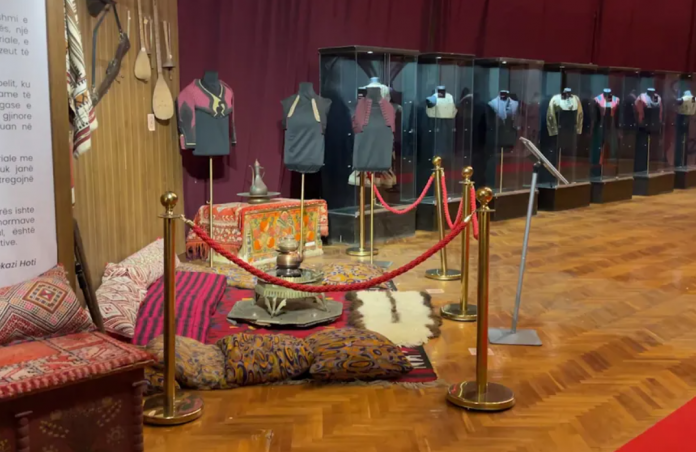
Surrounded by million-year-old fossils, traditional costumes, and Trepça’s underground history, the Mitrovica Museum continues to tell the city’s story.
Founded in 1952, it ranks as Kosovo’s second-oldest museum, after the National Museum. However, it still operates without a permanent headquarters. Despite this, the institution remains culturally active and engaged with the community.
Museum Director Nora Prekazi-Hoti told KosovaPress that the museum’s creation was essential. She cited Mitrovica’s geographic and political role, as well as the presence of the Trepça industrial complex.
First, the museum operated in the former municipal building. Later, it moved to the city’s hammam, where it functioned from the 1960s until 2009. Even today, it lacks a permanent seat.
Meanwhile, the past year proved one of the most dynamic. The museum organized six exhibitions. The program began on May 18, International Museum Day, with an exhibition on Trepça’s architectural heritage. Then, with “A Life in Gajtan,” the museum presented traditional clothing and craftsmanship to the Japanese public, representing Kosovo abroad.
In addition, the museum runs monthly educational programs. These activities support both permanent exhibitions and the institution’s broader mission.
Prekazi-Hoti described the museum as a living treasure. Fossils, archaeological artifacts, and traditional dress narrate the city’s journey through centuries. Each collection, from the Neolithic period to traditional life, creates a direct link to the past.
Since 2018, the museum has focused on inclusion. It joined the Balkan Museum Network and brought exhibitions to vulnerable communities.
Finally, the director stressed continuity. The museum encourages repeat visits through year-round activities, changing exhibitions, and media coverage. As a result, the Mitrovica Museum stands as a bridge between eras—where history, culture, creativity, and new generations meet.
/a.c/
Të ngjashme
Latest News


Most read








 RTI
RTI