
 English
 Français
  Deutsch
 Italiano
 Turkish
 Greek
Greek Serbian
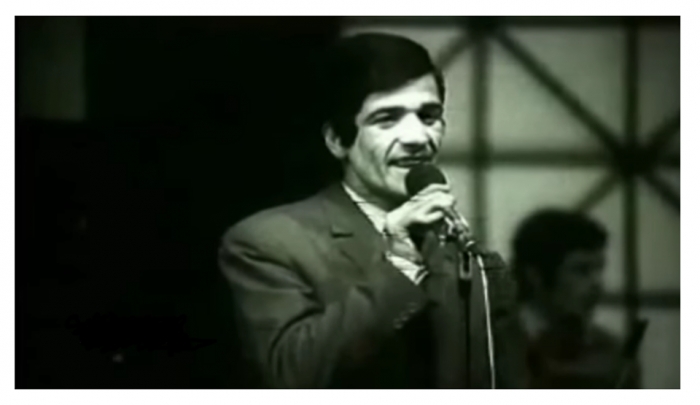
Migjeni, the Illuminist Poet




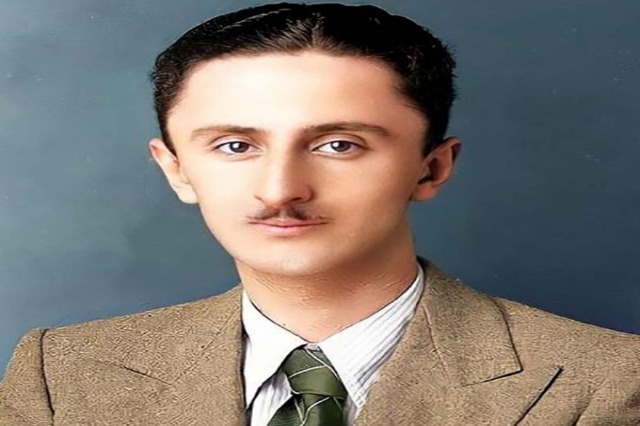
Milosh Gjergj Nikolla, also known as MIGJENI, was born on October 13, 1911 in Shkodër, and passed away on August 26, 1938 in Torre Pelice, Italy.
Regarded at large as the most the most illuminist thinker in Albanian poetry, Migjeni, poet and prose writer, was the most prominent representative of democratic literature between the two world wars. He was born on October 13, 1911 in Shkodër. After completing primary school in his hometown, in 1928-1932 he attended secondary theological studies in Manastir. In the years 1933-1937, he worked as a primary school teacher in Vraka, Shkodër and Pukë. This is also the time when he developed his literary activity. He published his first writings in 1934; collaborated in the magazines “Illyria”, “New World” etc. In 1936, he summarized his poetic creations in the book “Vargjet e Lira” /The Free Verses/, which the censorship did not allow to circulate, at first. At the end of 1937, he went to Italy to recover from lung disease. He passed away on 26.8.1938, at the age of 27, in a sanatorium near Turin in Torre Pelice. He left an important part of his prose in manuscript.
Migjeni had democratic, revolving convictions, with which he began to knead from the school benches under the influence of the works of progressive authors. He started his work as a writer when the democratic current was strengthening in Albanian literature; with his realistic writings, profoundly innovative in content and form, provided great help in its further development.
Though he could not, or better say did not had much time to write, belonging to the so-called ’27 Club’, at the root of Migjeni’s creativity lies the aspiration for a new world, where ordinary people live free and happy with human dignity and without fear for tomorrow. This active humanity permeates his work. In the first poems, such as “Awakening”, “Sons of the new century”, “Skëndija” /The spark/, “Wandering souls”, etc. the deep dissatisfaction with the feudal-bourgeois reality and the author’s dream of a beautiful future were expressed with vivid romantic figures. The poet rose up against the social stagnation and the forces that kept the country in darkness. The harsh criticism of the dire state of the country was interwoven in these creations with the burning desire for “a good and just national dawn”, with the desire to fight for better days. Migjeni’s development as a writer is characterized by his rapid transition from revolutionary romanticism to critical realism.
Many critics portray him as the poet of misery, though it was the Albanian life immediately after Independence attained from centuries of backwardness of the Ottoman Empire, it was the reality he was describing, rather than him.
The reflection of the deep poverty of the masses occupies a central place in Migjeni’s creativity. For the writer, it was of great social importance. The heroes of his best works (“Our daily bread give us today”, “The beauty that kills”, “The forbidden apple”, “The legend of the corn”, or “Do you want coal sir?”, were unemployed because they toiled all day long to get a bite out of their mouths, mountaineers who were in the grip of life, wretched who had not progressed in life and were thrown out of society. That was simply the fuel, which drove his poetic engine, a Nietzsche philosophy, looking for the hero. A feature which is especially noticed in the poem “The mountaineers recital” and especially in the “The sons of the New Century”.
With the denial of feudal-bourgeois society and the strong aspiration for a better future for the masses, after the WWII, the literary legacy of Migjeni became fully known. His remains were brought to rest in Homeland in 1856.
From Migjeni’s “The sons of the New Century”
We the sons of the new century;
That the old man, we left in his ‘holiness’;
We raised our fist to fight;
In new fights, and to win.
………………………………………………
No, no, no more perpetual losses;
We want victory;
Victory of free thinking and consciousness.
/a.p./
Të ngjashme
Latest News
Most read







 RTI
RTI