
 English
 Français
 Deutsch
 Italiano
 Turkish
 Greek
 Serbian
Minister Ibrahimaj: Albania on a Path of Stable Growth, Minimum Wage to Reach €500 by 2026




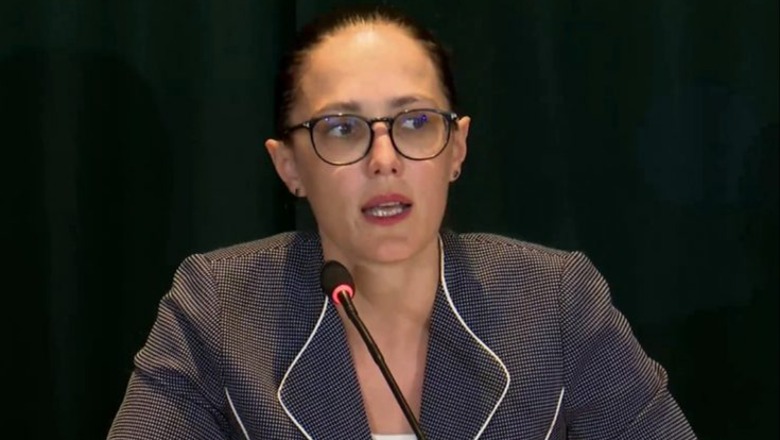
Minister of State for Entrepreneurship and Business Climate Delina Ibrahimaj said Albania is experiencing stable and sustainable economic growth, driven by structural reforms and improved fiscal performance.
In a recent television interview, Ibrahimaj highlighted a series of positive indicators underscoring the country’s economic progress. “Gross Domestic Product has more than doubled, per capita income has tripled, and public debt has declined from over 70% to 54%, reflecting fiscal discipline and stability,” she said.
She noted that consumer price increases in Albania have been more moderate than in many European countries, with reforms helping to maintain steady growth. The government’s inflation target remains at 3%.
According to Ibrahimaj, the economy has expanded significantly, from producing €9 billion with 1% annual growth to generating €25 billion with 4% growth. Meanwhile, business debt to banks has dropped from 25% to just 4.2%.
Wage growth has also been a key focus. “Albania now has a higher minimum wage than North Macedonia, Kosova, and Bosnia and Herzegovina,” the minister said. “When we took office, the minimum wage was €159. Today it’s €400, and we plan to raise it to €500 by 2026”.
To ease the transition, the government will subsidize social security contributions for the increase, applying the current €400 rate for the first 18 months. This will translate to a net income boost for minimum wage earners.
Average monthly wages have increased from €320 to €830, and teacher salaries have risen from €420 to over €900. Despite a 63% increase in consumer prices since 2013, Ibrahimaj pointed out that wages across all levels have doubled in the same period.
She also announced that public sector salaries are set to rise by around 30%, alongside ongoing pension reform. “The average pension was €111 in 2013; today it stands at €300. We aim to raise it to €400 and guarantee a minimum of €200,” she said. Pension indexation will continue to shield retirees from rising living costs, with the same mechanism extended to public sector salaries.
Looking ahead, Ibrahimaj said the government plans to support €2 billion in private sector investment over the next four years, which is expected to generate €8 billion in economic activity and create 100,000 new jobs.
She also highlighted improvements in agriculture, noting that Albania, once importing nine times more than it exported, now exports one unit for every three imported, marking significant progress in trade balance.
/a.p./
Të ngjashme

Latest News









Most read










 RTI