
 English
 Français
 Deutsch
 Italiano
 Turkish
 Greek
 Serbian
Mount Tomorri: A Natural Gem of Albania, Rich in Biodiversity and Cultural Heritage




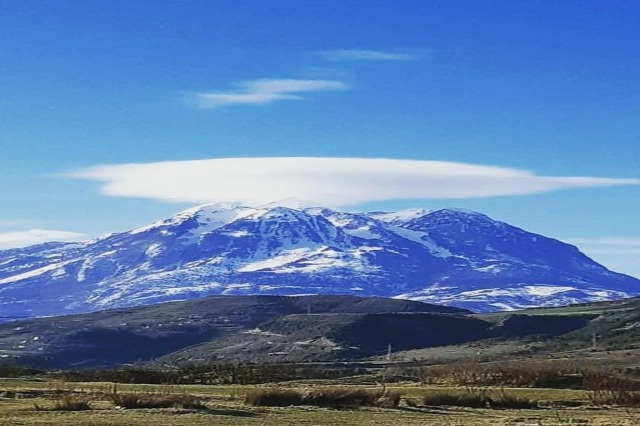
Mount Tomorri is a unique and impressive mountain that can be visited at any time of the year. From a distance, this mountain gives the impression of a natural fortress, with its beauty being evident in every season.
Mount Tomorri is located to the east of the cities of Berat and Poliçan, to the southeast of Çorovoda, to the west of Gramsh, and in the northern part of the Tomor Kulmak-Miçan mountain range.
It spans a variety of geological formations, primarily dominated by limestone and porous rocks. The varied relief is mainly characterized by high peaks (Çuka Partizan 2,417m, Kulmaku 2,175m, etc.), with permanent snow pockets. In the northern and northeastern heights, there are two glacial terraces and several simple and complex glacial cirques that amaze with their harshness and shape. The southern part is very uniform, filled with karst formations, often resembling honeycomb patterns, caves, and deep karstic wells.

Two streams flow into the Devoll River: the Sotira and Tomorica streams, originating from the eastern side of Mount Tomorri. In the Tomorica valley, there are several karstic springs, including the Kërpica and Sotira springs, while the Ujanik springs are associated with moraine deposits. Springs can also be found on the western slope, including the Tomorri and Bogova springs. The water is used by local communities for drinking, irrigation, electricity generation, and recreational activities.
The park stands out for its rich biodiversity: Mediterranean shrubs, firs, oaks, junipers, and subalpine and alpine meadows. The flora represents all four phyto-climatic levels of the country.
The park is home to a very diverse fauna: 11 species of amphibians, including the yellow-bellied toad, the European mole salamander, and the crested newt; 19 species of reptiles, including the spotted salamander, the four-lined snake, the common turtle, and others.
Around 141 bird species can be found, including several resident species, such as: the owl, the golden eagle, the griffon vulture, the wild rooster, the raven, and others, as well as species that reproduce in the park, such as the short-toed eagle, the Eurasian eagle-owl, and the honey buzzard. The park also hosts significant populations of mountain species, including around 100 breeding pairs of the alpine accentor, wild pigeons, swallows, and the Eurasian redstart.
There are 34 species of mammals, including endangered ones, such as: the brown bear, wild boar, wild goat, roe deer, wildcat, wolf, fox, wild rabbit, and others. Several species of bats breed in the park’s caves.

This national park is perhaps the richest in biodiversity in the country. It hosts plant elements from both the Mediterranean bio-geographic zone and the alpine zone, reflected in the presence of all four phyto-climatic belts of the country. Therefore, the park contains vegetation groupings such as maquis, bushland, and juniper forests, as well as alpine meadows.
The park is home to 16 important natural habitat types, of which 5 are primary habitats. It is also characterized by an extraordinary diversity of flora and fauna. There are 22 important plant species (5 protected internationally),and 18 endemic species. Additionally, several faunal species from the IUCN Red List are present, including 1 endangered species, 12 species that are nearly endangered, 8 vulnerable species, 56 species that are not threatened, 2 species with insufficient data, and 19 species not listed by the IUCN.

In addition to its significant scientific value, rich biodiversity, endemic and subendemic plants, stunning landscapes, the park also holds historical and cultural value.
For a long time, Mount Tomorri has attracted the attention of Albanians, becoming a symbol of nature and an integral part of their spiritual world, revered by our great national renaissance figures. On its heights and the Kulmak pass, you can find the famous Kulmak Teqe, a sacred place for Bektashi believers, along with many other cultural monuments and objects.
The famous springs of Bogova, Kërpica, the Sotira waterfall, the green valleys, and the mountains of the park create a relaxing landscape and an ideal place for various tourist activities: numerous opportunities for skiing, mountain climbing, hiking, and mountain biking.
Të ngjashme
Latest News










Most read










 RTI