
 English
 Français
 Deutsch
 Italiano
 Turkish
 Greek
 Serbian
Movement with identity cards in the Western Balkans: Over 8.5 million entries and exits




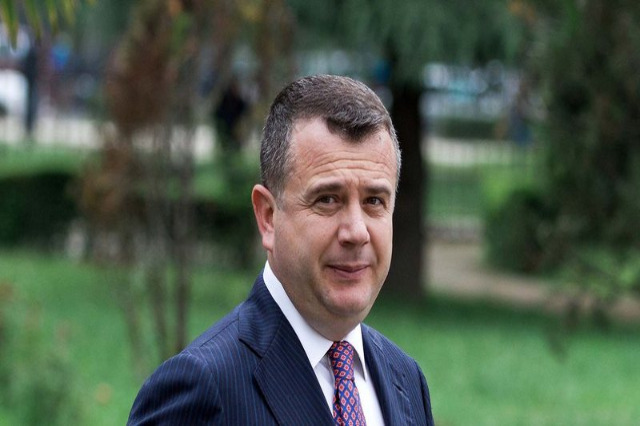
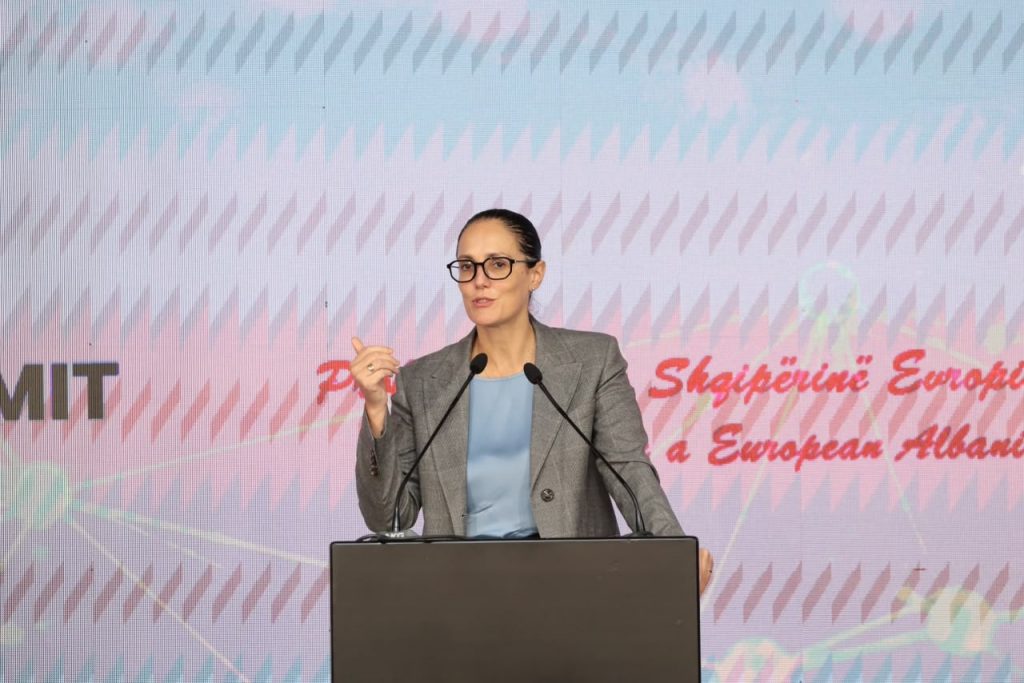
The Commission for European Affairs held a hearing session with the Minister of the Interior, Taulant Balla, to discuss the level of implementation of the agreement on freedom of movement with identity cards in the Western Balkans.
In his speech, Balla stated, “The Berlin process has emerged as a necessity to enhance cooperation among the six Western Balkan countries, foster communication between them, and facilitate the liberalization of the free movement of people, goods, and capital. This concept draws inspiration from the European Union’s experience, where a community began among six countries—Germany, France, Italy, and the Benelux countries—based precisely on these principles of increased cooperation.”
“I had the honor of being part of Prime Minister Rama’s delegation in April 2014 when the idea of such a process in the Western Balkans was first discussed with Chancellor Merkel. It was subsequently implemented with the first constitutive meeting of this process in August 2014,” said Balla.
Balla emphasized the need for and congratulated the Assembly and the chairman of the Commission for European Affairs. During this Albanian Presidency of the Berlin Process, he highlighted the significance of returning to the parliamentary dimension of this process.
“As I have been informed, I understand that in Tirana, in addition to the prime ministers and other leaders from the Western Balkan countries and the EU, there will also be a meeting of the heads of the Commissions for European Affairs,” stressed Balla.
Regarding the report, Balla informed that, “The facilitated movement within the 6 countries of the Western Balkans with identity cards is a regional agreement. It fosters the possibility of a more united region, better connected with each other. In fact, all countries benefit, but the citizens of our countries benefit the most. The agreement came into force in June 2023, with Serbia being the last country to sign and ratify it. Serbia announced the adoption of this agreement through a letter dated July 31, 2023.”
Balla also highlighted that “in the Republic of Albania, thanks to this agreement, a total of 8,501,000 citizens have benefited. Among them, in addition to Albanian citizens, the most notable beneficiaries are Kosovar citizens. They represent the largest number of beneficiaries compared to any other country, primarily because they frequently enter Albania. A total of 2.26 million Kosovar citizens have entered Albania using only their identity cards, all thanks to this agreement. Furthermore, citizens of Montenegro account for 250,000 entries and 239,000 exits. North Macedonian citizens follow closely with 353,000 entries and 348,000 exits, with fewer entries from Bosnian and Serbian citizens.”
Balla remarked that “this agreement must be accompanied by another essential element: the facilitation of border crossing at the checkpoints. This pertains to measures aimed at streamlining border control processes. During my 80 days in office, we have been able to implement the principle of single control at the Qafë-Thana border crossing point, and I believe it has already started to show its effects. This border crossing point is crucial, with a large number of people entering or leaving the Republic of Albania. However, I stress that this facilitation should be extended to all border crossing points, including those shared with two EU countries, specifically Greece and Italy.”
Meanwhile, Balla emphasized, “One of the problems we encounter at the border crossing points is the lack of uniformity in the identification of travelers—individuals who cross the border checkpoints. For example, in our case and in North Macedonia, we use different systems.”
If Albania uses the TIMS system and North Macedonia uses a different system, unifying them at this stage is impossible. Therefore, I want to clarify for the citizens who cross these points that there have been delays. Despite applying the ‘one-stop shop’ principle with a single check, the problem persists because each citizen passing through must be entered into both the Republic of Albania’s system and the Republic of North Macedonia’s system,” explained Balla.
Balla also clarified that in their communication with Minister Spasovski, during all the moments when there were delays, he moved freely without undergoing control, only through the registration of the license plates of the cars. This was done as a result of the obligations both parties have within the framework of the agreements or obligations arising from the agreements with third parties.
Balla further stated that Albania has fulfilled its obligations under the agreement.
“Regarding this crucial aspect of the Berlin Process, which is free movement, I believe we are at a stage where we can confidently say that it has been achieved. Now, what is needed is to consolidate its implementation, particularly in addressing issues related to combating various forms of trafficking, including arms trafficking,” added the Minister.
Addressing the issue of illegal migration and the fight against criminal networks involved in clandestine trafficking, Balla stated, “At the current stage, the most challenging issue we face is the use of the Western Balkans as a transit route for illegal immigration. To counter this phenomenon, we must enhance cooperation among the countries in the region. While Albania has also been used as a route, the numbers are comparatively smaller than those in other countries in the region. The State Police have taken action against various criminal groups exploiting this opportunity for financial gain. Additionally, the police collaborate with the specialized units dedicated to combating corruption and organized crime, as well as with general jurisdiction prosecutors, to dismantle any form of corridor or network involved in the illegal migration of individuals from African or Asian countries to the EU.”
The minister cited that Albania has consistently played and continues to play an important and constructive role in the region. Its primary interest lies in fostering a stable region characterized by peace, socio-economic and cultural cooperation, and mutually beneficial relationships with its neighbors.
Emphasizing the importance of good neighborly relations and cooperation with regional countries, especially within the Western Balkans, Balla underscored that these remain top priorities of Albanian foreign policy, particularly within the context of the EU integration process.
/m.ll/
Të ngjashme

Latest News
Most read










 RTI