
 English
 Français
  Deutsch
 Italiano
 Turkish
 Greek
Greek Serbian
National Historical Museum Commemorates Today 95th Death-Anniversary of Father Shtjefën Gjeçovi




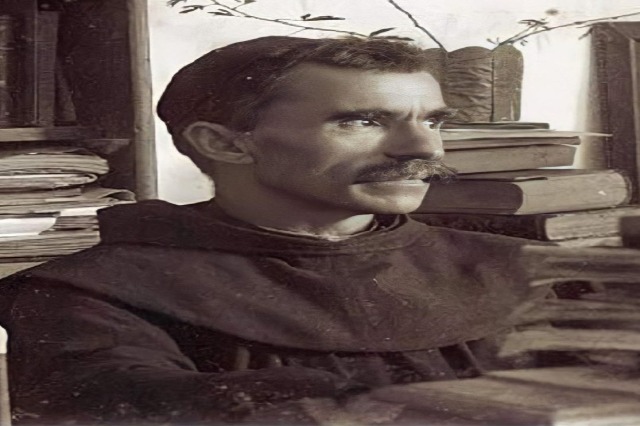
Father Shtjefën Gjeçovi was born in Janjeva, Kosovo, on July 12, 1874. After completing his studies at the Franciscan College in Troshan, he left in 1888 to pursue further studies in Croatia. Upon finishing his studies in 1896, he was ordained as a priest and served in various locations, including Pejë, Gomsiqe, Theth, and Rubik.
Father Shtjefën Gjeçovi epitomized the erudite intellectual, having collected hundreds of folktales, prepared scientific monographs, written articles, developed teaching materials, and translated works from world literature. His published works include: “The Life of Saint Lucia, Patroness of the Archdiocese of Durrës” (1904), “Mark Kuli Kryeqitas” (1905), “The Dawn of Civilization” (1910), “Saint Ndou the Unseen” (1912), “Atil Reguli” (a free translation of the three-act play by Pietro Metastasio) (1912), “The Maid of Orleans or Joan of Arc” (1915), “Atil Reguli” (1912), “Moisi Golemi,” and “The Code of Lekë Dukagjini” (1933).
Father Shtjefën Gjeçovi became renowned for his book “The Code of Lekë Dukagjini.” He collected the rules of the kanun from the oral traditions of the people and initially published them in the magazine “Hylli i Dritës.” He was killed by Serbian chauvinists on October 14, 1929, in the village of Zym in Prizren, where he served as a parish priest.
/a.c/
Të ngjashme
Latest News




Most read









 RTI
RTI