
 English
 Français
 Deutsch
 Italiano
 Turkish
 Greek
 Serbian
New Exhibition Highlights Apollonia and Dyrrachium’s Economic Development




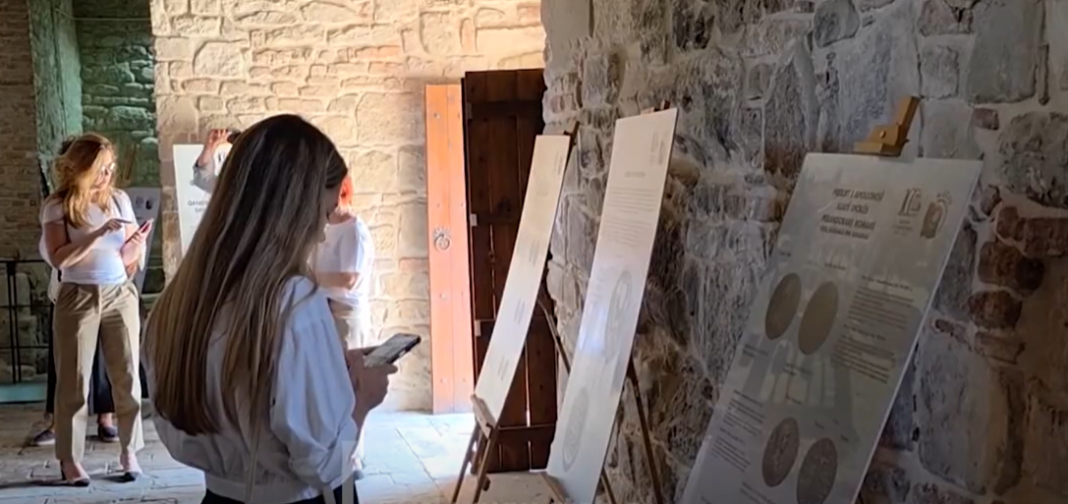
The Archaeological Park of Apollonia, the Bank of Albania Museum, and the Durrës Museum Center presented a photographic exhibition. It highlights key archaeological, commercial, and economic developments in the ancient cities of Apollonia and Dyrrachium.
The exhibition opened at the Archaeological Park of Apollonia. It tells a story through coins, from ancient times to today.
“Coins in this city were linked to funding military operations and wars. Staters were minted to pay mercenaries and support military actions. Later, drachmas were minted for trade as other Illyrian cities developed regional markets. This increased coin minting, trade, and monetary circulation,” explained Alba Selita, a numismatics expert.
Coin minting in Dyrrachium and Apollonia dates back to the 7th–6th centuries BC. This shows strong economic growth in these areas during that time.
“It was a very strong currency and I believe it remains so. Even when all of Illyria became part of the Roman Empire, Apollonia remained free and independent. Unlike other cities that became colonies, Apollonia continued to use its own coinage within its territory for local trade, despite Roman currency being dominant,” said Ornela Dyrmishi, Director of the Archaeological Park of Apollonia.
The exhibition aims to attract visitors and educate foreigners about Illyrian-era developments. Coins from that time have been found in other places, such as Ancient Macedonia, Italy, Greece, Asia Minor, and Egypt, due to trade exchanges.
/a.c/
Të ngjashme




Latest News










Most read










 RTI