
 English
 Français
  Deutsch
 Italiano
 Turkish
 Greek
Greek Serbian
Panajot Kanaçi, the Pioneer of Albanian Choreographic Art




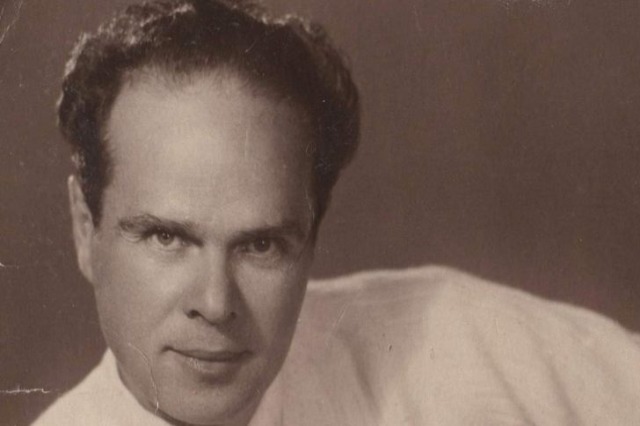
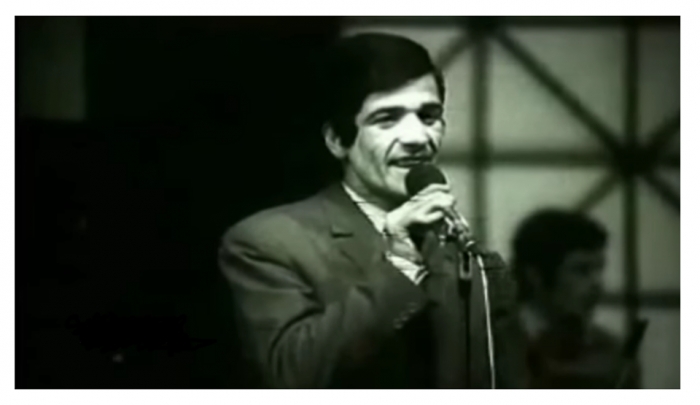
Panajot Kanaçi, a name that has given great value to Albanian dance and ballet, holds a place of honor in Albanian art. August 2, 2024 marks the 101st anniversary of his birth. In his early artistic life, he performed in some of the first works on stage, where he skillfully brought to life roles that received considerable acclaim.
Panajot Kanaçi was born in Delvinë on August 2, 1923. He was a child nurtured with the beautiful dances of his region and who recognized beauty from an early age. The dances he witnessed in the town square of his birthplace captivated him and never let him go. Indeed, after many years, specifically two decades later, he set foot in the streets of Tirana and knocked on the doors of the National Theater, the center of artistic excellence. He did this after completing the Classical High School in 1943. After finishing high school, Kanaçi in one form or another, pursued the art of folk dance wherever he found himself—on the streets, on stage, at weddings, and everywhere.
Panajot Kanaçi began his career as a choreographer with a group of young boys and girls. He launched ballet at the end of 1946 and continued with momentum into the early 1950s. After studying abroad, he confidently introduced foreign repertoire ballets to the Albanian stage, such as “The Fountain of Bakhchisarai,” “Esmeralda,” “Francesca da Rimini,” and “Paganini.” Recognizing that Albanian ballet was also needed, Kanaçi filled this gap with the first national ballet, “Halili and Hajrija,” and further enriched the artistic collection with authentic Albanian ballets and composers, including “Shota and Azem Galica,” “The Fisherman’s Family,” and “Joniada,” among other successful ballets.
Panajot Kanaçi had a broad knowledge of world music, which accompanied his numerous ballets over several years. He could speak for hours about international ballets with deep thought and inexhaustible professionalism, yet with a desire for the Albanian stage to have a purely Albanian ballet with national spirit and truly Albanian artistic creators.
In February 1948, Panajot Kanaçi was appointed ballet instructor at the People’s Theater.With teenage dancers, he formed a group called “Little Ballet.” Under the direction of the young choreographer, this group began to perform pieces from the world ballet repertoire such as “Cinderella,” “Sleeping Beauty,” “Moscow Waltz,” and many other creations.
The troupe of dancers and performers, created and led by Master Kanaçi, began to represent post-war Albania on international stages. At the International Festival in Budapest, the Albanian group won third place with “The Dance of Tirana.” Panajot Kanaçi himself was involved as a dancer within this ensemble.

It was the end of March 1952 when Panajot Kanaçi conceived the show “The Flag of Peace,” a performance that took on a nationwide character and left an indelible mark in concerts organized abroad.
Panajot Kanaçi staged “Hungarian Rhapsody,” “Spanish Dance,” a musical piece by composer Prengë Jakova, “Light Over Albania,” which would be recognized as the prelude to Albania’s first opera, “Mrika.” It was also Panajot who prepared the dances for the first Albanian operetta “Agimi” by composer Kristo Kono.
Not many years passed before, under the direction of Panajot Kanaçi, at the Youth Festival organized in Warsaw (Poland), the group won second prize with “The Dance of Tirana.”
But how did Panajot Kanaçi begin his odyssey in the field of culture, a culture with professional breadth? At the beginning of 1950, with the creation of the Albanian Philharmonic, at the request of the young choreographer Kanaçi, Soviet choreographer Georgi Perkun came to Albania. Together they brought show after show to the stage, achieving success after success. Under Perkun’s choreography, Panajot performed the role of Girei in the ballet “The Fountain of Bakhchisarai” and Claude Frollo in “Esmeralda.” The performances turned out to be successful.
Panajot Kanaçi was a thorough researcher of the art of dance. He did not see the dancer simply as someone who would perform a task in front of an audience. He studied every movement of the dancer, every expression, and advised that all movements aim towards professionalism.
The ballets staged by Ballet Master Kanaçi had an artistic core, capturing the emotion of the dancer as they tapped on the floor, seemingly gaining momentum, and resulting in a performance warmly applauded by the art-loving public.
It took until 1963, under the direction of a team of professionals: Panajot Kanaçi, librettist and ballet master; Tish Daija, composer; Mustafa Krantja, conductor; and Stavri Rafael, painter, for the ballet “Halili and Hajrija” to be presented on stage.
Today, decades later, the creations of Panajot Kanaçi, including his choreographies, ballets, and dances, remain vibrant in the National Theater of Opera and Ballet and the National Ensemble of Songs and Dances. These works have earned Albania awards and recognition in other countries, presenting it honorably to audiences worldwide. There is no artist in the National Theater of Opera and Ballet or the National Ensemble who, upon mentioning the name of Panajot Kanaçi, does not say: “He was the father of Albanian choreography, a great master.” These are the words that are still heard in these institutions, where, although decades have passed since the master’s passing, his work is remembered with great respect by artists and the public alike. For decades, thanks to Kanaçi’s work, his students became well-known choreographers who, based on their teacher’s work, managed to pass on the artistic values from generation to generation.
The troupe of dancers and performers, created and led by Kanaçi, garnered applause and praise wherever they represented Albania, with the greatest credit undoubtedly going to the father of Albanian choreography. In the field of folk choreography, Panajot Kanaçi made a highly valuable contribution. He has been honored with numerous titles, including ‘People’s Artist’ and ‘Grand Master.’
/k.s/
Të ngjashme
Latest News

Most read








 RTI
RTI