
 English
 Français
 Deutsch
 Italiano
 Turkish
 Greek
 Serbian
Portuguese media, “GAZ”: Albania – Liberation from Invaders and Democratic Transition




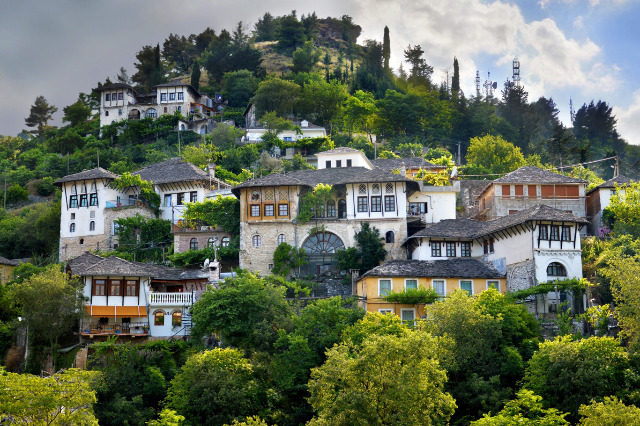
While strolling through the picturesque city of Gjirokastra, which boasts Byzantine origins and Ottoman architecture nestled in the Albanian mountains, I noticed souvenirs and images of the former communist leader Enver Hoxha (1908-1985) in local shops and traditional restaurants. Journalist Aidir Parizzi writes this intriguing aspect of Albania’s history in an article published in the Portuguese daily “GAZ.”
To gain a deeper understanding of 20th-century Albanian history, it is essential to navigate past ideological biases and information distorted by external interests.
While it is undeniable that Albanian communism (1948-1991) underwent a gradual descent into brutality, it is equally important to acknowledge the significant prejudice the country faced as a result of its socialist experience.
It is crucial to show respect for a people who bear the collective memory of suffering, history, and traditions passed down through countless generations.
Regardless of one’s opinion, socialism was the solution that Albania chose to break free from the centuries-long oppression of poverty.
In 1912, protests led to the country gaining independence from the Ottoman Empire and declaring itself a republic.
Two decades later, a turbulent political dispute brought Ahmed Zogu (1895-1961), a staunch ally of Benito Mussolini, to power.
After being elected, Zogu proclaimed himself the King of Albania and initiated a policy of submission to the fascists, who economically and culturally occupied the country through a debt-based colonization.
In 1939, Italy annexed Albania without encountering any resistance, and Zogu fled to Greece.
In his possession, Zogu had all the gold from the nation’s coffers. The artificial Albanian fascist party was met with rejection by the local population, which consisted of 87% peasants.
In response, protests were prohibited, and the death penalty was imposed for political crimes.

In the country’s mountainous regions, resistance movements inspired by Maoism emerged, and it was during this period that the leadership of Enver Hoxha came to the forefront, uniting anti-fascists and the rural population.
In fact, Enver Hoxha had been sentenced to death in absentia by the Italians. When Italy surrendered during World War II in 1943, the Germans stepped in to fill the void left by Italy, occupying Albania with the typical brutality of Hitler’s troops.
The Nazi repression was exceptionally brutal, subjecting the natives to subhuman manner.
The foundation for the resistance against the Nazis was rooted in the philosophy of Antonio Gramsci, an Italian thinker with an Albanian mother.
Nevertheless, the local elite, accustomed to privileges, aligned themselves with Nazism.
In 1944, Albania successfully defeated Nazi-fascism with its own forces, leading to the establishment of the Albanian socialist state under the leadership of Hoxha.
As is often seen in totalitarian regimes, Albanian communism gradually descended into turmoil.
An obsession with espionage and external threats led to the construction of military shelters throughout the country, including enormous bunkers that now serve as memorials in the capital, Tirana.
Despite facing numerous challenges, Hoxha achieved significant progress in Albania. The country was electrified, railways and roads were constructed, and there was a remarkable improvement in both industry and agriculture.
Urbanization, healthcare, and education (with illiteracy, which stood at 80% after the war, being eradicated) all contributed to a substantial enhancement in the standard of living.

In 1991, Albania transitioned into a democracy.
During my travels, I noticed that while Hoxha’s image may still hold some sympathy among Albanians, it is clear that reversing the democratic progress would be unacceptable.
The nation is addressing issues of poverty and specific cultural challenges and is actively working towards European Community integration through advancements in education, and a growing appreciation for culture and science.
The Socialist Party won in the last three elections, pursuing policies aimed at modernizing the economy and further democratizing institutions. Notably, nearly half of the ministers in the government are women.
Additionally, it’s worth noting that during the military dictatorship, the student movement played a crucial role in the process of re-democratization and the advancement of social policies that have now garnered widespread consensus.
It served as a starting point, but after half a century, it’s high time for progressives to embark on modernization efforts. This is especially crucial to counter the recent surge in anti-democratic movements.
In the 21st century, there’s no room for extremism and anachronism in any political spectrum.
At the “Bunk Art” memorial in Tirana, I noticed a quote by Anjezë Gonxhe Bojaxhiu, a Catholic saint of Albanian origin known as Mother Teresa of Calcutta: “Evil takes root when a person begins to think that he is better than others”.
/m.ll/
Të ngjashme




Latest News










Most read










 RTI