
 English
 Français
 Deutsch
 Italiano
 Turkish
 Greek
 Serbian
Prime Minister Rama signs with Macron-Merkel and 20 world leaders the call for a post-pandemic treaty




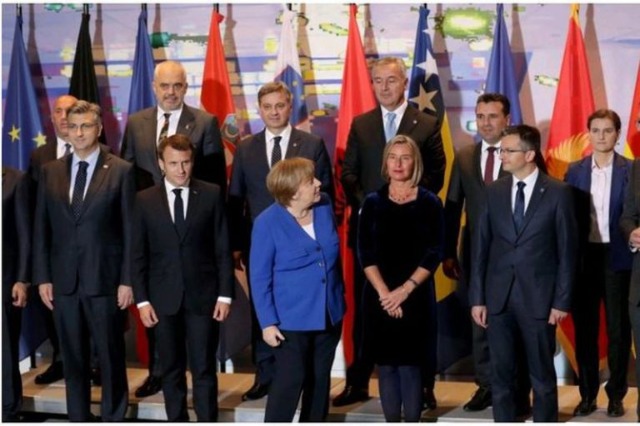
Prime Minister Edi Rama joined 22 world leaders and signed a treaty to be united in the fight against COVID-19 as well as other pandemics that could threaten the world.
In the treaty signed by President Emmanuel Macron, Chancellor Angela Merkel, Albania is also Albania.
In an article for newspapers around the world, leaders including French President Emmanuel Macron of France and German Chancellor Angela Merkel said COVID-19 posed the biggest challenge since World War II. Leaders in this joint article have said that the COVID-19 pandemic has shown that “no one is safe until everyone is safe.”
Pandemic Treaty Communication: The COVID-19 Pandemic showed us why we need to work together for a stronger international health architecture. The COVID-19 pandemic is the strongest test the international community has faced since the 1940s. At that time, right after the end of the two world wars, political leaders came together to build a multilateral system.
The objectives were clear – to unite the countries, to quell the temptations of isolation and nationalism, and to respond to those challenges that could only be met through a spirit of solidarity and cooperation, which were peace, prosperity, health and security.
Today, we nurture the same hope that, as we fight together to overcome the pandemic, we build a stronger international health architecture that will protect future generations. New pandemics will come and other major health emergencies will emerge, but no government or multilateral agency will be able to deal with these threats alone.
The question is not whether it will happen, but when. Together we need to be better prepared to anticipate, prevent, detect, evaluate and respond effectively to pandemics in a highly coordinated manner.
To achieve this, we believe that countries must work together to move towards a new international pandemic preparedness and response pact.
Renewing such a joint commitment would mark a fundamental step in increasing preparedness against pandemics at the highest political levels. It will be based on the constitution of the World Health Organization and will include other important organizations that are key to this commitment, adhering to the principle of health for all. Existing global health instruments, in particular,
The International Health Regulations would be the basis of this treaty, which would guarantee strong and proven foundations on which we can develop and improve.
The main objective of the treaty in question will be to establish a pan-governmental and societal approach, which strengthens the capacities of national, regional and global resistance to future pandemics.
To achieve this, a significant increase in international cooperation is needed to improve, for example, in relation to warning systems, data exchange, research, production and distribution locally, regionally and globally in function of medical treatment of public health, such as vaccines, drugs, diagnostic equipment and personal protection.
Likewise, to do so would have to accept the “One Health” approach, which combines the health of humans, animals and our planet. This treaty should lead us to a mutual responsibility and co-responsibility, greater transparency and cooperation within the international system and its rules and norms.
The COVID-19 pandemic has been a shocking and painful reminder that no one is safe unless they are all. Consequently, we are committed to providing universal and equal access to safe, effective and cost-effective vaccines, drugs and diagnostic tools for this pandemic and others in the future. Immunization is a global public good and we need to be able to develop, produce and distribute vaccines as soon as possible.
To achieve this, we will work with heads of state and government around the globe and with all actors, including civil society and the private sector. We are convinced that it is our responsibility, as leaders of nations and international institutions, to ensure that the world learns from the COVID-19 pandemic.
At a time when COVID-19 has taken advantage of our weaknesses and divisions, we must seize this opportunity to come together as a global community in a peaceful partnership that goes beyond this crisis. Building our capacities and systems to do this will take time and sustained political, financial and social commitment for many years.
Our solidarity in securing a better-prepared world will be the legacy that will protect our children and our children’s children and reduce the impact of future pandemics on our economies and societies.
Readiness to respond to pandemics requires global leadership in order to have a health system fit for this millennium. To make this commitment a reality, we must be guided by solidarity, honesty, transparency, inclusiveness and equality.
States and signatory organizations:
Chile, Costa Rica, Trinidad & Tobago, Kenya, Rwanda, Senegal, South Africa, Albania, European Council, France, Germany, Greece, Netherlands, Norway, Portugal, Romania, Serbia, Spain, Ukraine, United Kingdom, Tunisia, Indonesia, Fiji, Republic of Korea.
/Klara Ruci/
Të ngjashme
Latest News

Most read










 RTI