
 English
 Français
 Deutsch
 Italiano
 Turkish
 Greek
 Serbian
Rama for “Financial Times”: The agreement with Italy for migrants is a 100% unique case




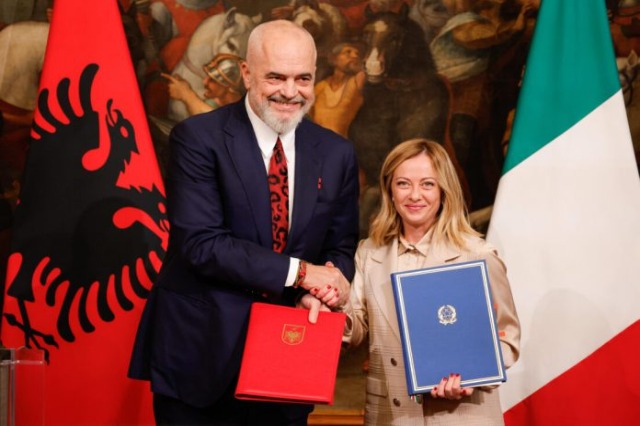
Albanian Prime Minister Edi Rama has declared that Albania’s agreement with Italy on migrants is unique, despite interest from other governments, quashing hopes of some EU capitals to replicate the deal.
Last year, Rome and Tirana agreed to establish centers in Albania where thousands of migrants heading to Italy would be registered and then have their asylum requests processed by Italian officials.
While the plan drew criticism from human rights groups, it also garnered interest from some right-wing European governments. In fact, the center-right European People’s Party even made it part of its electoral platform for the June elections to the European Parliament.
“It’s unique, 100% unique,” Rama told the Financial Times.
He mentioned that other governments had approached him to see if they could replicate the agreement with Italy.
“I said no. Because it doesn’t make sense to me. Italy is very special for us, more than a strategic relationship. It’s a deep-rooted friendship,” Rama said.
Rama emphasized that the agreement with Italy was based on a long history of mutual law enforcement, with Italian coastal patrols helping Albania control emigration in the 1990s and recent joint efforts against drug trafficking.
Critics argue that the plan has legal problems and high costs. However, it’s not a new idea. Western partners have sought Albania’s help with migrants since it sheltered thousands of Afghans left exposed to the Taliban after the Western withdrawal in 2020.
The list started with the Prime Minister of the United Kingdom.
“Boris Johnson called me and said he appreciated my leadership and that we should do something together,” Rama recalled.
“Let’s have an agreement for the UK to bring illegal migrants to Albania to keep them there, to process them. I said, excuse me, this is not possible,” Rama added.
Unlike the Italian agreement, which is for sheltering up to 3,000 people at once, the UK offer was not “a fixed number,” Rama said.
“It was for all those going to the UNHCR… as a transit. I said there is no way. Then, we had others that I won’t mention. Among the richest countries in Europe,” he added.
He warned against treating migration as a security problem, especially for governments trying to offload it.
“This issue cannot be treated by transferring the problem,” Rama said.
“Besides Albania, other Balkan countries can help if the process is well structured and kept within international law,” he said.
However, Europe turned it into an ideological, electoral issue and forgot that it would need people to avert a “demographic winter” and an economic decline as a consequence.
“More than a million Albanians have migrated to the EU and the US over the years, a third of the country’s total population,” Rama said.
“The war in Ukraine has finally changed the game for EU enlargement,” Rama said, noting the outgoing EU executive’s record.
“Also, thanks to Vladimir Putin, a change has already occurred,” he added.
“The new proposals of the EU to include Western Balkan countries on a practical path of cooperation, such as easy and free money transfers or reduced cross-border trade bureaucracy, would have been unimaginable five years ago,” he said.
“It’s not about money,” Rama added, referring to a six billion euro package offered to the Balkans – a sum that most countries in the region consider modest.
“It’s about opening paths to integration and having the same conditions as members, without being members yet,” he stressed.
As a critic of the slow EU enlargement process, Rama suggests that the moral authority of the bloc is fading.
“Europe is becoming Balkanized,” he said.
“We still see Europe as a place where we will be protected from nationalist explosions that lead us to conflicts and wars. But nationalist movements in Europe not only found a space in politics, but they have infected or touched [other movements,” Rama concluded for the Financial Times.
/k.s/
Të ngjashme
Latest News
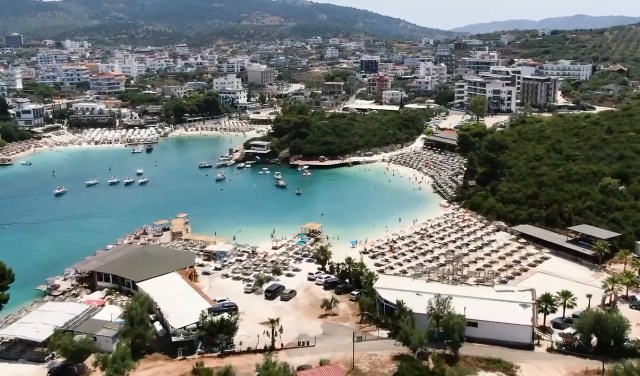
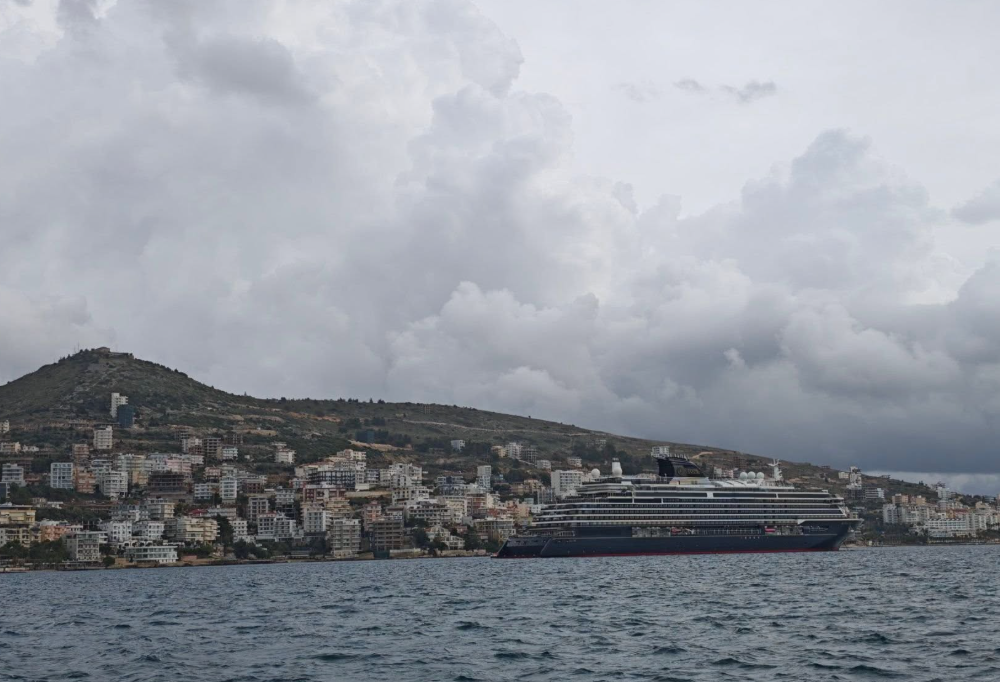
Luxury cruise ship Explora 2 makes first call in Saranda
Most read










 RTI