
 English
 Français
  Deutsch
 Italiano
 Turkish
 Greek
Greek Serbian
Roadblocks lifted in the north of Kosovo/ Germany welcomes Prishtina-Belgrade agreement




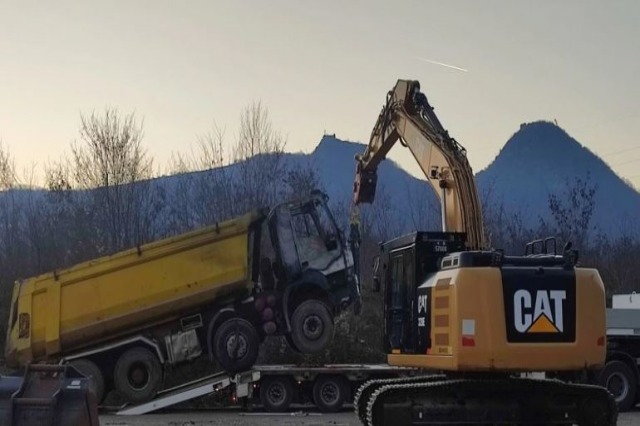
The German government welcomes the agreement on the removal of the barricades from the northern roads and the easing of the situation. But regarding Prime Minister Kurti’s requests for the addition of NATO soldiers in Kosovo, no comment.
The German government has expressed relief over the recent easing of the situation in the north of Kosovo following the removal of barricades from the roads. “It’s a good sign that the two sides have approached each other and that the Serbian minority in northern Kosovo has lifted the roadblocks”, stated the deputy spokesperson of the government, Christiane Hoffmann. This has resulted in the re-opening of all border crossings between Kosovo and Serbia, which were blocked in December and during the holidays.
“It is now primarily important that the dialogue between Serbia and Kosovo is further supported. This is what the federal (German) government is doing and it also supports the mediation efforts of the EU,” added Hoffmann. Germany supports the efforts of representatives of the European Union for mediation in the dialogue.
Neither Hoffmann nor a spokesman for the German Foreign Ministry wanted to comment on Kosovar Prime Minister Albin Kurti’s call for more NATO soldiers to be sent.
Hoffmann stressed Berlin is initially focusing on supporting the dialogue.
In an interview with German newspaper WELT, Kurti said “a significant increase in NATO soldiers and military equipment in our country would improve security and peace in Kosovo and in the entire Western Balkans region.”
The events in the north have escalated after the decisions to change the illegal license plates, which resulted in the exit of Serbs from the north from the institutions of Kosovo, the announcements and then the postponement of the mayoral elections in the north, the attacks on the representatives of Kosovo and also those of the international community , arresting several people and releasing them under house arrest, blocking roads and removing barricades. But what has most worried both the political and diplomatic representatives, as well as the military, is the belligerent rhetoric that has been heard in Belgrade, the increase in the degree of combat readiness of the Serbian army and police, but also the threats from the Kosovo authorities that they will act with violence to remove the barricades. The situation in the north is now calm, but problems remain. Berlin now wants to continue the dialogue.The NATO-led security force KFOR has been supposed to guarantee security throughout Kosovo since 1999. It currently has almost 3,800 members, including around 70 German soldiers.
Formerly part of Serbia, Kosovo has been independent since 2008. Serbia does not accept this and claims the country’s territory for itself.
/a.s/











 RTI
RTI