
 English
 Français
 Deutsch
 Italiano
 Turkish
 Greek
 Serbian
Roadbook: Agritourism: The finest farm stays in Europe




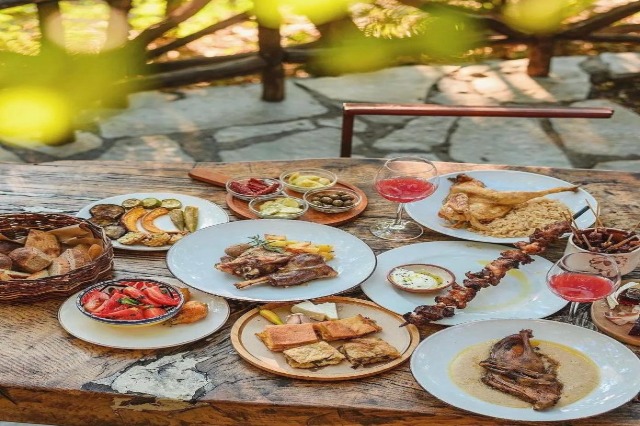
“Travellers are increasingly swapping hotels for serene farm stays, as they seek intimate, rustic idylls immersed in nature, with fuss-free locavore dining and a swathe of wellness activities,”writes Mhairi Mann in the British travel magazine “RoadBook”.
Picture the scene: an attentive host drizzles hand-pressed olive oil on a seasonal spread made using ingredients grown in a nearby organic garden. Perhaps meat is sizzling on a nearby open grill, as you take a sip of local wine from a neighbouring vineyard. There is a faint bleat of grazing sheep, as the sun drifts behind a pastoral backdrop of endless sweeping hills, rolling meadows and peaks. You retreat to one of just a handful of rooms, to be awoken by nature the next morning.
Add in daily yoga, cookery classes and artisanal decor and it’s no wonder agritourism is booming as a blissfully bucolic, eco-conscious alternative to city dwellings. Forget The Simple Life, farm stays in 2024 are refined, combining upmarket interiors with organic fare and oenophilic offerings. After all, where better to experience authentic farm-to-fork dining than on the farm itself?
The rise of agritourism
The global agritourism market is expected to grow from 56.92 billion USD in 2023 to 60.89 billion USD in 2024, and is expected to reach 79.9 billion USD by 2028, according to the 2024 Global Agritourism Market Report.
Agritourism helps to reduce rural poverty by allowing farmers and agricultural workers to diversify their business by offering guests overnight hospitality and an abundance of activities spanning olive harvesting, cheesemaking and beekeeping. Agritourism doesn’t necessarily need to be a full-blown farm stay; revenue from agricultural endeavours includes a wedding in a converted farm barn, drinking apple cider in an orchard or visiting a farmers’ market.
The ‘haycation’ aligns with a general desire of travellers to go off-grid, get back to nature and embrace the great outdoors, as well as the continued appreciation of hands-on activities such as foraging and fruit picking, which grew in popularity during the Covid-19 pandemic. It doesn’t hurt that these locations are also often breathtakingly beautiful, from remote rustic farmhouses to mountainous ranches.
Claus Sendlinger, founder of the Design Hotels network, is oft-quoted: “The farmhouse is the golf course of the 21st century.” He is also the co-founder of Slowness, which is currently building a curation of properties that combine regenerative agriculture with boutique hospitality, engaging a global community of designers, farmers, artisans and creatives.
The finest farm stays in Europe
Farm stays in Europe rose to prominence in the seventies, particularly in Spain and Italy, home of the agriturismo movement. A growing farm stay scene is emerging in Greece and Albania, while Slovenia and Portugal also boast a thriving network of affordable offerings.
The best farm stays in Europe | A generous spread of food at Mrizi I Zanave Agroturizëm, AlbaniaThe best farm stays in Europe | The brick and glass exterior of Mrizi I Zanave Agroturizëm, Albania
Mrizi I Zanave Agroturizëm, Albania
Best for: Immersive setting, delicious Albanian cuisine
Address: Rruga “Lezhë – Vau i Dejës”, Fishtë, Lezhë 4505, Albania
Price: From 51 GBP per night
Warmth and hospitality permeate this family-friendly working farm and hotel set in a remote village in northern Albania. The original farmhouse has been updated with glass-walled rooms showcasing sweeping pastoral views, while geese gather in sun-dappled olive groves and workers in traditional Albanian dress collect fresh produce from the fields. The feted restaurant, which is popular with locals, does not have menus and bases mealtimes on what is available that day. Expect a full table of organic Albanian fare for less than 30 GBP, such as wild fish, tender chicken skewers and picked tomatoes with cheeses made onsite.
Të ngjashme




Latest News










Most read










 RTI