
 English
 Français
  Deutsch
 Italiano
 Turkish
 Greek
Greek Serbian
Sabiha Kasimati, the Albanian scientist eliminated by the communist regime




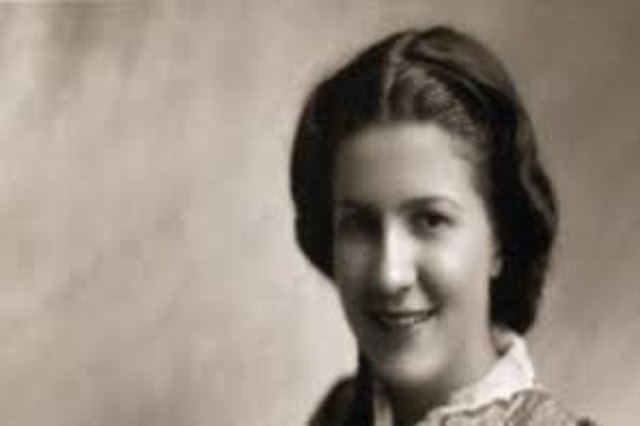
The National Historical Museum commemorates the 111th birth anniversary of Sabiha Kasimati (1912-1951) biologist and scientific worker.
Kasimati was born in Edrene (Adrianople) of European Turkey, in a family from Libohova. In 1927, she returned to her homeland with her family, settled in Korça, and graduated from the National High School. She worked as a teacher in the female school in Korça and in the American agricultural secondary school in Kavaja (1931-1936).
In 1936, she began higher studies in biology (ichthyology branch) at the University of Turin. In 1941, she defended her doctoral thesis and returned to her homeland. She worked as a biology teacher at the “Queen Mother” Female Institute in Tirana (1941-1945). During 1945, she stayed for medical treatment in Turin.
Sabiha Kasimati returned to her homeland and started working as a scientific researcher at the Institute of Studies since its establishment (1946), where she dealed with the studies of fishes of Albania. She published several scientific articles in the “Bulletin of the Science Institute” magazine. She collected a rich material about the ichthyology of Albania, on the basis of which she would write a monograph. On the 20th of February 1951, she was arrested due to a bomb incident at the Soviet embassy in Tirana together with 21 other people. She was killed without the benefit of a full and fair trial, on 26.02.1951.
Her work was published, but not under her name. “Fishes of Albania” documented the fish of Albanian lakes, rivers and the seas and it was published under the name of the Russian scientist Anatoly Poliakov and two Albanian researchers in 1955.
Kasimati is credited with creating the idea of the Albania’s National Museum of Science. In October 2018 it was announced that a space at the Albanian National Museum of Science would be dedicated to her life story.
/k.s/
Të ngjashme
Latest News
Most read






 RTI
RTI