
 English
 Français
  Deutsch
 Italiano
 Turkish
 Greek
Greek Serbian
Selfixhe Ciu – Broja, the first Albanian woman who published literature in Albania




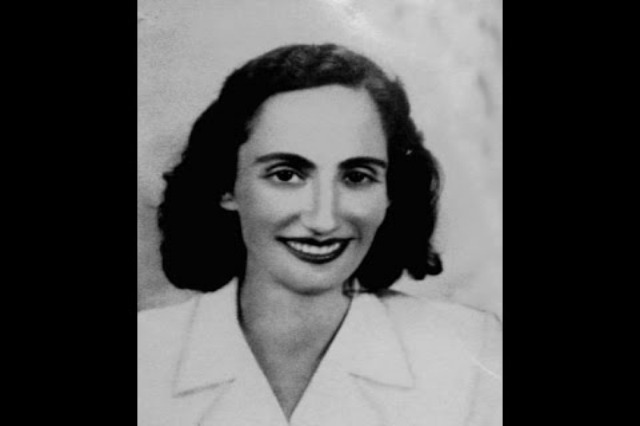
Selfixhe Ciu – Broja was an Albanian writer and the first Albanian woman who published literature in Albania.
Selfixhe was born in 1918, in the Varosh neighborhood of Gjirokastra, in a well-off family, the daughter of the wholesaler, Ibrahim Ciu. She spent her childhood in her hometown, where she finished the girls’ school “Urani Bundo”. She met and befriended Musine Kokolari, the first Albanian woman who published a novel. She also met the journalists of the time, Nonda Bulka, Petro Marko and Kolë Berisha.
She studied in Florence and then continued her studies in Grenoble, France, where she met her husband, Xhemal Broja, and together they opened a book store in Shkodër.
Her familiarity with literature began during the time at the girls’ school “Urani Rumbos”, in Gjirokastër, instilling in her the desire to see beyond. The Florence of that period would further increase the passion for writing in the girl who had started writing at the age of 17, choosing an interesting pseudonym, Colombia. She published her first poem in the magazine “Populli”, November 28, 1935.
This article would be followed by many others published in the magazines “Bota e re”, “Diana”, “Java”, “Drita”, “Stypi”. The writings of a woman were not something common in Albania in those years, but they gave hope to young writers. Selfixhe herself would write in her memoirs: “very timid writings”, calling the first sketches almost “like diaries of self-confession”, but they were a reflection of her troubled soul.
Colombia soon became known in literary circles and her writings would be followed with curiosity. It was in September 1937, the publicist F. Llagami in the magazine “Java”, in the column “From the novel ‘Why’ to ‘If I were a boy’, to Colombia”, not only accepts her being and talent as a writer, but also appreciates her role in literature.
Selfixhe’s writings are not only felt, but also a slap in the face of the reality that surrounded him. “Our nation has many shortages, therefore intellectual girls are not begged to remain so indifferent, but to participate in the rapid evolution of our nation,” she writes. In the magazine “Bota e re” her voice will be raised in defense of women’s freedom. In the first article published in this magazine on September 16, 1936, she sees the woman as an oppressed creature, “victim of the contempt and superior oppression of the man”. Representing the most advanced young women of the time, she believed that with the war they will win the denied rights “side by side with the dynamic youth”, freed an endless line of prisoners waiting for the desired freedom”.
Close friends with Musine Kokalari, the two girls not only shared verses about love and men, but also efforts for emancipation and liberation of the country. In her memoirs, she tells how many times they were separated from each other, sat down and wrote, and then sent the writings to the “Stypi” newspaper. Selfixhe’s life would not be what she had contributed to after the War. Together with her family, she was exiled, but this could not extinguish the spirit of the deceased woman who has the same look beyond the photos today.
Her first book was a collection of poems for children “Flower to Flower” (1958). While after the 90s, she sits down and writes her memoirs, which today are a beautiful testimony of an unusual life. In it, we find not only the movements of feminism in Albania, but also the beginnings of female prose, and another side of the National Liberation War, through the people who believed in it.
Selfixhe Ciu – Broja published poems in a book in 1998 and called it “Tallazet e jetes”.
She passed away at the age of 85, in 2003, in Tirana.
/k.s/
Të ngjashme
Latest News
Most read









 RTI
RTI