
 English
 Français
 Deutsch
 Italiano
 Turkish
 Greek
 Serbian
SEPA Boosts Financial Inclusion, Investor Confidence, and EU Alignment




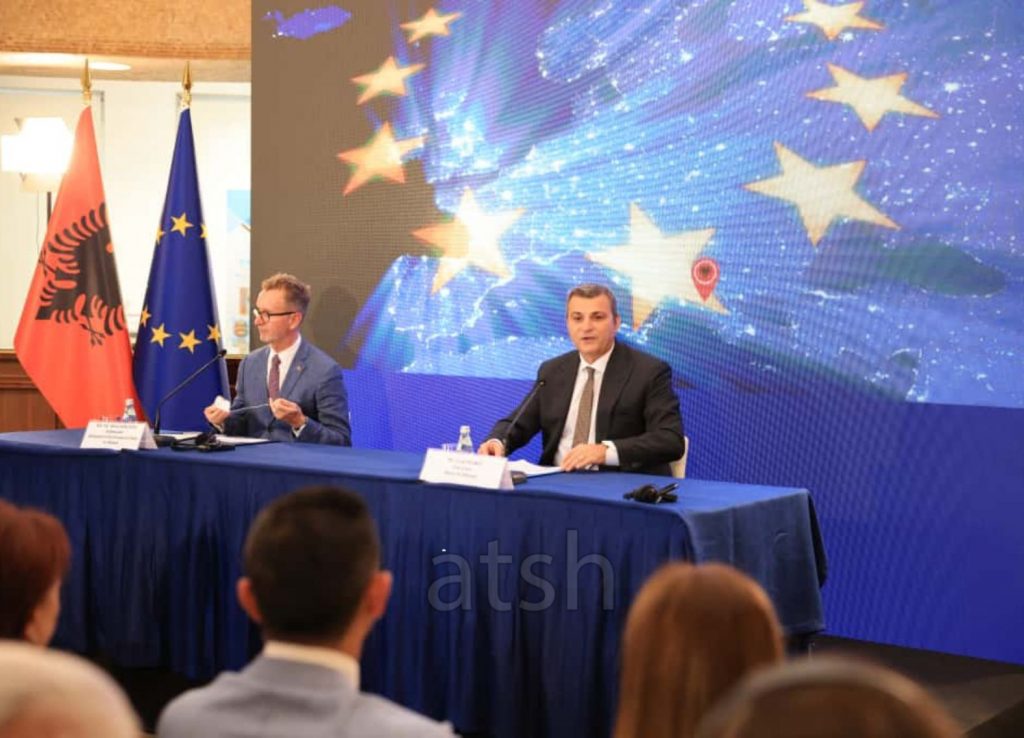
The Bank of Albania executed its first euro transaction through SEPA. Consequently, Governor Gent Sejko called it a “historic moment” for the country’s financial market. Furthermore, EU Ambassador Silvio Gonzato attended the ceremony.
Albania joined SEPA in November last year. Since then, the Bank of Albania coordinated with 11 domestic banks and financial institutions. Together, they successfully met all technical and regulatory requirements.
“This is not just a technical upgrade. Rather, it is a cornerstone for Albania’s integration into European financial infrastructure,” Sejko said. He emphasized that SEPA membership results from years of structured work. Moreover, the Bank built the foundations of a modern payment system step by step.
Sejko highlighted that SEPA is a strategic goal. Indeed, it links to the EU’s New Growth Plan and the regional project for modernizing payment systems in the Western Balkans. With support from the World Bank and coordination with domestic actors, the Bank ensured timely compliance and activation of services.
Looking ahead, Sejko urged banks and businesses to actively promote SEPA services. In addition, he stressed the importance of educating users and deepening digital payment adoption. Only through cooperation can Albania fully exploit this historic integration.
SEPA offers multiple benefits:
- Lower fees: transfers to SEPA countries now cost up to five times less.
- Faster transactions: electronic payments become faster, safer, and more convenient.
- Transparency: a payment from Tirana to Rome costs the same as a payment within Tirana.
Additionally, incoming payments will see major cost reductions. As a result, SEPA aligns Albania’s payment infrastructure with EU standards.
The governor projected €20 million in first-year savings from digital payments. Moreover, Albania’s AIPS Euro system, operating since January 2022, already saved the local market around €140 million.
Sejko also noted wider benefits. For example, SEPA reduces informal economy costs, increases financial inclusion, and enhances convergence with the EU market. According to the World Bank, a 10% rise in digital payments could reduce informality by 2%.
Furthermore, Albanian emigrants can save tens of millions of euros annually by sending remittances through SEPA. Previously, cross-border business transfers in the Western Balkans cost up to ten times more than in the EU. Now, SEPA lowers these costs to EU levels.
“SEPA strengthens our financial market, boosts investor confidence, and aligns Albania with EU standards. In addition, it prepares us for future financial integrations and capital market links,” Sejko said.
He stressed that the practical impact for citizens and businesses is clear: lower fees, faster processes, and stronger operational guarantees.
Finally, the Bank of Albania will continue to work tirelessly to maintain a modern, resilient financial system. Indeed, SEPA transforms the payments platform into a hub for financial innovation and inclusion, allowing citizens and businesses to feel more empowered and closer to Europe.
/a.c/
Të ngjashme



Latest News







Most read










 RTI