Shkodra, one of Albania’s oldest cities, is steeped in rich cultural heritage and a history that spans over two millennia. Renowned for its significant contributions to Albanian culture and tradition, Shkodra offers a captivating blend of historical sites, natural beauty, and artistic expression.
Historical Significance
The history of Shkodra dates back to the Illyrian period, establishing it as a pivotal location in antiquity. Its storied past is prominently displayed in the ruins of Rozafa Castle, which majestically overlooks the city. This ancient fortress, steeped in legend and historical importance, draws countless visitors eager to explore its ramparts and enjoy stunning views of the surrounding landscape.
Cultural Attractions
-
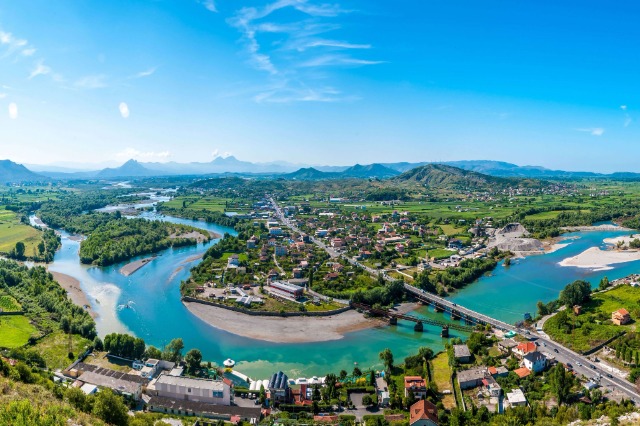
Rozafa Castle: Serving as the symbol of Shkodra, Rozafa Castle not only offers historical insights but also breathtaking vistas of the city and the confluence of the Drin and Buna rivers. Visitors can roam its ancient walls and delve into the legends that surround it.
-
Marubi National Museum of Photography: This museum features an extensive collection of photographs that document the history and culture of Albania, showcasing the works of the acclaimed photographer Pietro Marubi. It stands as a testament to the region’s artistic legacy.
-
Shkodra Historical Museum: Located in a beautifully preserved building that once belonged to local nobility, this museum provides a comprehensive view of Shkodra’s history and culture through artifacts, documents, and exhibitions.
-
The Lead Mosque: An architectural gem from the Ottoman period, the Lead Mosque is significant for understanding the region’s Islamic heritage. Its unique design and historical value attract numerous visitors.
-
Cultural Festivals: Shkodra hosts lively cultural festivals, such as the Shkodra Carnival and the Summer Festival, celebrating local traditions, music, and dance. These events immerse visitors in the vibrant local culture.
Natural Beauty
Beyond its cultural and historical attractions, Shkodra is enveloped by stunning natural landscapes. The nearby Lake Shkodra, the largest lake in the Balkans, offers opportunities for boating, fishing, and birdwatching. The Albanian Alps, with their majestic peaks and hiking trails, present adventurous visitors with a chance to explore breathtaking scenery.
Conclusion
Shkodra stands as a testament to Albania’s rich cultural tapestry, drawing visitors with its ancient sites, museums, and vibrant traditions. Whether exploring historical landmarks or enjoying the region’s natural beauty, visitors to Shkodra are sure to leave with lasting memories of this remarkable city.
/a.c/

 English
 Français
 Deutsch
 Italiano
 Turkish
 Greek
 Serbian




























 RTI