
 English
 Français
 Deutsch
 Italiano
 Turkish
 Greek
 Serbian
Spanish Media’El Economista’: Tourism Boom Propels Albania’s Economy




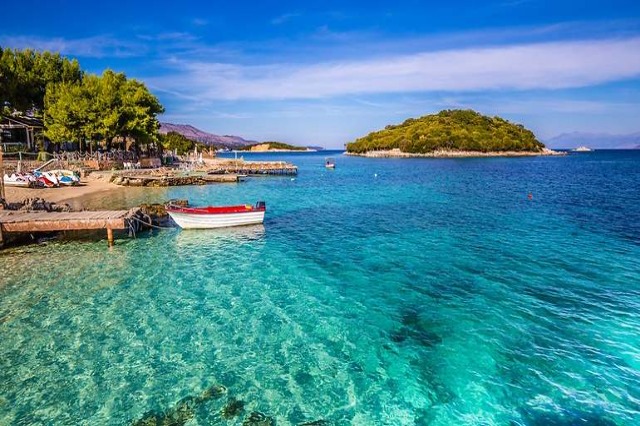
‘You might have seen posts on social media this summer from some of your contacts vacationing in Albania or heard a friend or family member mention plans to visit the country. What might initially seem like anecdotal evidence is actually supported by some remarkable data. Albania, a once-forgotten Balkan country, is experiencing a genuine tourism boom that is boosting its economy. The massive influx of travelers, especially to the beaches of the Albanian Riviera—a coastal area in the south of the country along the Ionian Sea—is transforming the economy and providing new opportunities for Albanians after decades of poverty, conflict, and instability’ writes the Spanish Media’El Economista.
Recent data from analysts at Oxford Economics speaks volumes. As of August 2024, the number of foreign tourists who have visited Albania has reached an impressive 300% of the local population. This means that for every Albanian, three foreign tourists have visited the country this year. With a population of around 2.8 million, a total of 8.5 million foreign tourists traveled to the country between July and August this year, as reported by the Minister of Tourism, Mirela Kumbaro. To grasp the scale of this summer’s influx, consider that in all of 2023, there were 10.1 million tourist arrivals.
First, this figure far exceeds Croatia’s 250% and Greece’s 150%, countries that have been more prominent tourist destinations for years. Second, this 300% marks a stark contrast to the 150% seen in Albania up until August 2019, highlighting the recent nature of this boom. Naturally, the country’s economy cannot remain unaffected by this phenomenon. Albania has historically been the poorest country in Europe. After decades of political and economic isolation under the communist dictatorship of Enver Hoxha, Albania became an autarky, unknown to Europeans and the rest of the world. This isolation led to profound economic stagnation, with rudimentary infrastructure and an agricultural-based economy, alongside a severely limited industrial sector. With the collapse of communism, the country faced a chaotic transition to capitalism, marred by corruption, financial crises, and slow economic growth. Yet, amidst this chaos, the gradual opening of the economy allowed Europeans and the wider world to discover a natural paradise, often dubbed the ‘European Caribbean’ due to its vast beaches with crystal-clear waters, untouched landscapes, and archaeological sites.
A Unique Country
Albania’s uniqueness is undoubtedly one of its main attractions. Although its resident population is under 3 million, the “Albanian people” extend far beyond its borders. It’s estimated that about 1.7 million Albanians live abroad, primarily in Kosovo, Greece, Serbia, North Macedonia, Bosnia, and Italy. Until recently, it was a country many sought to leave.
Moreover, Albania is one of the few majority-Muslim countries in Europe (there are only a handful). Of its 2.8 million inhabitants, more than half are Muslims, mostly Sunni. However, the country is known for its religious tolerance. Different faiths coexist peacefully, which is crucial in a society with a significant Christian population, accounting for over 15% (including Orthodox, Catholic, and Evangelical communities). There is also a notable number of atheists and Albanians who choose not to disclose their faith.
Additionally, among the Muslims in Albania, there is a notable presence of the Bektashi order (a Sufi sect) with its world headquarters in Tirana, Albania’s capital. These Muslims are known for their tolerance and openness: women do not wear veils, followers drink wine, and they do not consider those who do not follow their practices as heretics. Albania aims to become a bridge or mediator between Islam and other religions. Recently, the Albanian government announced plans to consider creating a city similar to the Vatican for the Bektashi community. With all these factors, it’s no surprise that Albania has become a significant tourist attraction—not only for its paradisiacal beaches and beautiful mountains. The improving economy may soon encourage some of those Albanians living abroad to return.
Albania Is No Longer the Poorest Country
“More than three-quarters of the Albanian economy is dominated by the private sector, which allows for greater adaptability and vitality,” explains Zef Preci, Executive Director of the Albanian Center for Economic Research (ACER), to elEconomista.es. “Meanwhile, private investments, especially those made in the last decade in the country’s tourism infrastructure or related sectors, have created powerful incentives for the rapid growth of this sector, especially in the context of geopolitical crises such as Russia’s aggression against Ukraine. This has contributed to putting the Albanian economy on an upward trend.”
In just a few years, Albania has moved away from being the poorest country in Europe. While the improvement isn’t a dramatic leap, given that its per capita income is still far below the European Union average, it’s notable that, according to the International Monetary Fund, Albania’s per capita income will reach around $9,000 this year in terms of purchasing power parity (PPP, an indicator that removes price distortions). In 2024, if forecasts hold, Albania will compete with North Macedonia in terms of GDP per capita. Countries like Bosnia and Herzegovina, Belarus, Ukraine (heavily affected by war), and Kosovo are now behind.
The most recent figures are encouraging. Albania’s GDP grew by 3.4% in 2023, driven by strong domestic demand and the exceptional performance of the tourism sector, which reached unprecedented levels. Additionally, investment levels have seen significant increases, driven by private investments, including high levels of foreign direct investment inflows.
The European Commission itself acknowledges the positive performance of the Albanian economy in a recent report: strong growth, controlled inflation, and greater fiscal balance. “The robust growth momentum is supported by a booming tourism sector, increased investments, and higher wages. It is expected that the slowdown in import prices and the continued appreciation of the national currency will bring inflation down to the central bank’s target of 3% this year… The fiscal situation is also expected to improve, with the deficit-to-GDP ratio projected to decrease to 2% in 2025, and the public debt-to-GDP ratio is expected to decline gradually.”
No Initial Tourism Strategy
Albanians saw tourism as an opportunity to escape their poverty trap, and despite the significant challenges they still face, they are making the most of it. The growth of the tourism industry, combined with improved security, has turned Albania into a dream destination for millions of tourists. Preci, from ACER, highlights the significant contribution of tourism to Albania’s GDP: “Even without a clear governmental strategy on the type of tourism the country is prepared for—whether mass tourism, elite tourism, or a combination of both—it has played a crucial role.”
When asked about the origin of this recent and rapid tourism boom, which has been more gradual in other European destinations, Preci points to several factors: “The stratification of societies in Central European countries, the creation of a niche of clients (tourists) with relatively low incomes, combined with an aggressive promotion of a previously unknown country by the Albanian government, stimulated a significant increase in the number of tourists exploring the country, especially over the past two to three years.” According to data from the Ministry of Tourism, 77% of travelers arriving in August came from Southern Europe, compared to 9% from Western Europe, showing that Albania has become an economical alternative for travelers from less affluent European economies.
The expert also highlights the increased accommodation capacities in tourism services due to significant private investments, especially along the southern coast, as well as the introduction of “new” or previously minor tourism services, such as adventure tourism, aesthetic medical tourism, dental tourism, and even sex tourism, which all contribute to the country’s growing appeal. Improved transportation within the country has also helped diversify tourist destinations, he adds.
When asked about the sustainability of such a massive tourism model in a small country that has developed so quickly, Preci acknowledges some shortcomings: “The Albanian government is currently developing a tourism development strategy, in which the preferred model is expected to be clarified. However, based on the current dynamics on the ground, as well as judging by the number of construction permits for tourist complexes, coastal resorts, etc., it can be stated in advance that this model is still far from being sustainable. Serious public and private investments in supporting tourism infrastructure are needed.”
The executive director of ACER cites examples like improving communications, maintaining building types that do not destroy tradition, promoting local products, clean and ecological products, fostering a culture of tourism services, and educating businesses. Preci warns of the risk of environmental and health damage as a result of the mass construction, especially along the coast, a real threat as already seen two decades ago in some coastal areas of Bulgaria.
Overall Economic Improvement
Another important aspect the expert highlights is the distribution of the benefits of this tourism boom among the population. “The truth is that the economy as a whole has benefited and continues to benefit from the tourism boom, but it can be said that the distribution of these benefits is still far from fair,” Preci admits. He details that the main beneficiaries so far have been service providers, such as airlines, Tirana International Airport, several tour operators, and owners of hotel and restaurant establishments.
On the other hand, Preci notes, the benefits for the state budget and, consequently, for all citizens have been smaller. “The issues related to traffic, environmental pollution, etc., cannot be overlooked. The main challenge is that domestic production, especially in agriculture and livestock, has not yet received the right signals, meaning that the tourism boom has not yet ‘translated’ into growth in domestic production in this sector of the national economy. Unfortunately, this has not yet happened,” the economist concludes.
/k.s/
Të ngjashme




Latest News










Most read










 RTI