
 English
 Français
  Deutsch
 Italiano
 Turkish
 Greek
Greek Serbian
Spanish Minister Grande-Marlaska: The European Union shares common challenges, interests, and objectives with the Western Balkans




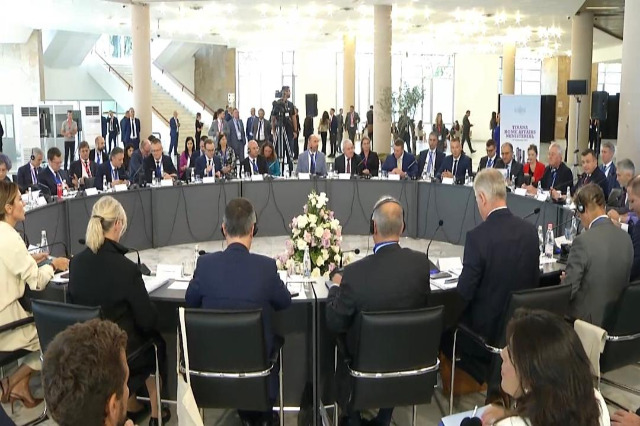
At the beginning of the Euro-Balkan Ministerial gathering of Interior Ministers from the EU and the region within the framework of the Berlin Process held in Tirana, Fernando Grande-Marlaska, Spain’s Minister of the Interior and in his position as the Spanish Presidency of the Council of the EU, emphasized that the European Union shares common challenges, interests, and objectives with the Western Balkans.
During his speech in front of the 26 participating high-level delegations, Fernando Grande-Marlaska highlighted three key areas where cooperation should be extended. This cooperation is not only in the interest of the region but also essential for the European Union itself.
“First, integrated border management in the Western Balkans. The Presidency of the Council is diligently working to enhance the functionality of the Schengen area while advocating for intelligent and secure mobility management at the external borders. The external dimension of immigration is of paramount importance; therefore, during this presidency, it is a top priority to seek cooperation with third countries of origin and transit to further prevent irregular immigration,” stated Fernando Grande-Marlaska.
“Today’s meeting offers an opportunity to discuss the path forward towards greater effectiveness, both in preventive and reactive measures, through cooperation with the Western Balkan countries,” continued the President of the EU Council and Spain’s Minister of Interior.
According to him, “The Presidency will also persist in its efforts to advance towards the finalization of the European Pact on Migration and Asylum, striving to strike a balance between responsibility and solidarity.” Achieving a final agreement on this pact stands as one of the most critical and ambitious objectives of this presidency.”
The second priority is regional cooperation in combating organized crime.
According to the President of the EU Council, “The rise in international organized crime activity poses a threat to our societies, necessitating continuous adaptation to the changing dynamics of criminal activities. This presidency places special importance on combating various forms of crime, including human trafficking for various purposes, international drug trafficking, and firearms trafficking, all of which are essential and often linked to serious criminal incidents.”
“Furthermore, we remain vigilant regarding organized crime aspects such as money laundering and technological crime. It is a priority for this presidency to share lessons learned, enabling us to enhance our capabilities for identifying and combating criminal groups,” stated Fernando Grande-Marlaska.
He also highlighted the danger of Russian aggression for the Western Balkan region.
“We are closely monitoring the security implications of Russian aggression in Ukraine and responding to identified risks to prevent any potential threats to peace in the Western Balkans. Given the region’s sensitive geographical position and exposure, it is crucial to strengthen cooperation with the Western Balkans,” emphasized Fernando Grande-Marlaska, President of the EU Council.
The fight against cybercrime was the third priority presented by the Spanish Interior Minister.
According to him, “The virtual environment is being used by criminals to undermine the stability and security of our countries. We have all experienced cyber-attacks targeting essential services and critical infrastructure. The terrorist threat persists and has even escalated in the virtual realm. Terrorist groups continue to use the Internet for recruitment and incitement to carry out attacks on European soil. Consequently, it is imperative to develop immediate preventive measures through training and the exchange of best practices to address technological advancements as a new challenge. Cooperation with the private sector is also essential,” underlined Fernando Grande-Marlaska.
He concluded by emphasizing that “these three priorities of the Spanish Presidency in the field of internal affairs underscore the EU’s alignment with common challenges, interests, and objectives shared with the Western Balkans.”
As part of the Berlin Process, the Ministerial meeting of Interior Ministers from the European Union and the Western Balkans took place in Tirana on Thursday. The topics discussed at the Ministerial included integrated border management, regional cooperation in combating organized crime, and a partnership for addressing cybercrime in the Western Balkans.
/m.ll/
Të ngjashme

Latest News





 RTI
RTI